Henry Darger
An Outsider Titan’s Universe
Henry Darger is an enigmatic figure in American art—a man who turned profound solitude into a sanctuary of resilience. His works on paper are sprawling, chaotic battle scenes of child martyrs, and storm-swept landscapes. They’re intentionally unsettling. If they emerged today without context, their sheer intensity would spark immediate outrage.
Beneath the initial shock of seeing Darger’s mixed-media collages are his personal mythology hand-stitched from the discarded fragments of 20th-century American print culture.
popJellyNYC acknowledges rule-breakers and recluses who live in crowded solitude. Darger is both. He transformed isolation, abandonment, and lifelong grief into his own cloistered salon, party of one. His story should reshape how we view creative survival.
Life Behind Closed Doors
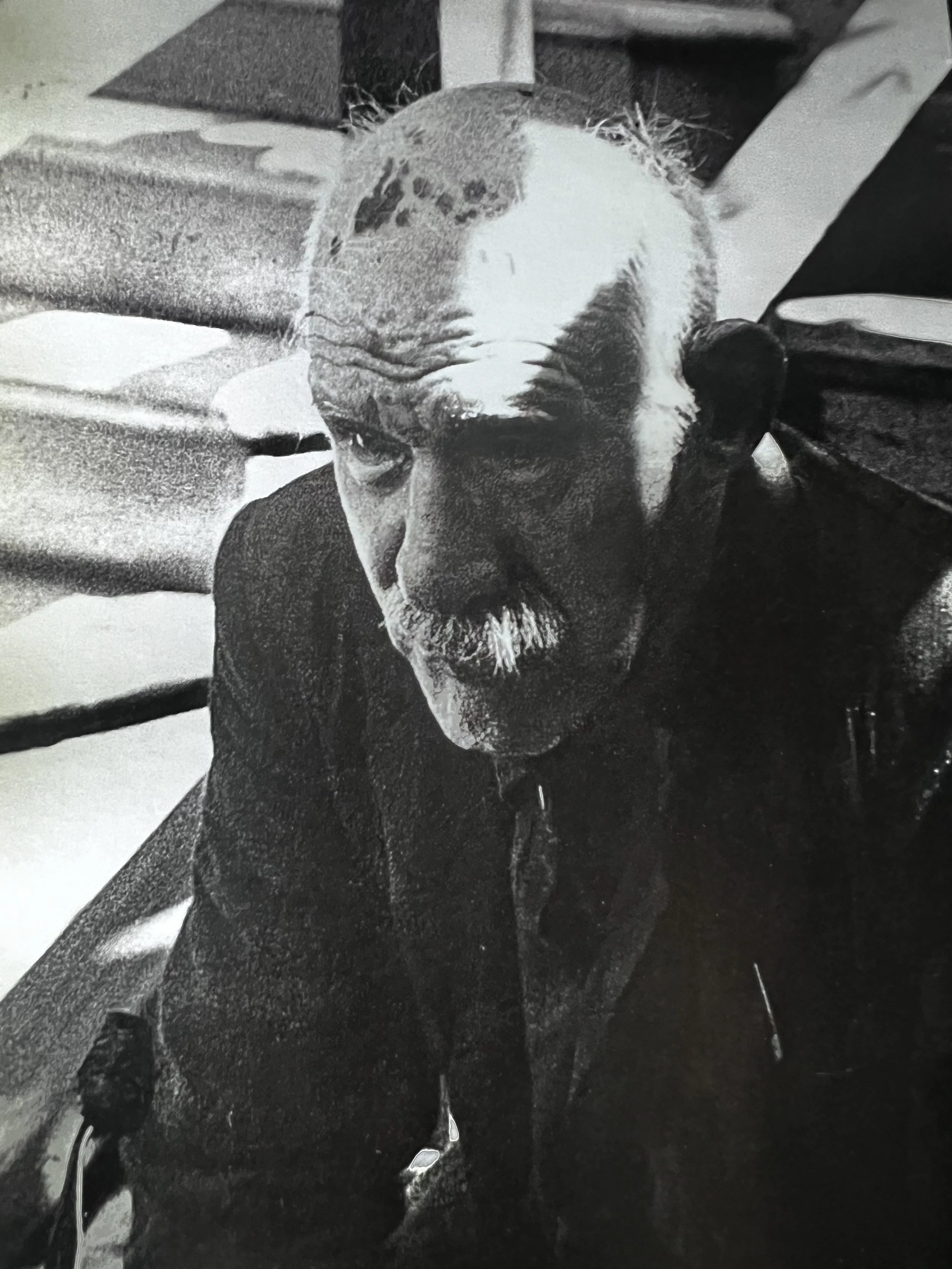
Henry Darger (1892–1973) lived quietly as a hospital janitor on Chicago’s North Side, living in an SRO (Single Room Occupancy) for over forty years. To his neighbors, he was an invisible, eccentric figure. To the art world, he would posthumously become a titan of outsider art.
Darger’s recluse lifestyle was the tragic byproduct of a painful childhood. Orphaned at age four after his mother died, he was separated from his disabled father and placed in a Catholic boys’ home. Then later sent to the Illinois Asylum for Feeble-Minded Children—abusive environment typical of state institutions at the turn of the century.
He escaped in his teens, returned to Chicago, and retreated into a life of near-total social isolation.
The Discovery in Room 508
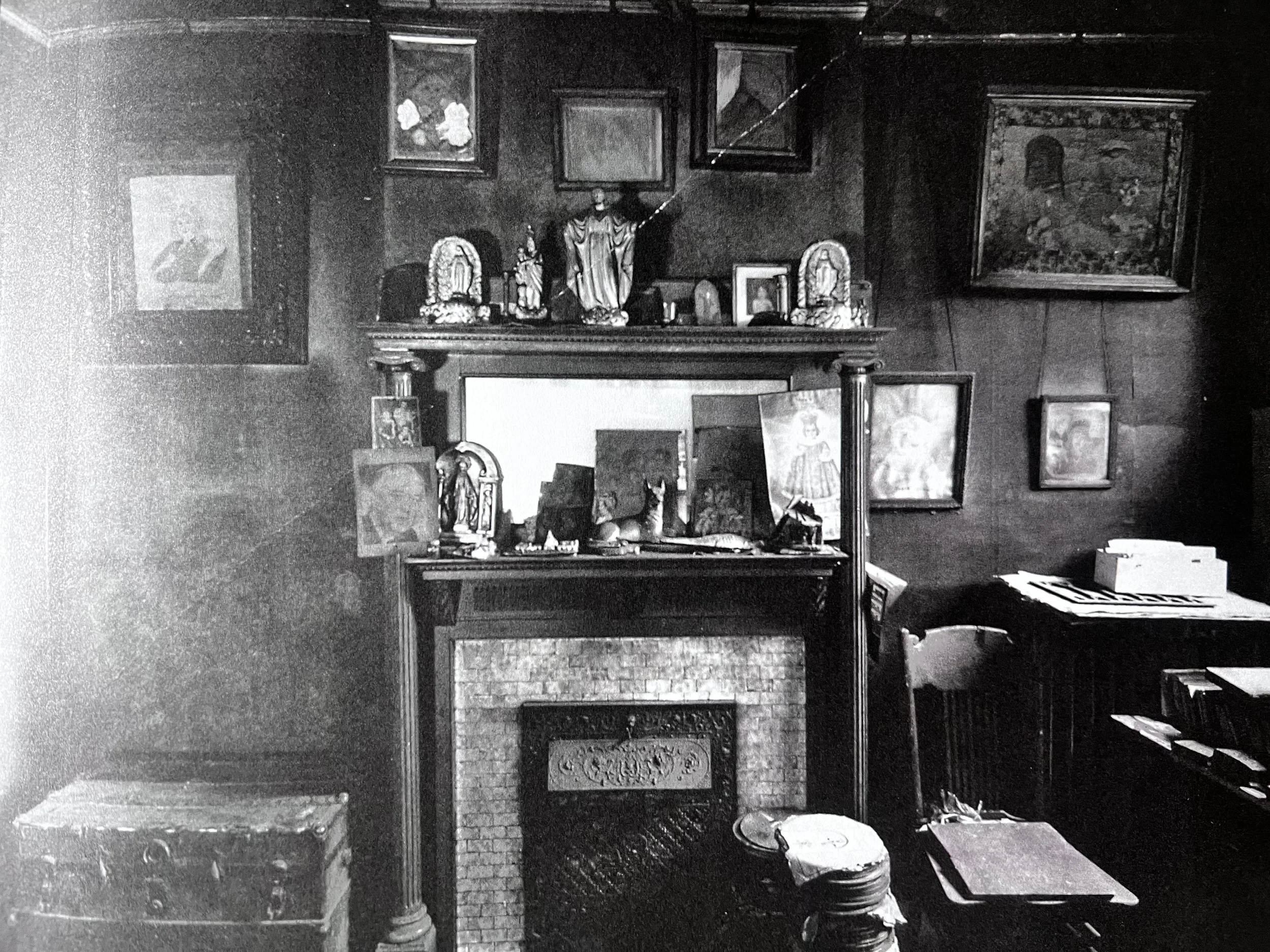
Darger died in 1973 at the age of eighty-one. The owners of the SRO, Nathan and Kiyoko Lerner, stepped into his small room to clear his belongings. What they discovered astonished the cultural world.
Beneath decades of accumulated trash, newsprint, and Catholic devotional items lay a massive, 15,000-page typed fantasy manuscript titled “The Story of the Vivian Girls,”also known as “In The Realms of the Unreal.”
Wrapped within the text were hundreds of giant, double-sided watercolor scrolls and collages—some stretching over ten feet long. This quiet janitor down the hall had spent decades secretly constructing one of the most expansive narrative artworks in modern history.
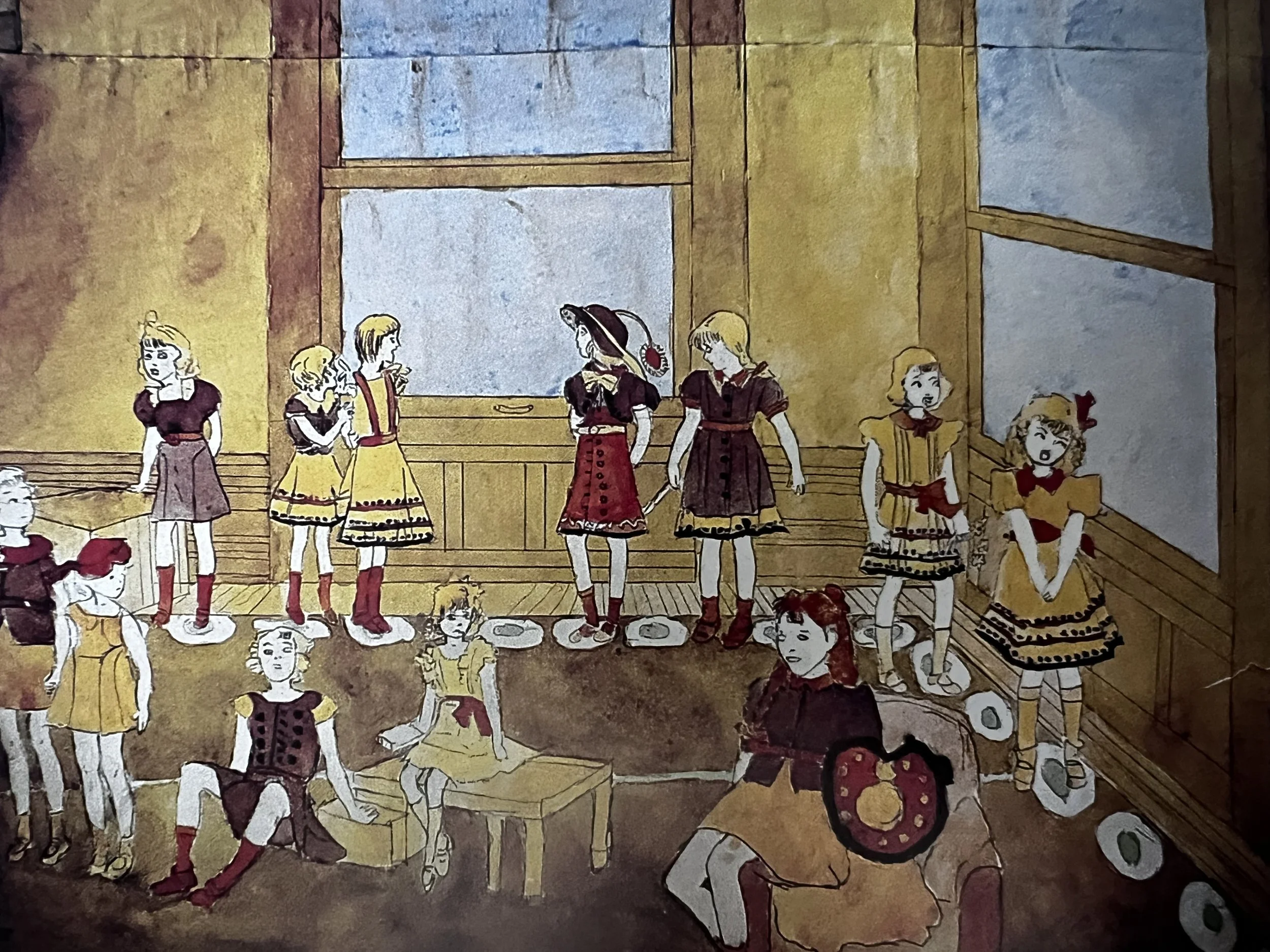
The Epic Universe: Good vs. Evil
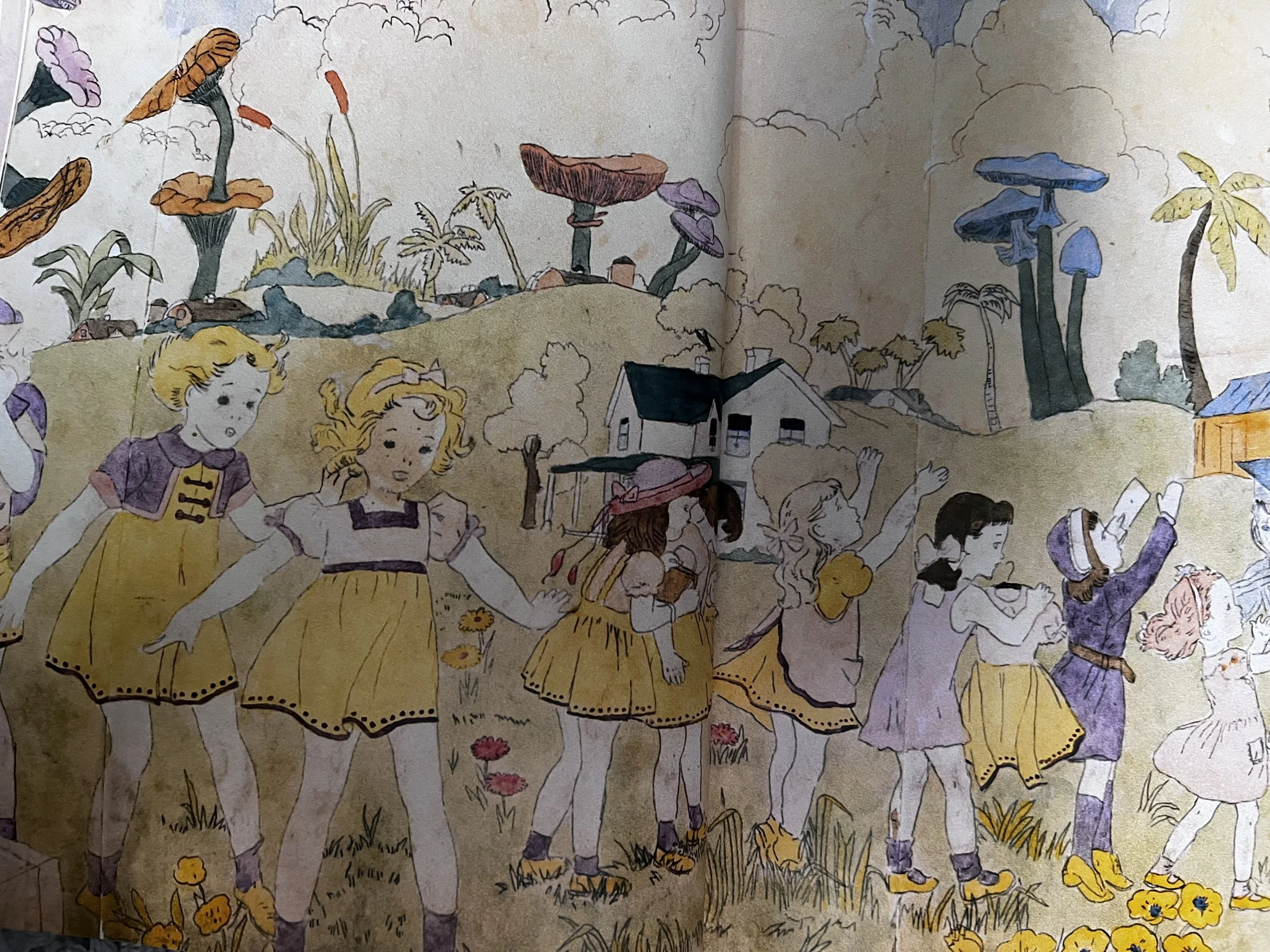
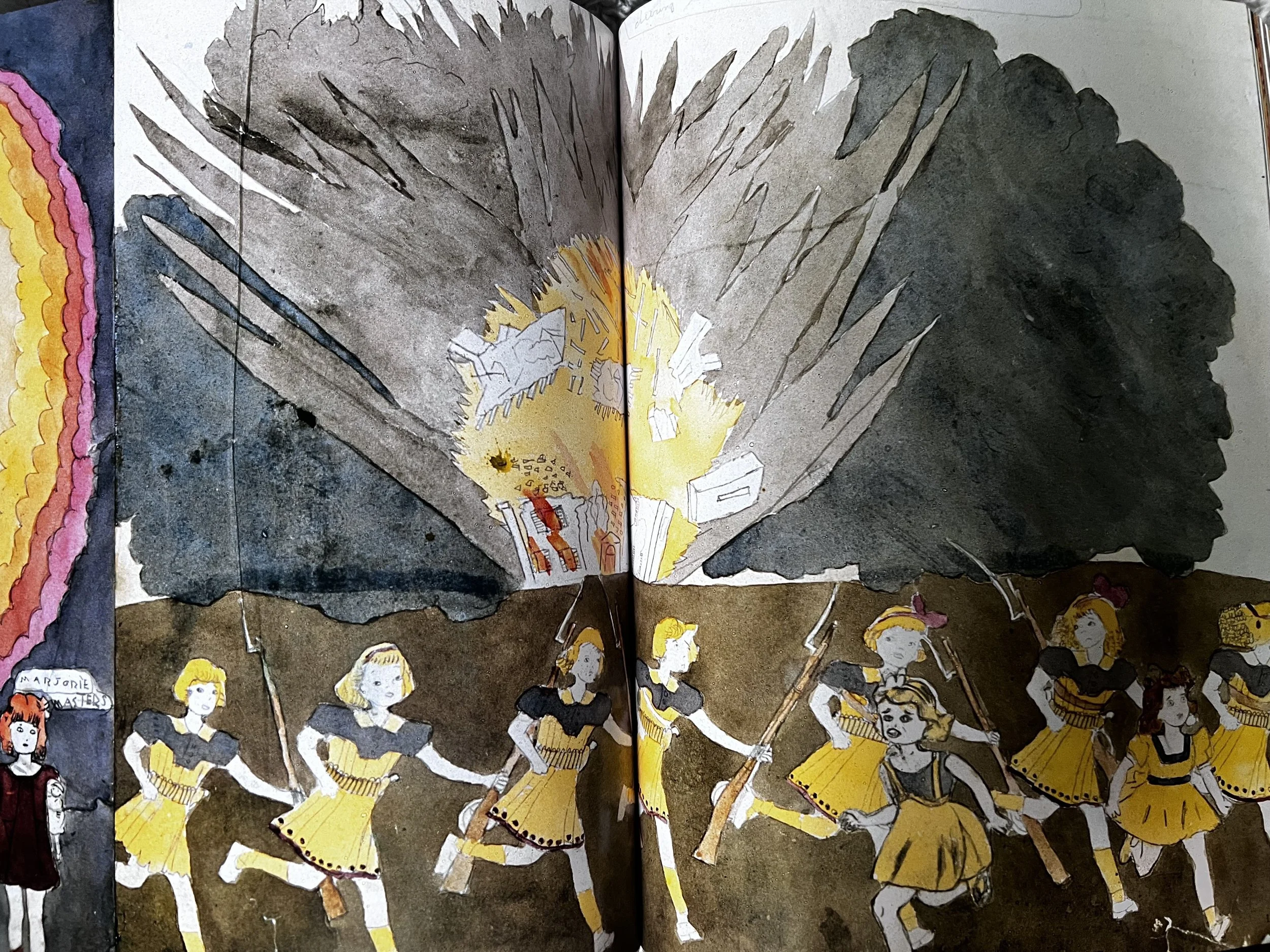
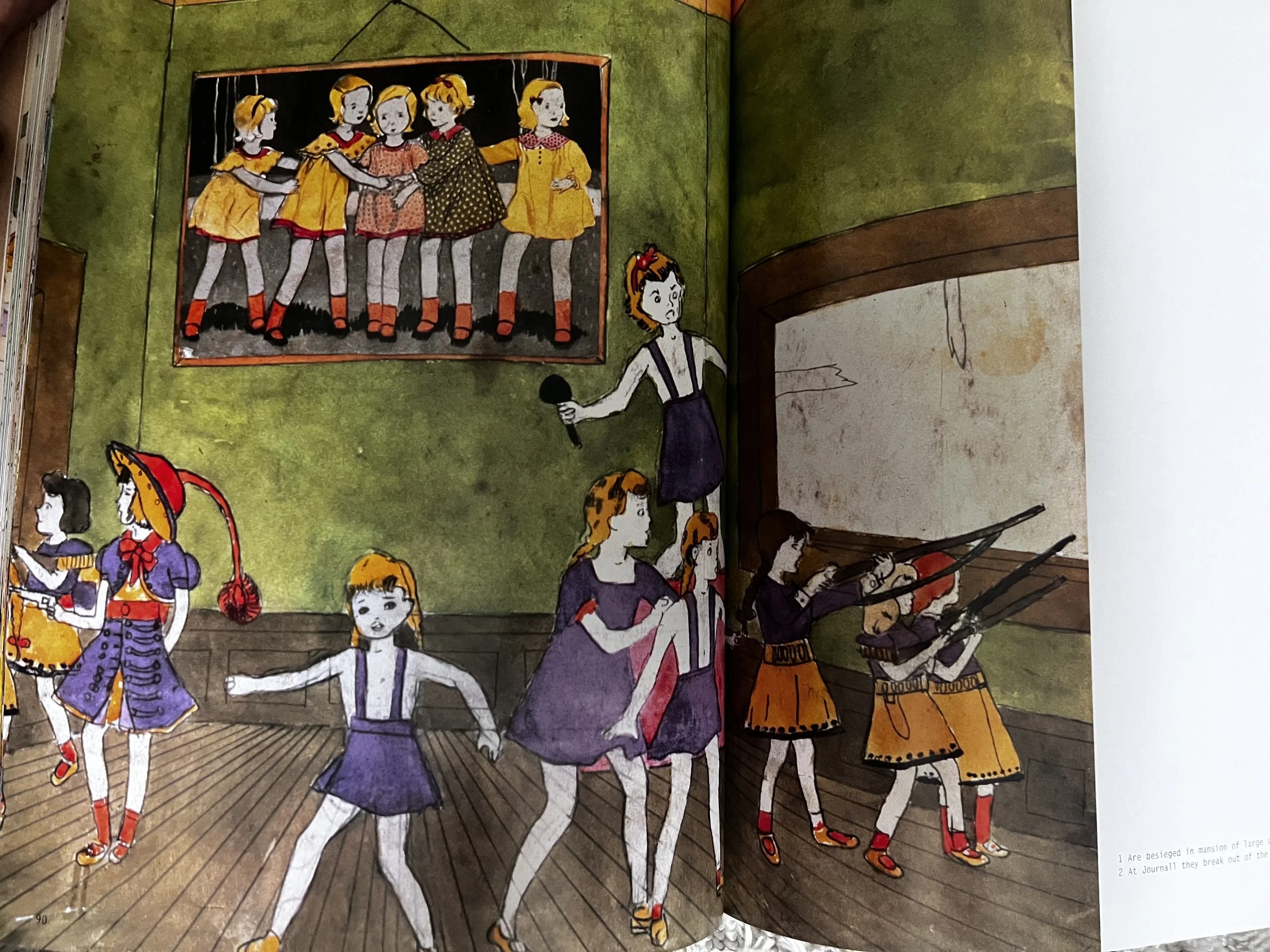
At its core, Darger’s epic is an apocalyptic battle between good and evil, rooted in the Catholic iconography of his upbringing. His narrative centers on seven heroic child princesses—the Vivian Girls—who lead a fierce rebellion against the Glandelinians, a cruel adult regime who enslave and oppress children.
Dargers scrolls and collages want to establish why it matters. He organizes the princesses experiences so that we understand how one event leads to another over time.
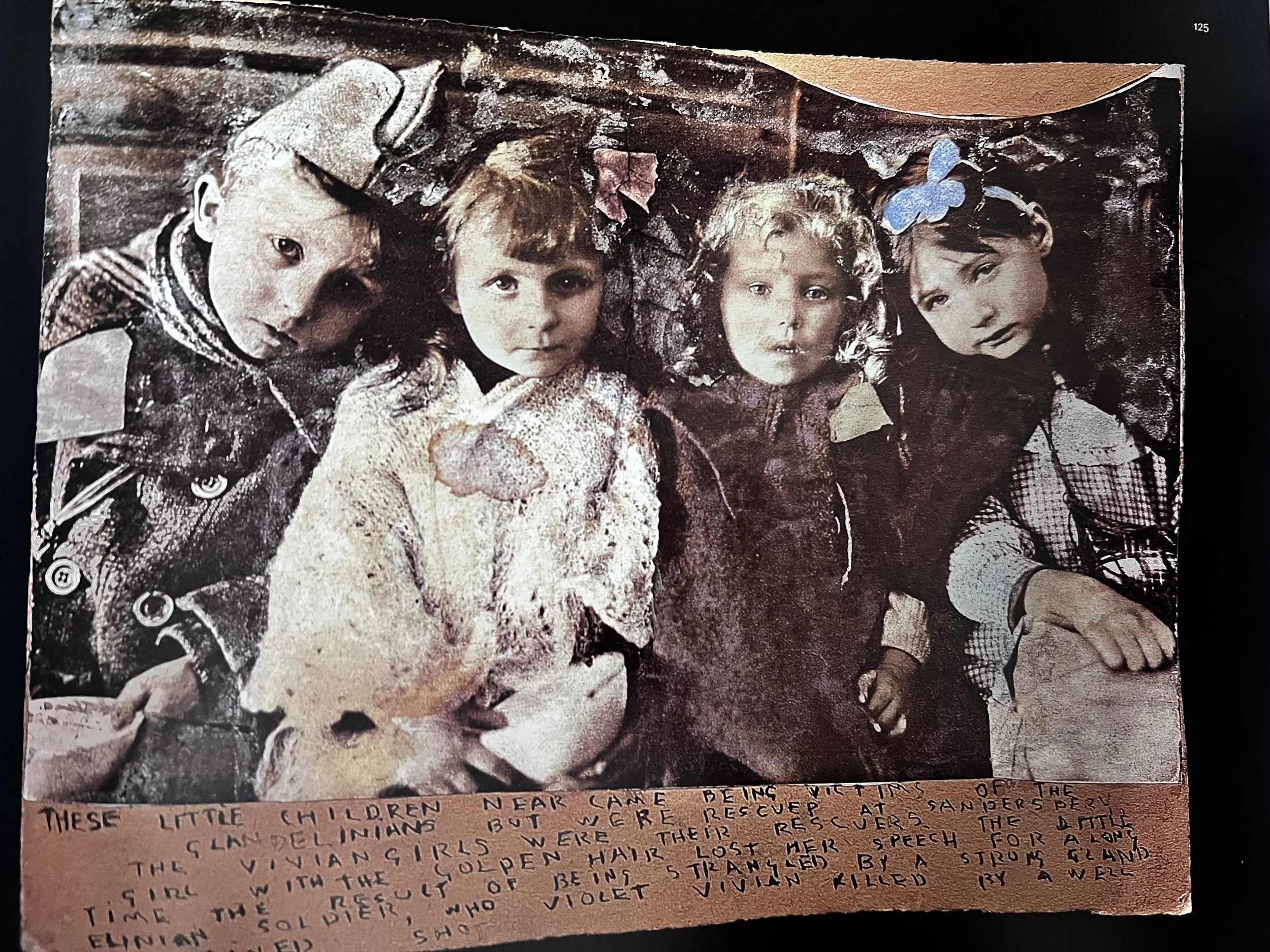
The motifs in his compositions reflect his internal emotional state:
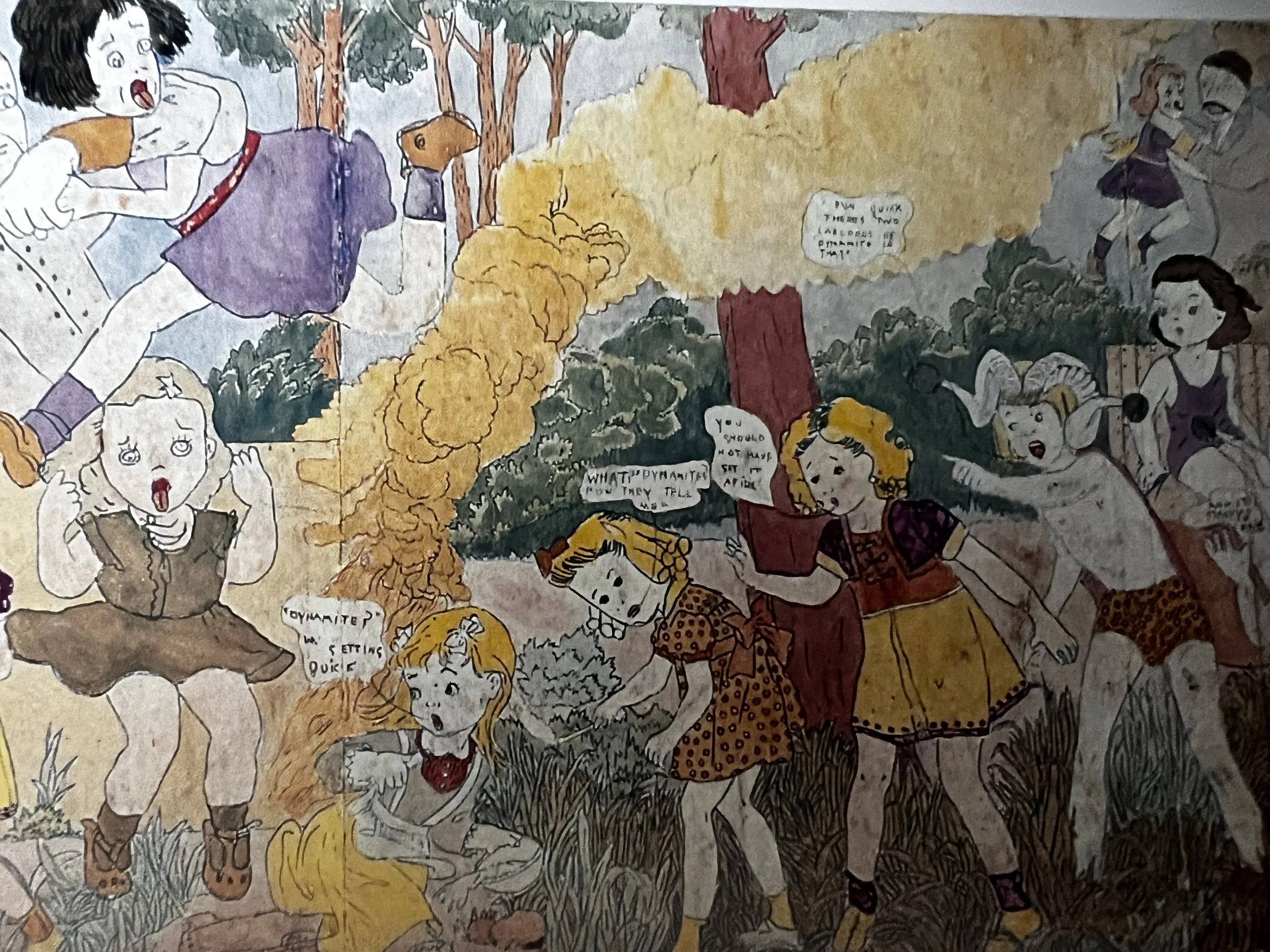
Violent skies: Swirling tornadoes, exploding clouds, and apocalyptic weather patterns mirror intense psychic turmoil and biblical judgments.
Surveillance & betrayal: Pervasive eyes, hidden observers, and looming adult figures reflect Darger’s lifelong feelings of paranoia and abandonment by authority.
Triumphant resistance: Despite the graphic cruelty of the Glandelinian regime, Darger’s narrative repeatedly centers on courage, miraculous rescues, and the ultimate victory of innocence.
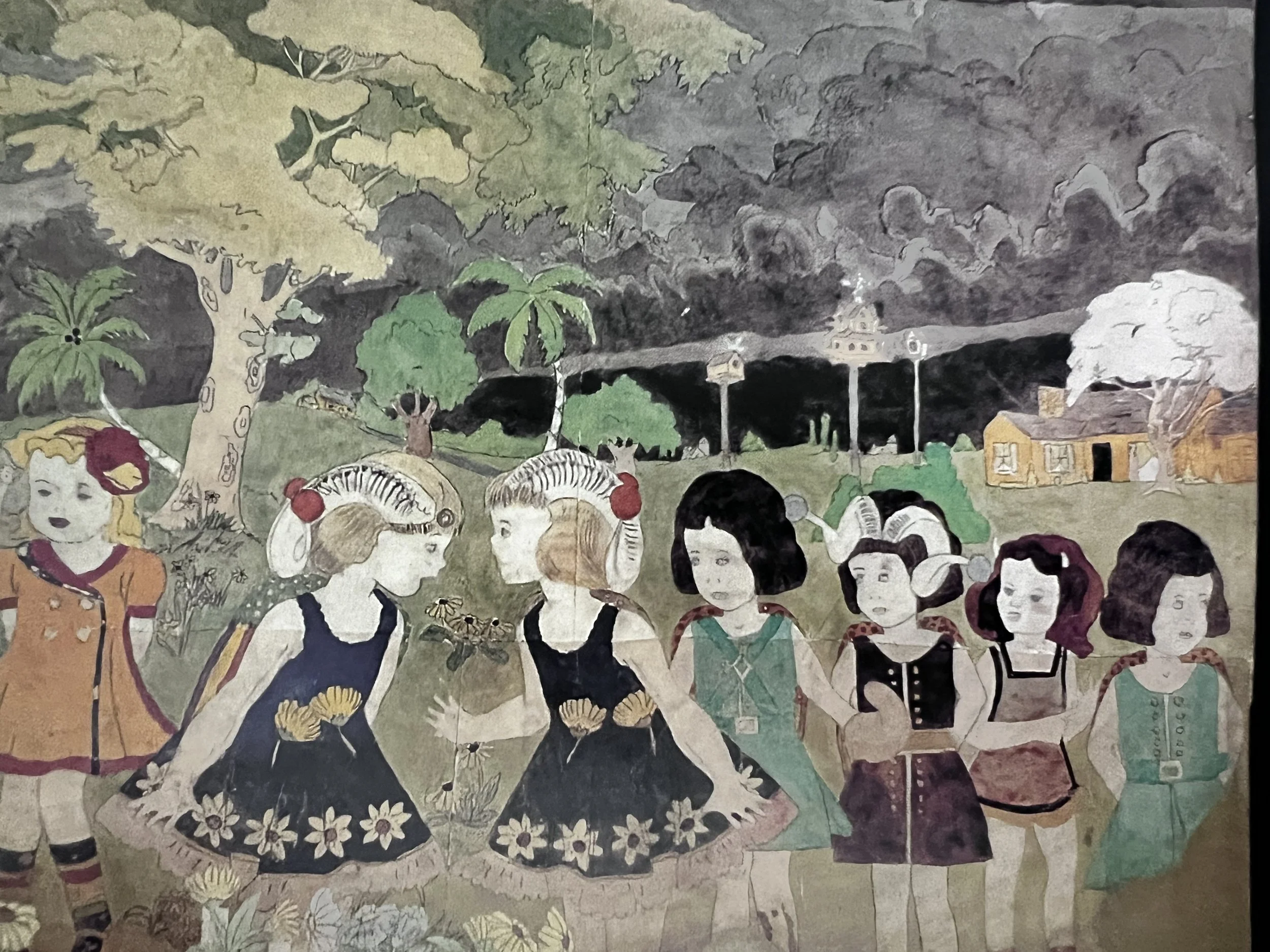
Innocence Under Siege
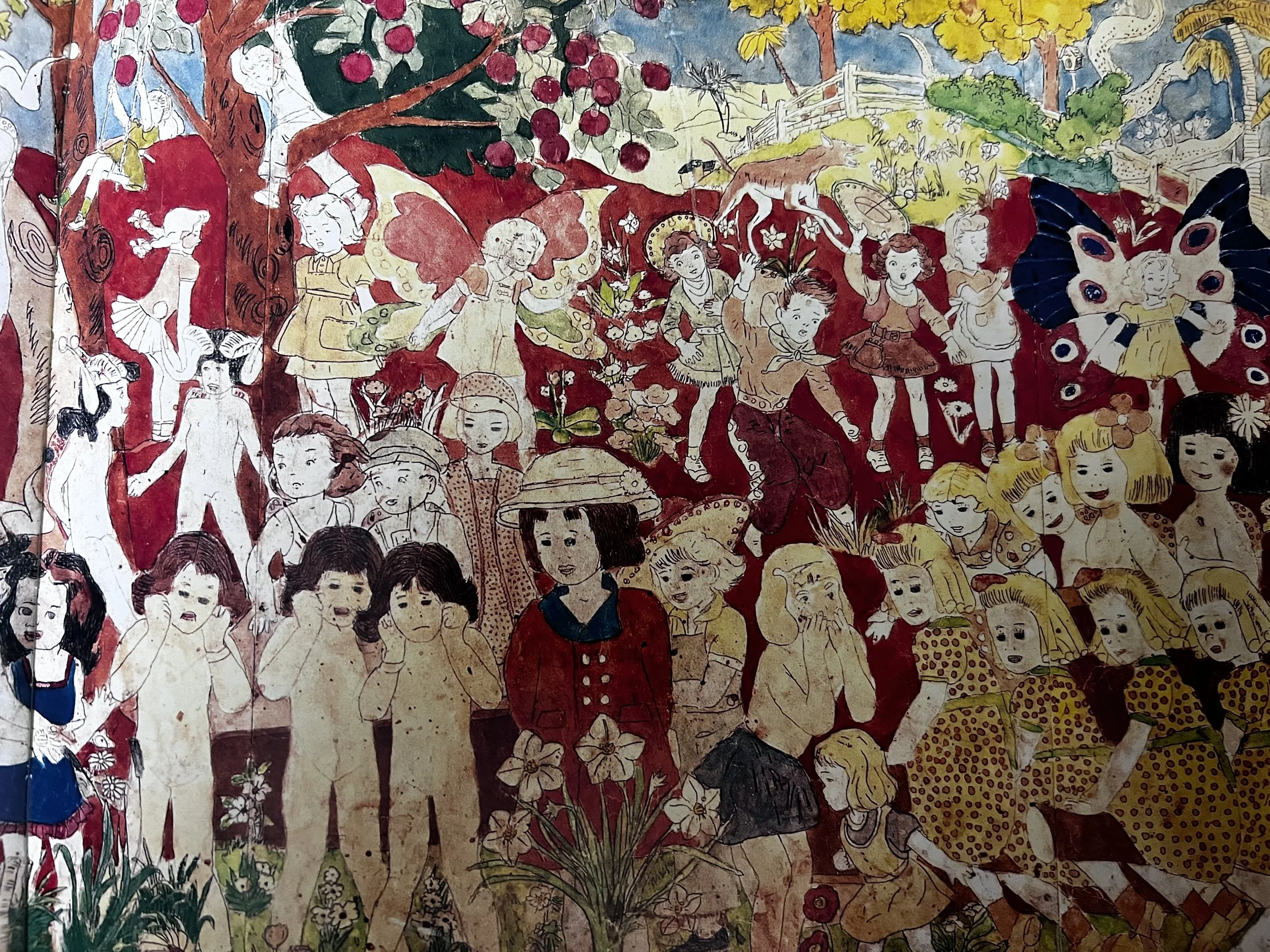
Darger’s work frequently provokes intense debate, primarily due to its violent depictions and unusual renderings of child protagonists. The war scenes feature graphic suffering, while the Vivian Girls and their companions are often depicted semi-nude or nude, frequently incorporating male genitalia.
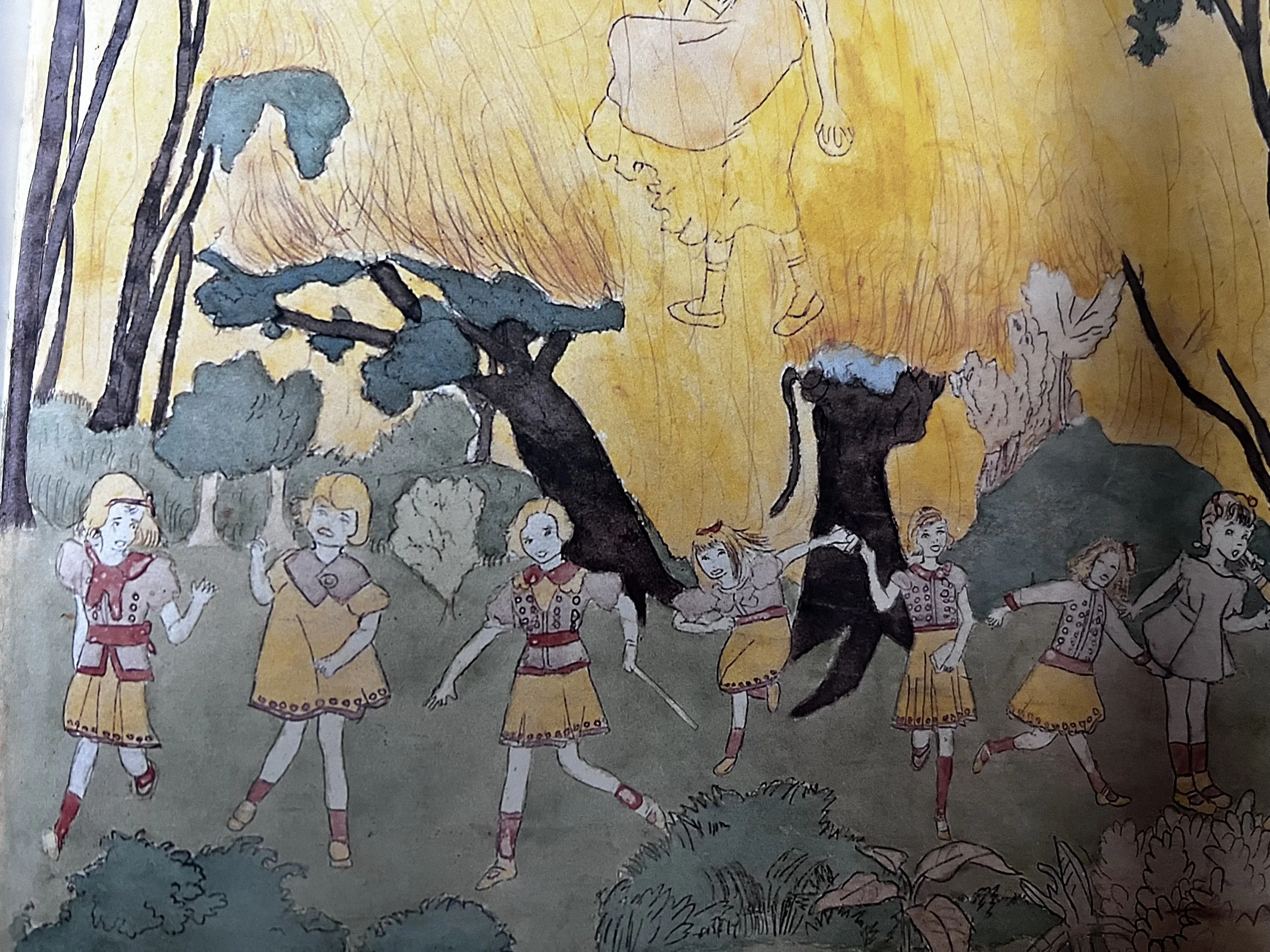
Viewing Darger’s depictions through a contemporary, hyper-sexualized lens misinterprets both his process and his psychological intent. Darger was entirely self-taught, working without live models, anatomical training, or formal art supplies. His universe was created by tracing and collaging figures from mail-order catalogs, newspaper ads, and children’s coloring books. Scholars point to three crucial factors that contextualize these choices:
Anatomical vaivety: Lacking formal art instruction, Darger relied on cutouts of young boys and girls interchangeably, often blending physical attributes without understanding conventional anatomy.
Processing childhood trauma: Having endured severe institutional abuse as a child, Darger’s focus on child martyrs reflect the human condition to process unhealed wounds.
Symbolic gender fluidity: In Darger’s spiritual binary, the children are pure, non-sexualized warrior-saints. Their physical traits serve as symbolic markers of strength rather than sexualization.
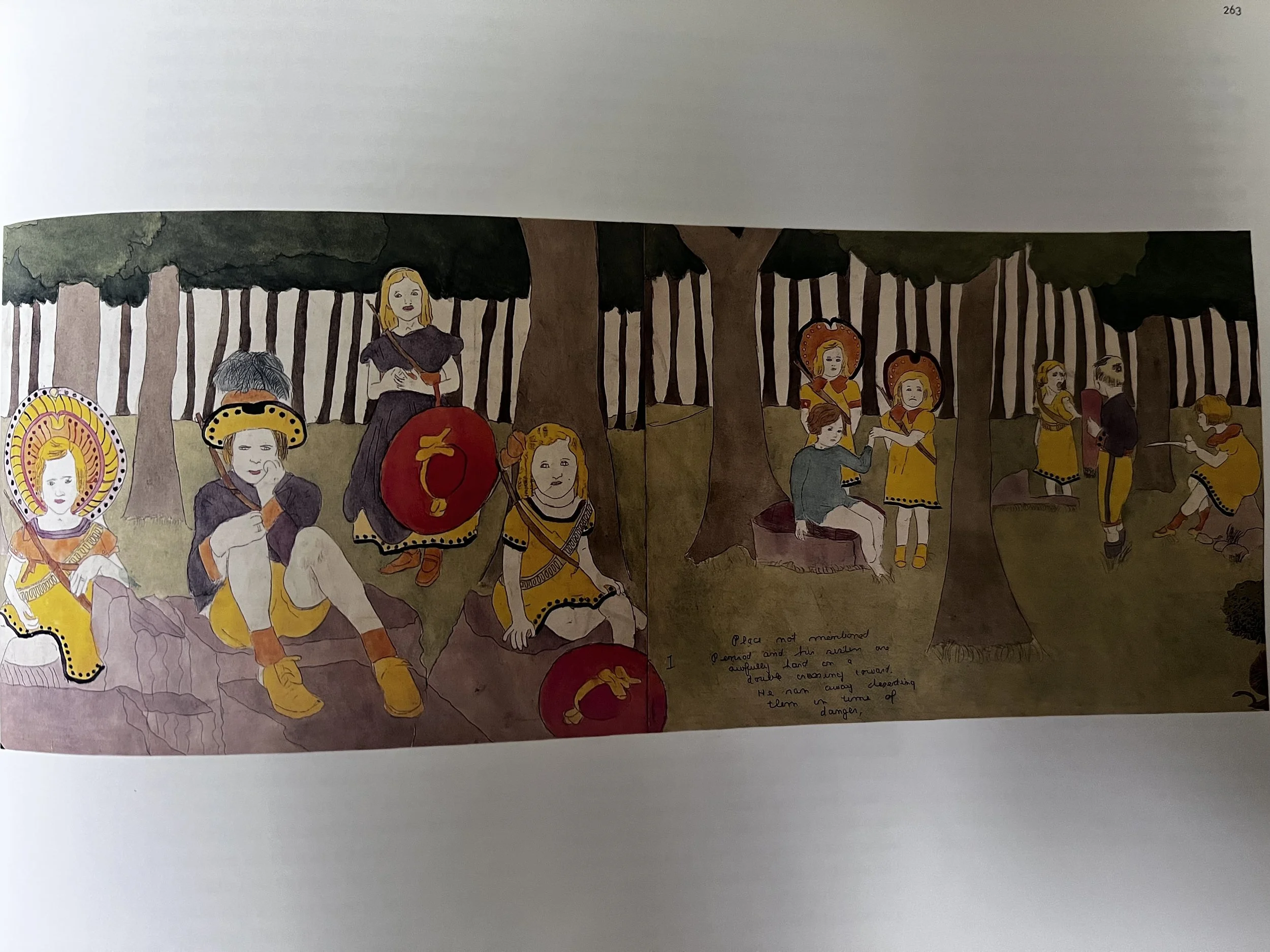
Far from exploiting youth, Darger’s universe is fundamentally preoccupied with the protection and liberation of innocence under siege. His epic is a moral allegory where vulnerable children are granted heroic agency to fight back against adult cruelty.
Equally important is the ethical dimension: Darger created this world entirely in secret, with no intention of commercial display or public audience. Honoring his work today requires us to approach his sanctuary with empathy and psychological gravity—viewing it not as sensational content, but as the private interior language of a survivor.
Visual Technique
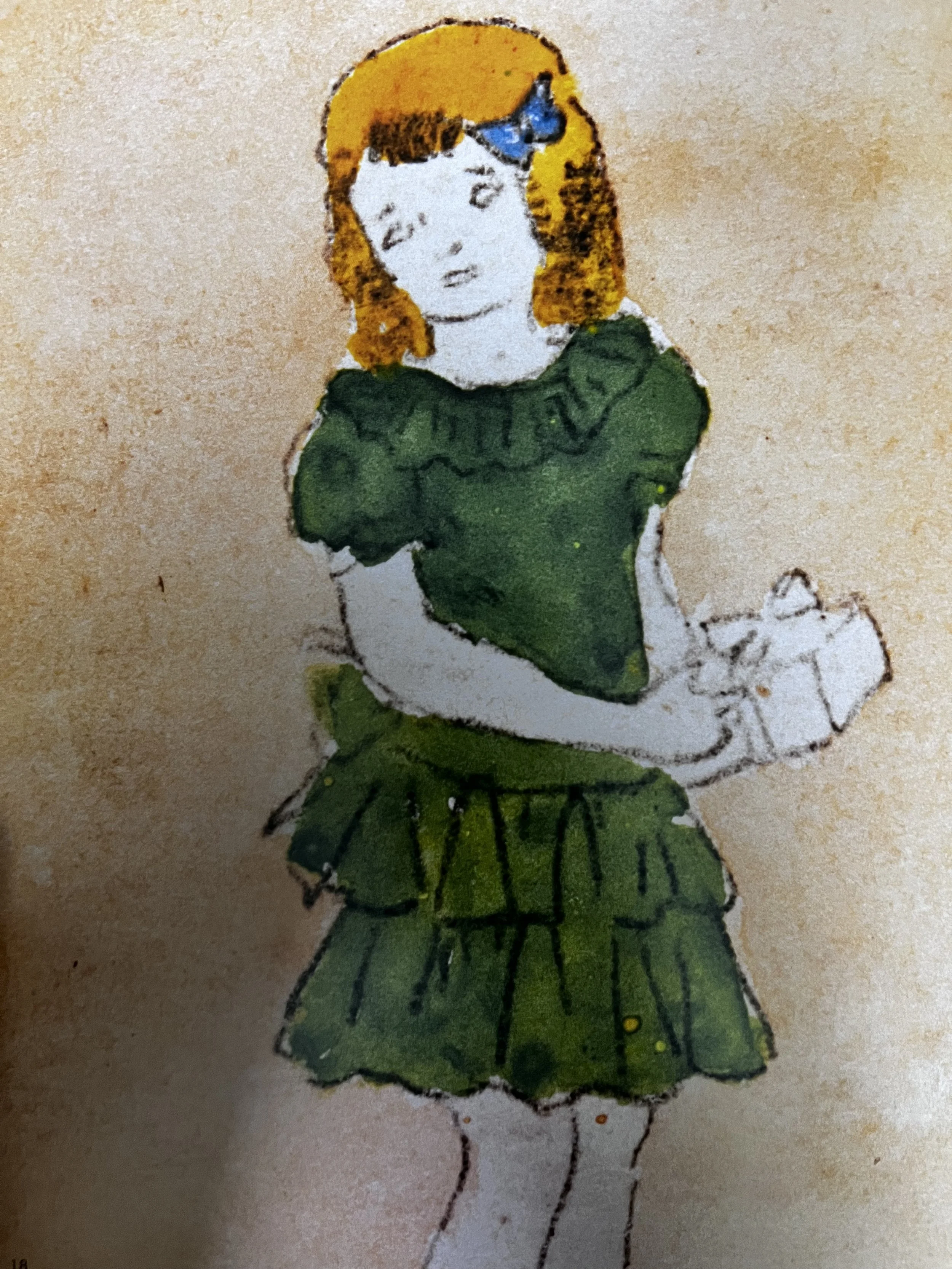
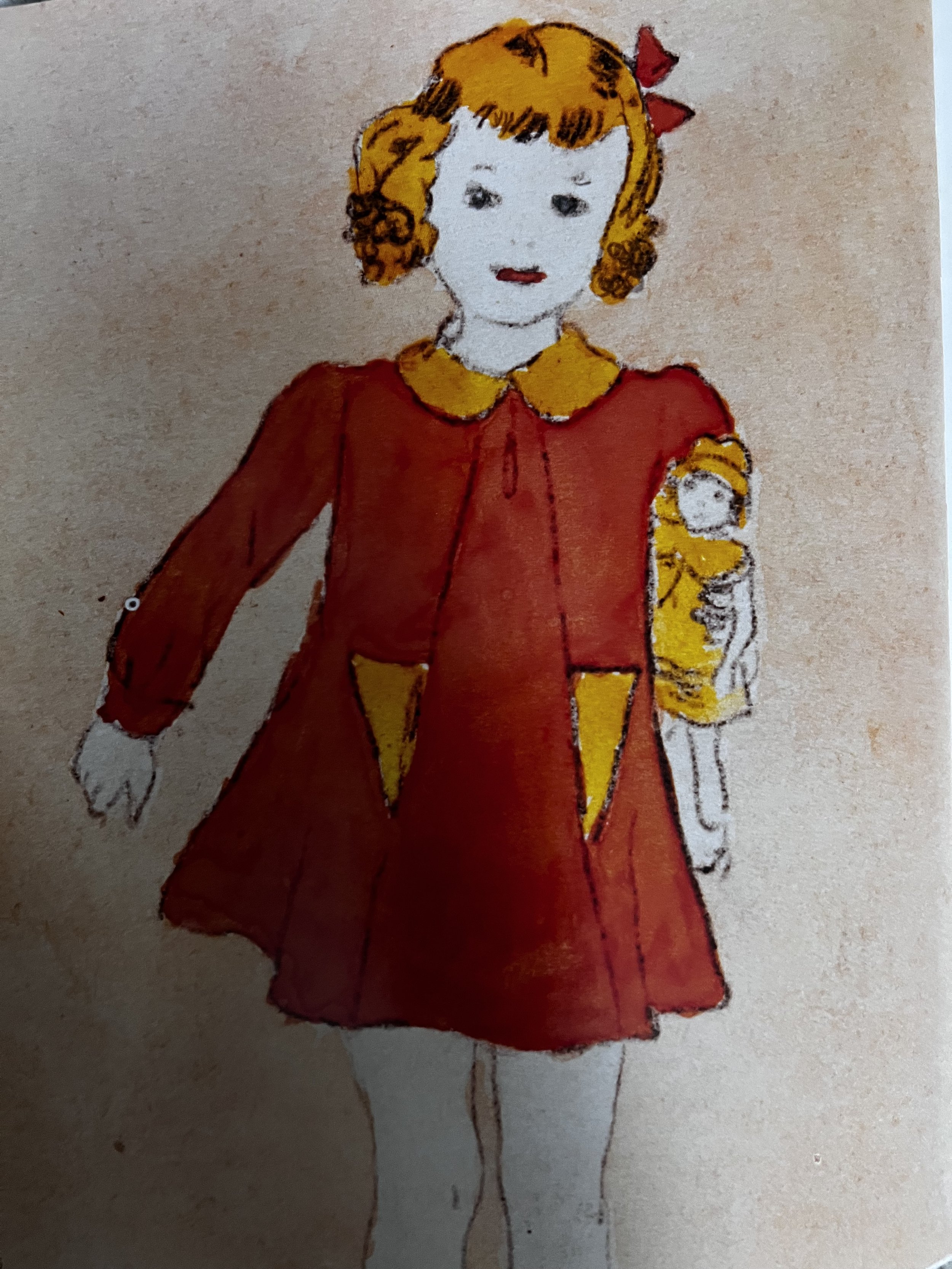
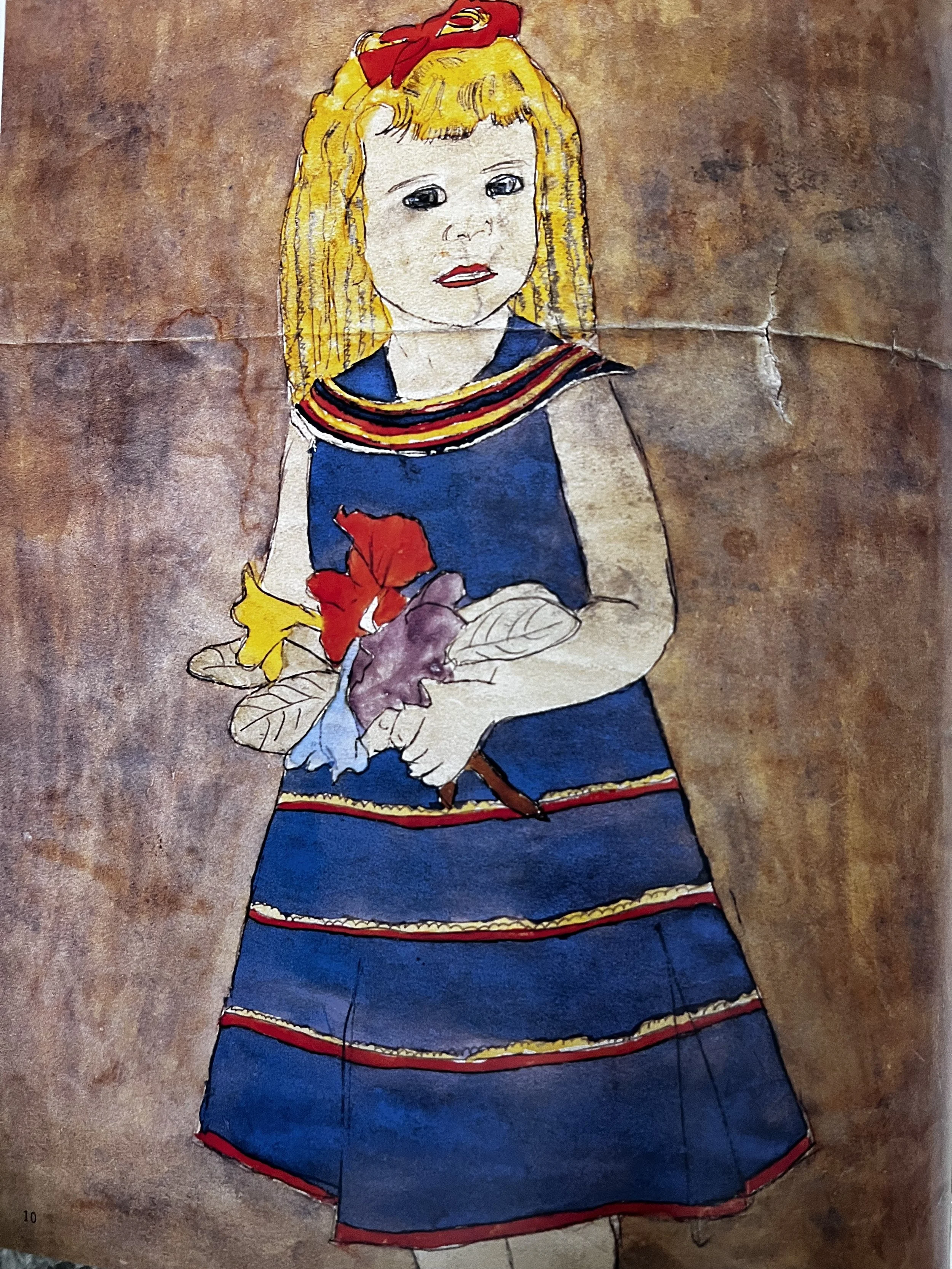
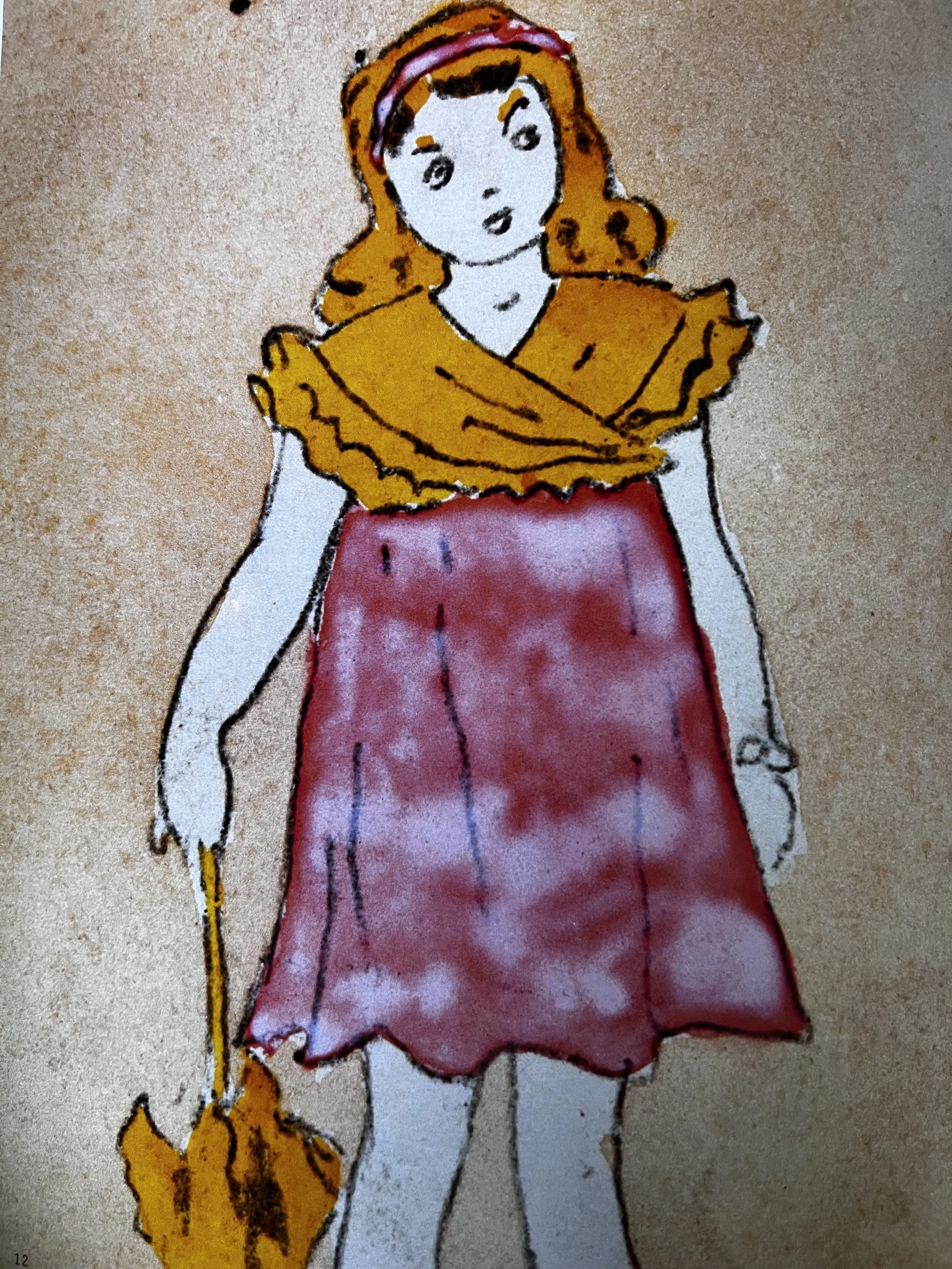
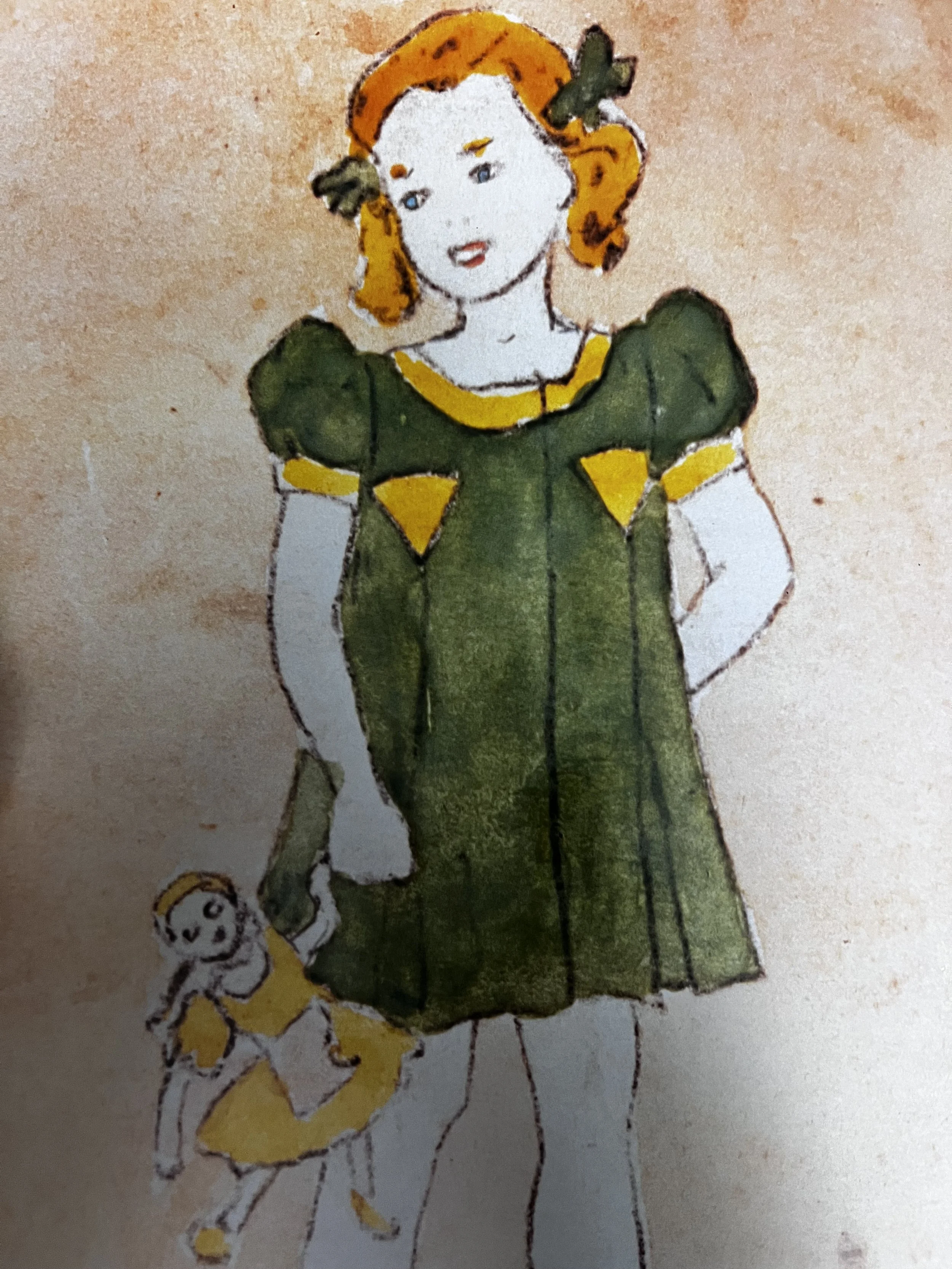
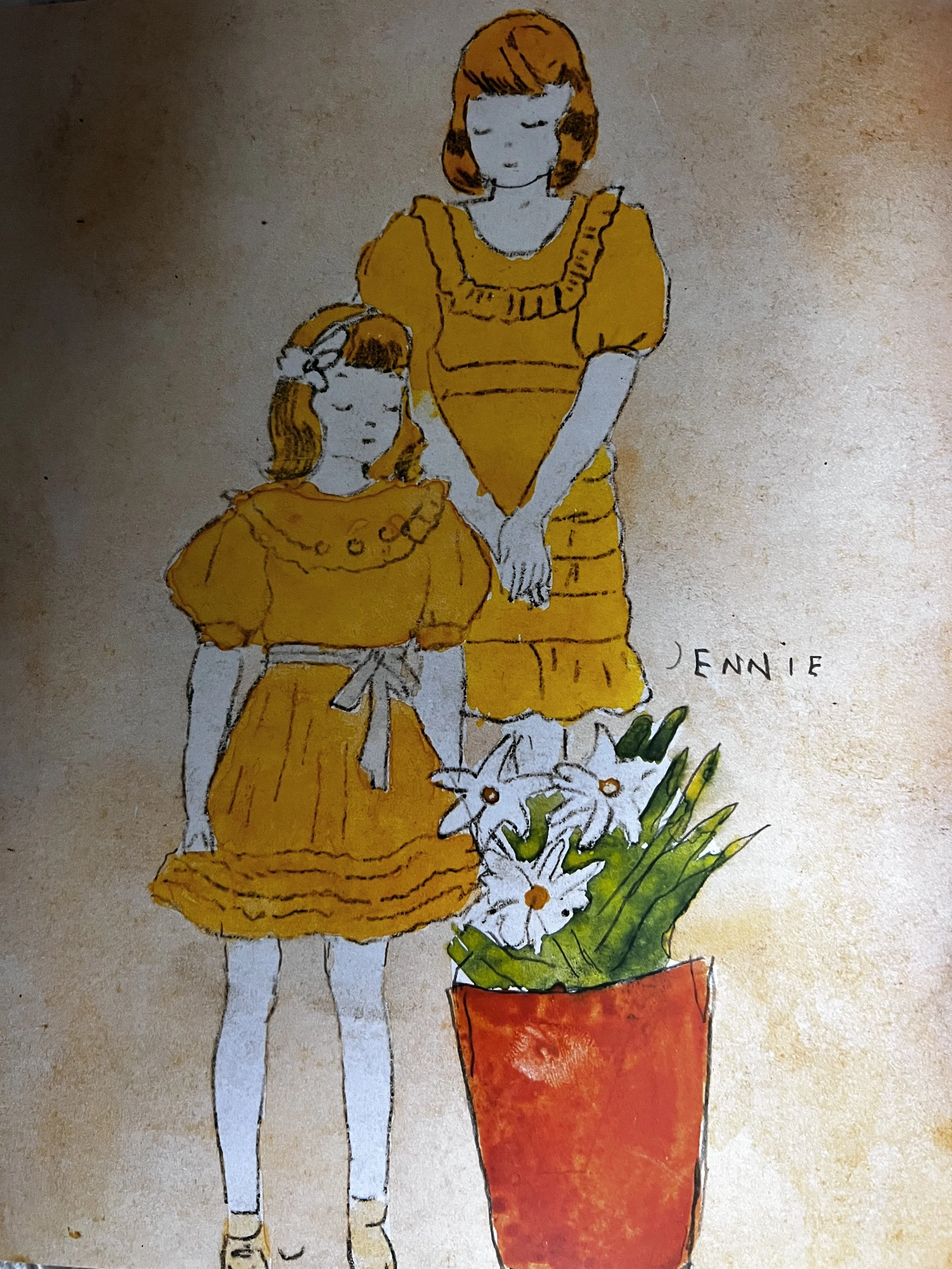
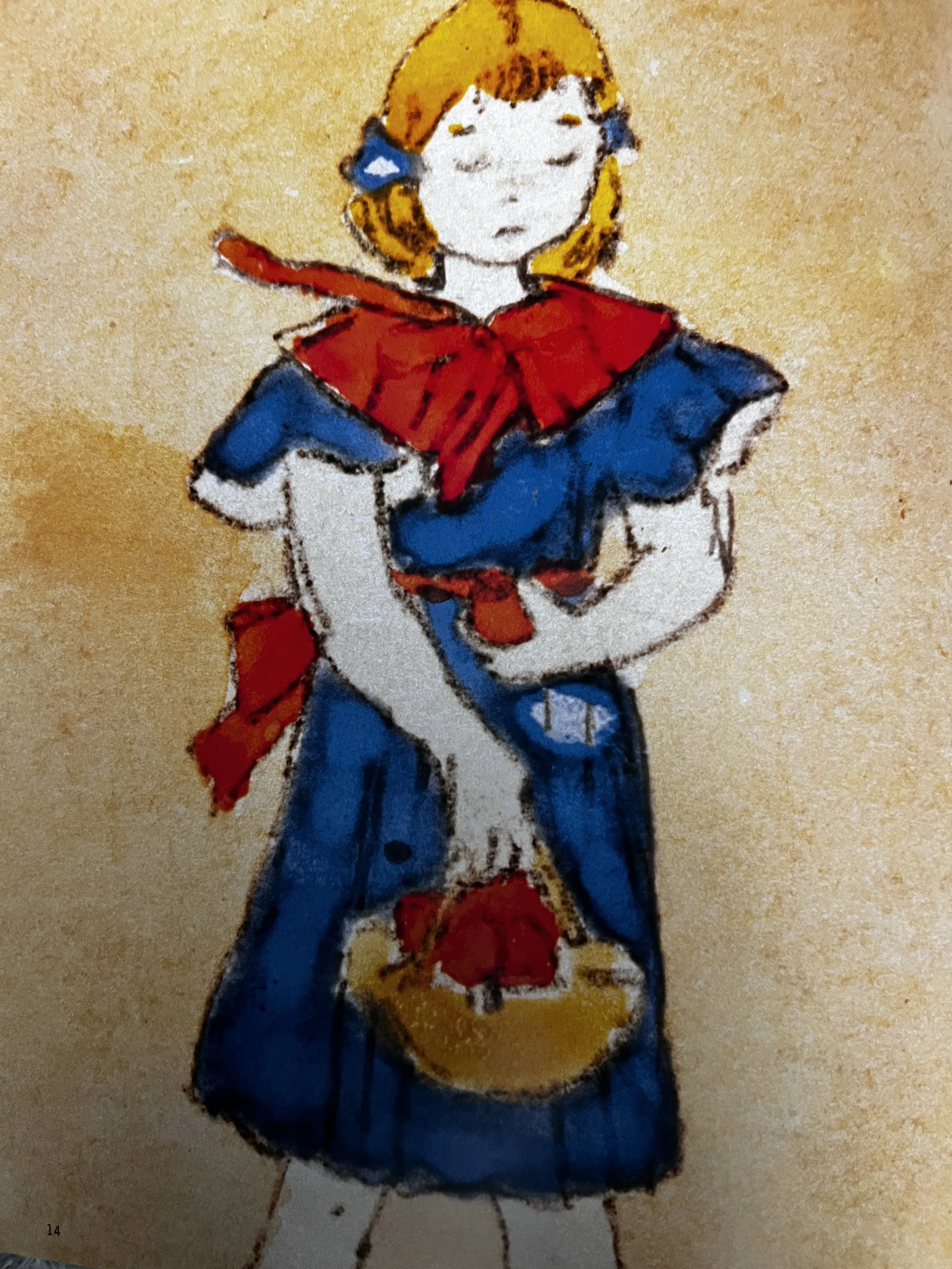
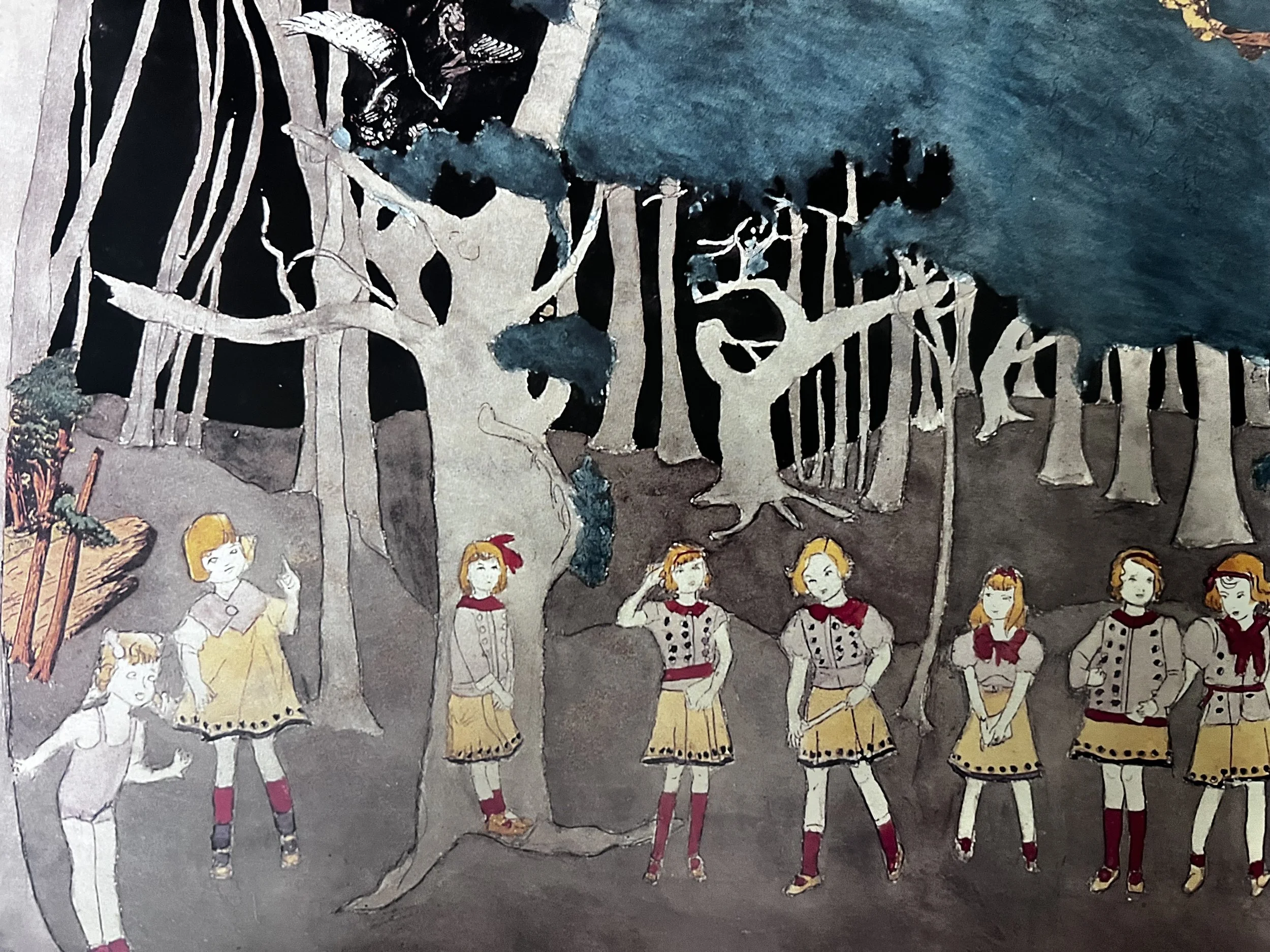
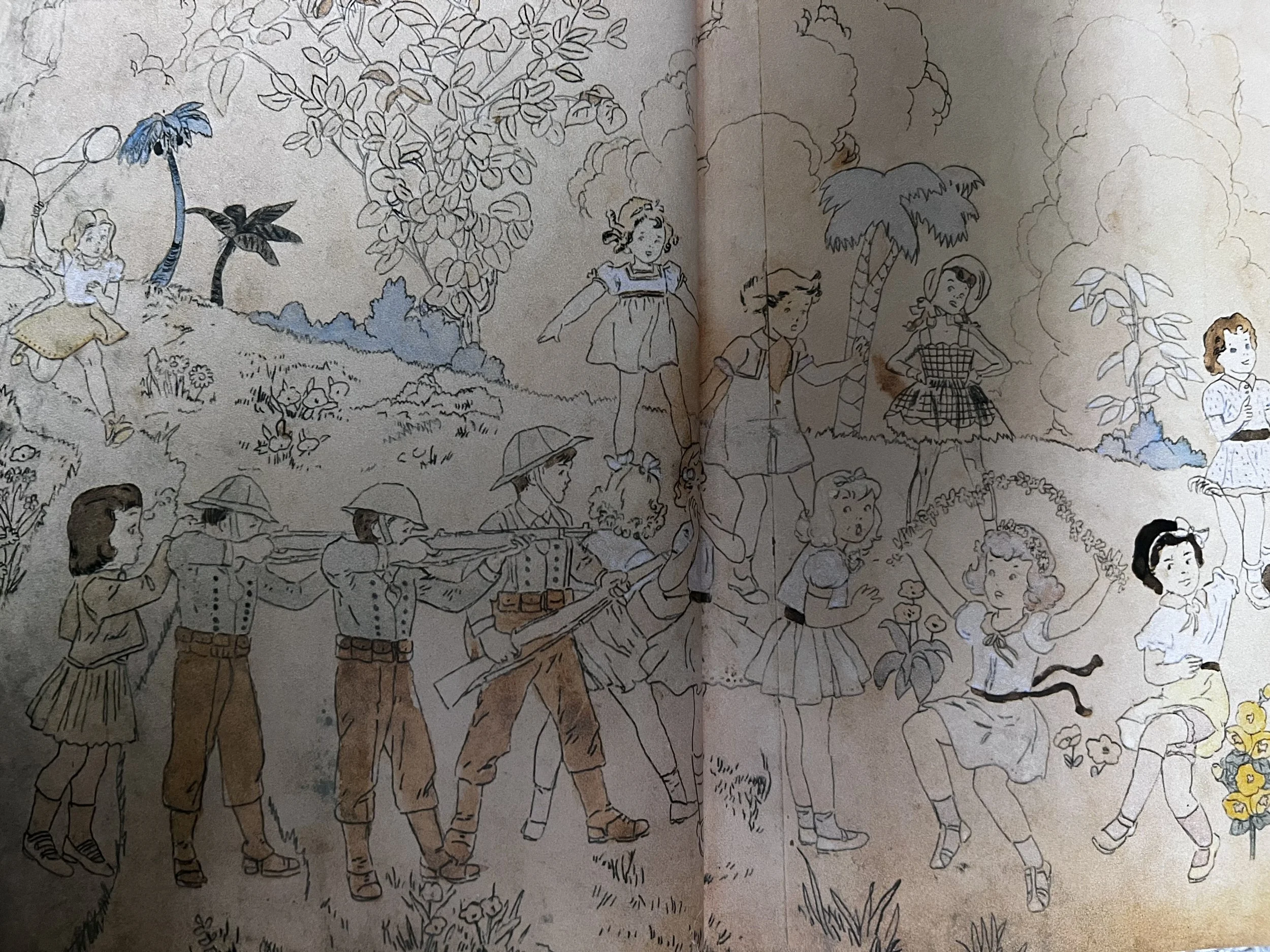
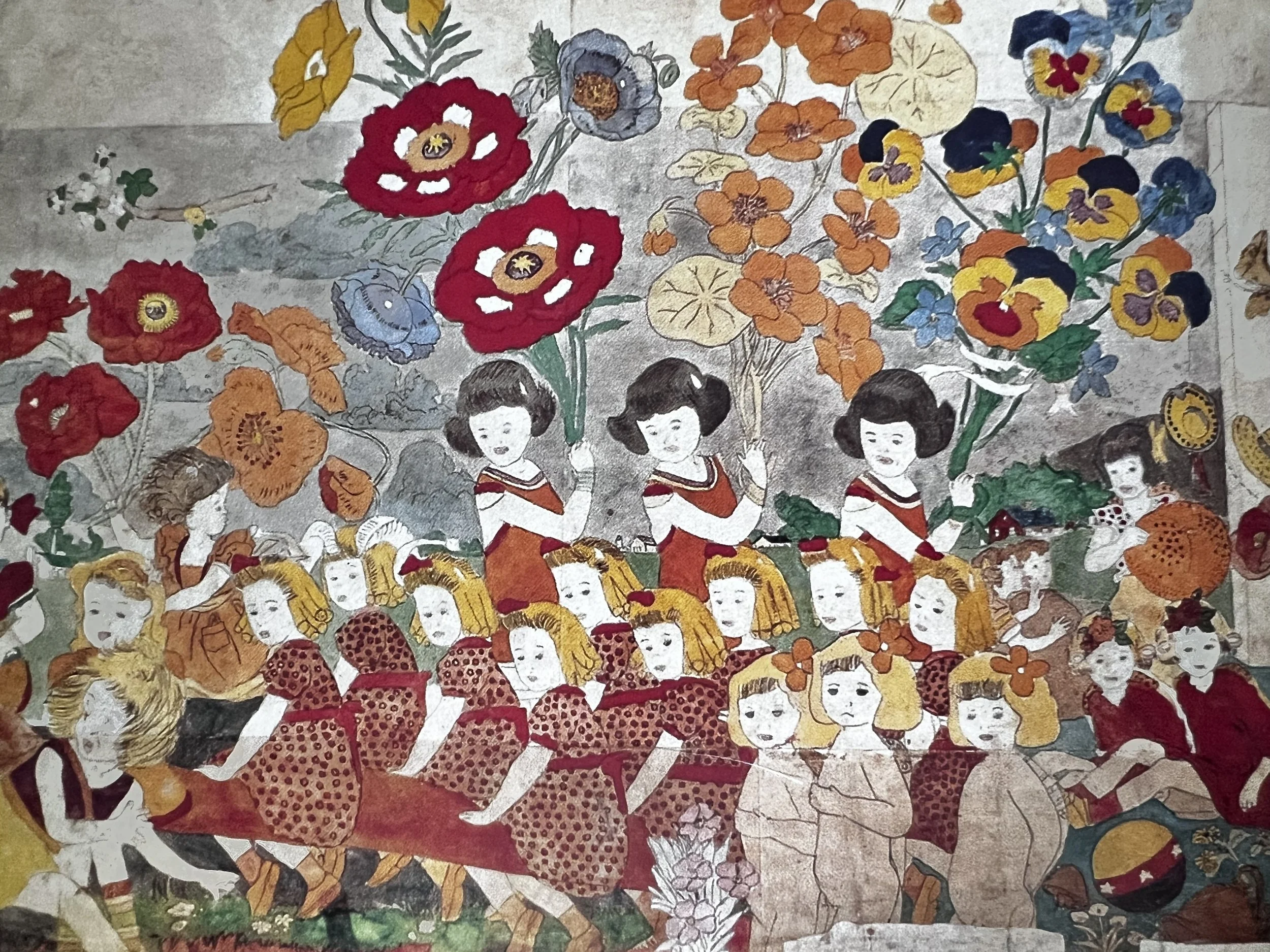
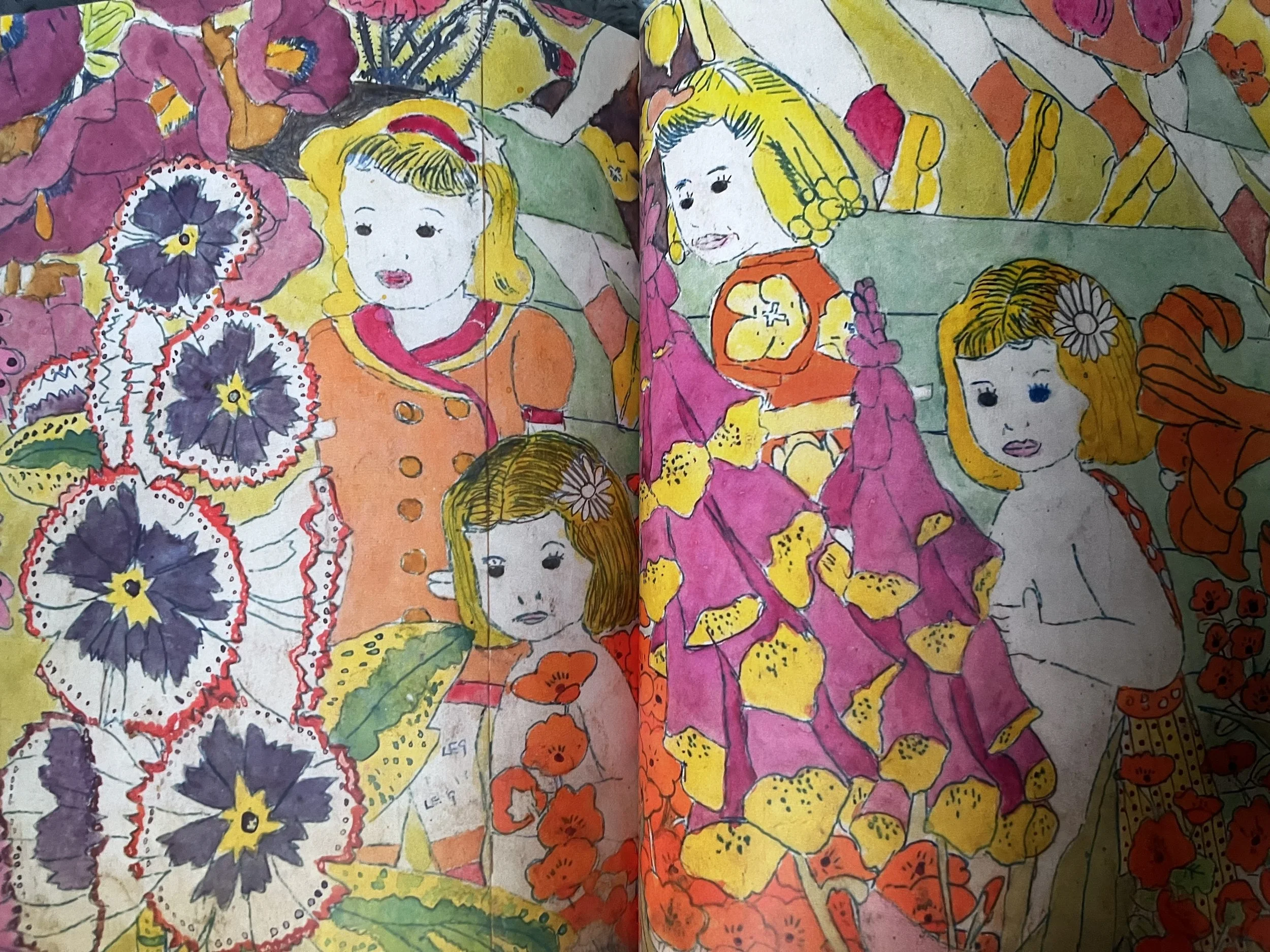
Because Darger lived on the margins of society without access to art supplies, he became quite resourceful. He salvaged discarded coloring books, magazine ads, comic strips, and newsprint, using carbon paper to transfer, enlarge, and repeat figures across vast watercolor landscapes.
Darger’s work has a striking visual style: sweet, innocent commercial figures straight from 1930s soap advertisements placed directly within turbulent, chaotic battlefields. This tension—often described as "deluxe chaos"—gives his work its singular, haunting power.
In the annals of art history, Darger’s visual instincts connect with major visionary traditions. Despite his lack of formal training, his intuitive command of color, rhythm, and scale elevates his scrolls to the level of monumental history painting.
Conclusion
Henry Darger’s legacy remains complex and unclassifiable. What’s the purpose of artistic creation? Can art serve as pure psychological survival? Can beauty exist alongside profound human pain?
popJellyNYC honors the extraordinary resilience of a forgotten soul. Out of absolute solitude and grief, Darger built a universe where innocence is ultimately triumphant: inherently incorruptible in its essence, even when it’s physically violated or destroyed. To be a survivor means distinguishing the difference between the body and the core identity:
Forge your own paths outside mainstream structures.