Greg Simmons II
Portrait Of An Artist
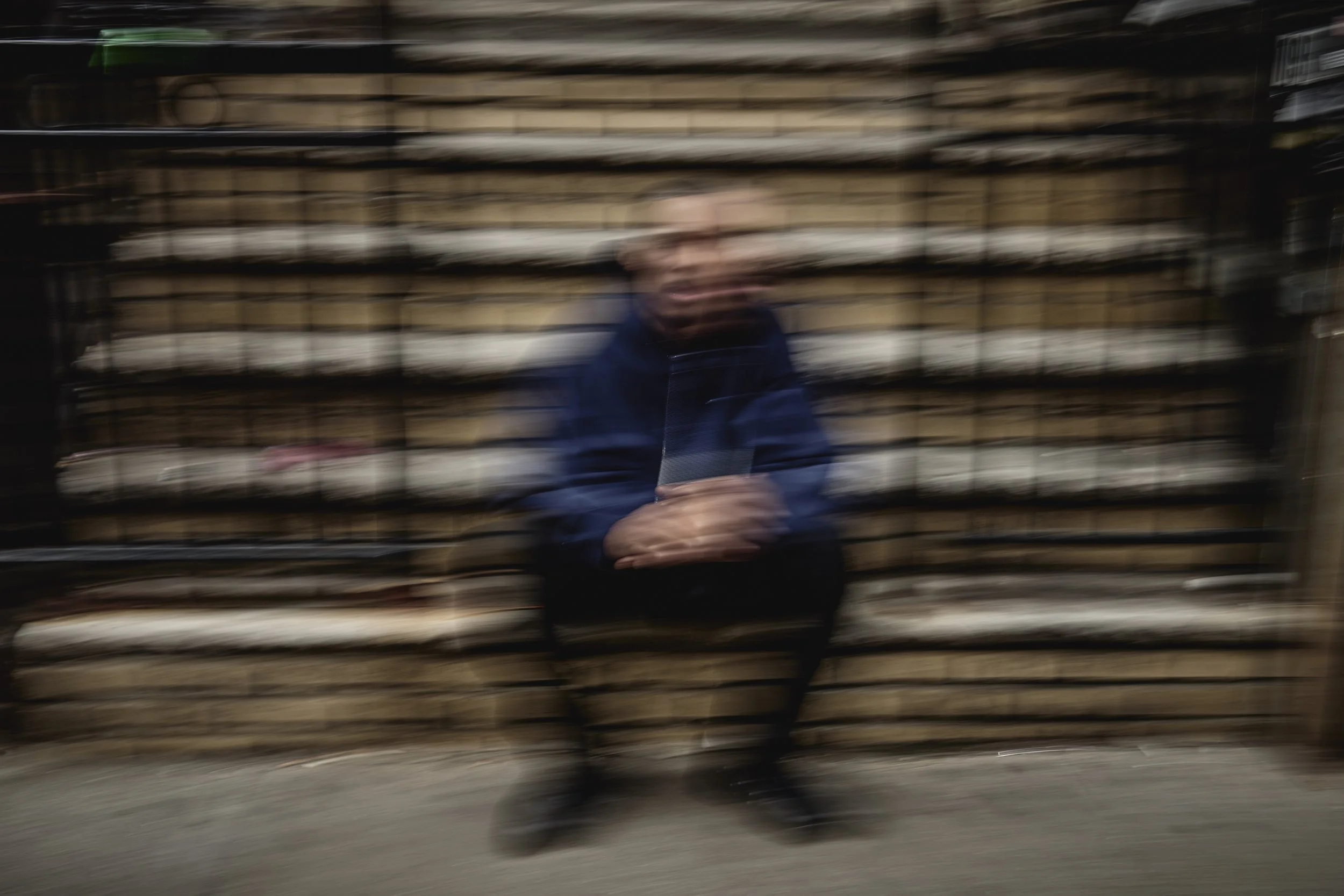
Photograph by Giovanni Reda @giovannireda
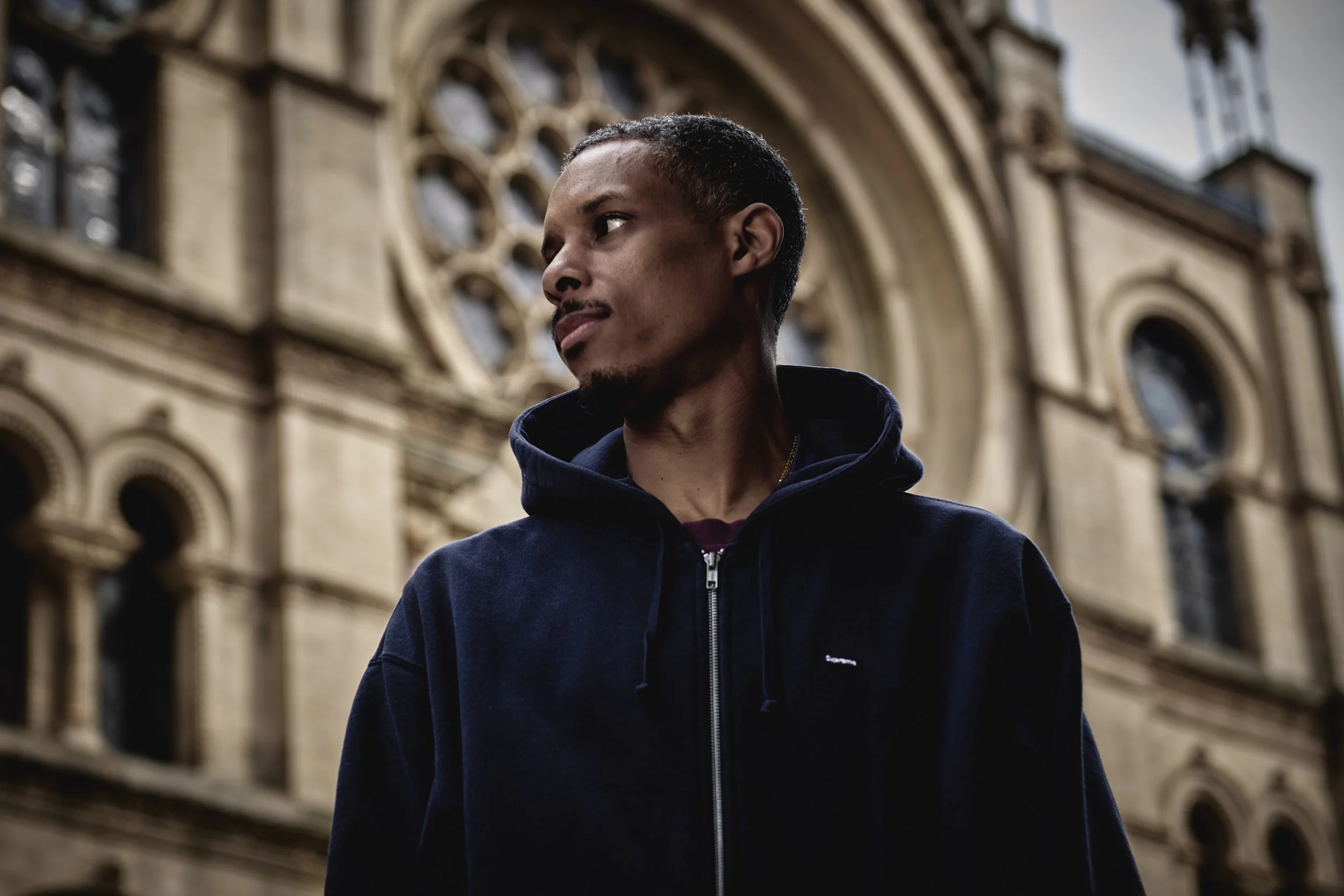
Photograph by Giovanni Reda @giovannireda
Greg Simmons (@g_simmonsart) is a visual record-keeper of everyday moments, of a world shaped as much by memory as by what memory omits. With intentional arrangement and stylistic choices, he disrupts conventional perceptions of Black people and urban spaces. Simmons shines a light on what society so often overlooks: stripped-away joy, agency, community care, cultural creation, and the rich texture of daily life outside of crisis.
He dismantles the reductive lenses of media and urban sociology—whether it's The Deficit, which reduces urban life solely to struggle and trauma, or The Hyper-Triumphant, which celebrates only those who "escape" their environment through exceptional resilience.
Simmons uses a sophisticated visual syntax to break free from linear storytelling. The figures in his drawings and paintings represent a living, multi-layered tapestry of history, culture, and humanity, asserting themselves far beyond any single monolithic trope.
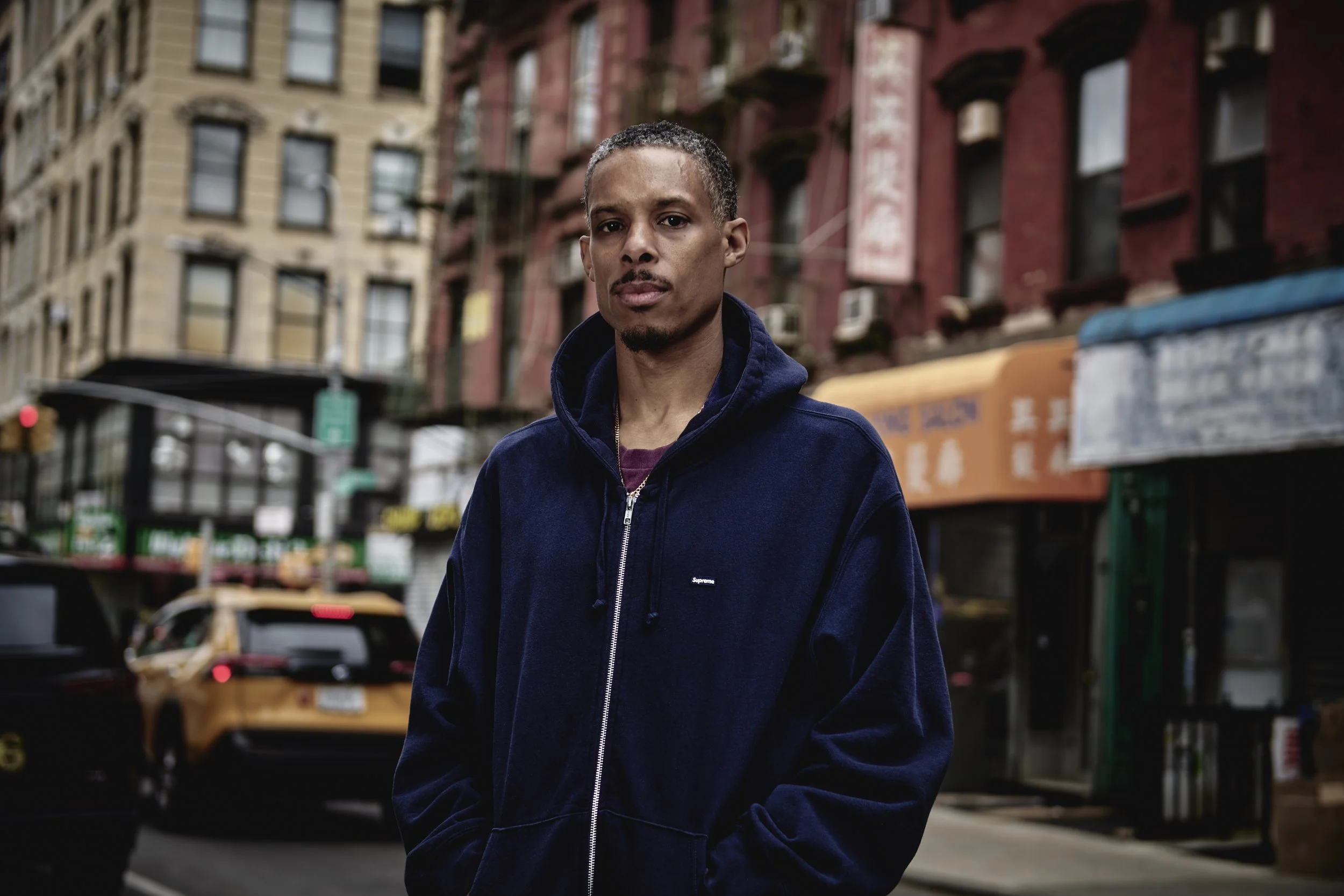
Photograph by Giovanni Reda @giovannireda
Reductive vs. Complex
Art and visual culture remain inundated with subtle as well as overt prejudice. Reductive framing in art often relies on high-angle shots looking down on individuals to render them small or vulnerable, or tight, restrictive framing that isolates subjects from their community.
This reductive style also uses muted, desaturated tones, harsh high-contrast lighting, or dark, gritty filters that signal decay and perpetual misery. In these treatments, the focus remains heavily biased toward crumbling infrastructure and vacant lots—using the physical environment solely as a symbol of poverty or conflict.
The Gaze
By contrast, Simmons’ visual syntax adroitly uses eye-level or low-angle framing to celebrate the people he draws, granting them immediate dignity and presence.
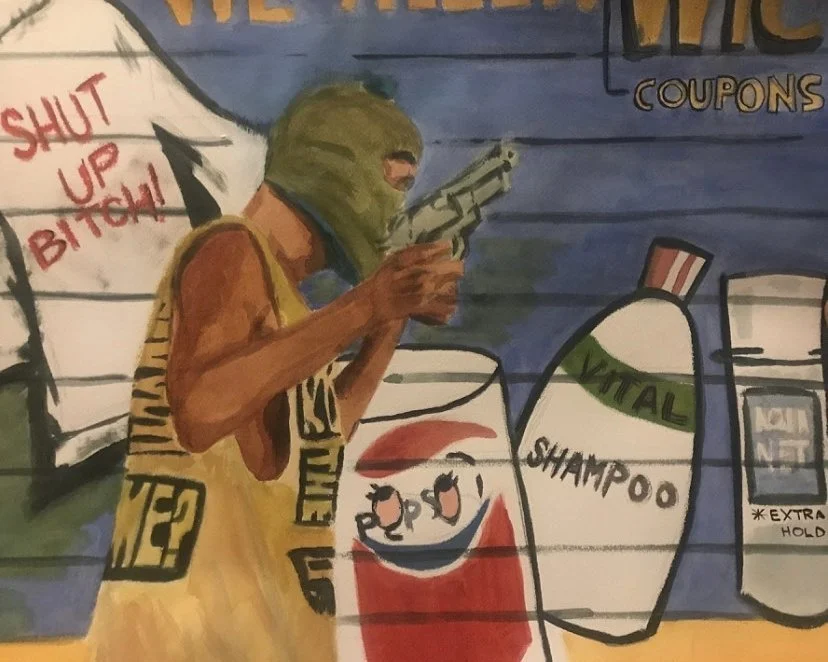
His wide compositions situate individuals in relation to vibrant streetscapes, block parties, or domestic spaces, highlighting community rather than isolation. His use of warm, rich color palettes, natural golden-hour lighting, and vivid saturation emphasizes the humor, warmth, and domesticity within the urban grid.
Multiple Narratives Unfold At Once
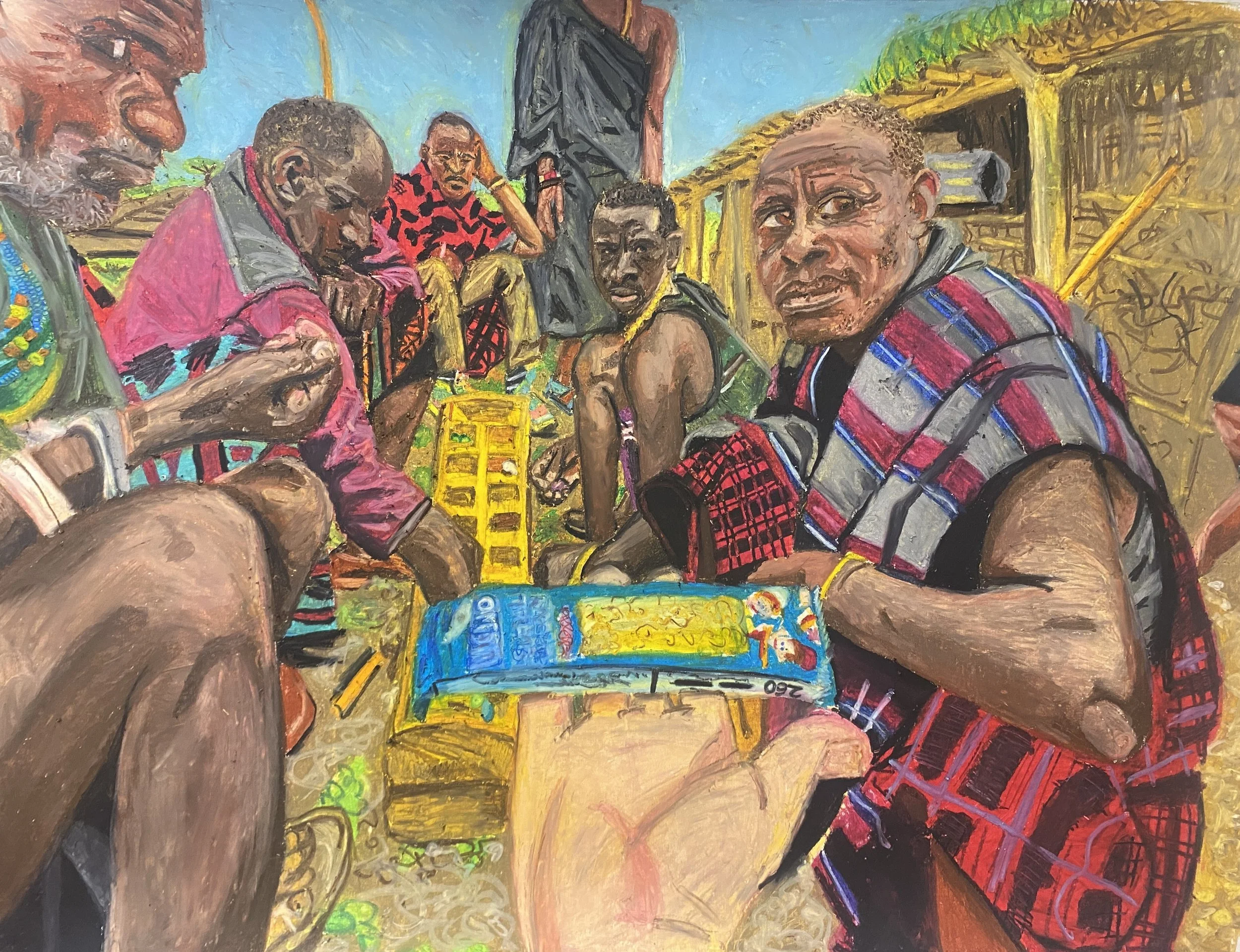
“Strange Fruit (Rice Krispy Treats)” 36” x 48” oil pastel on canvas paper 2K22
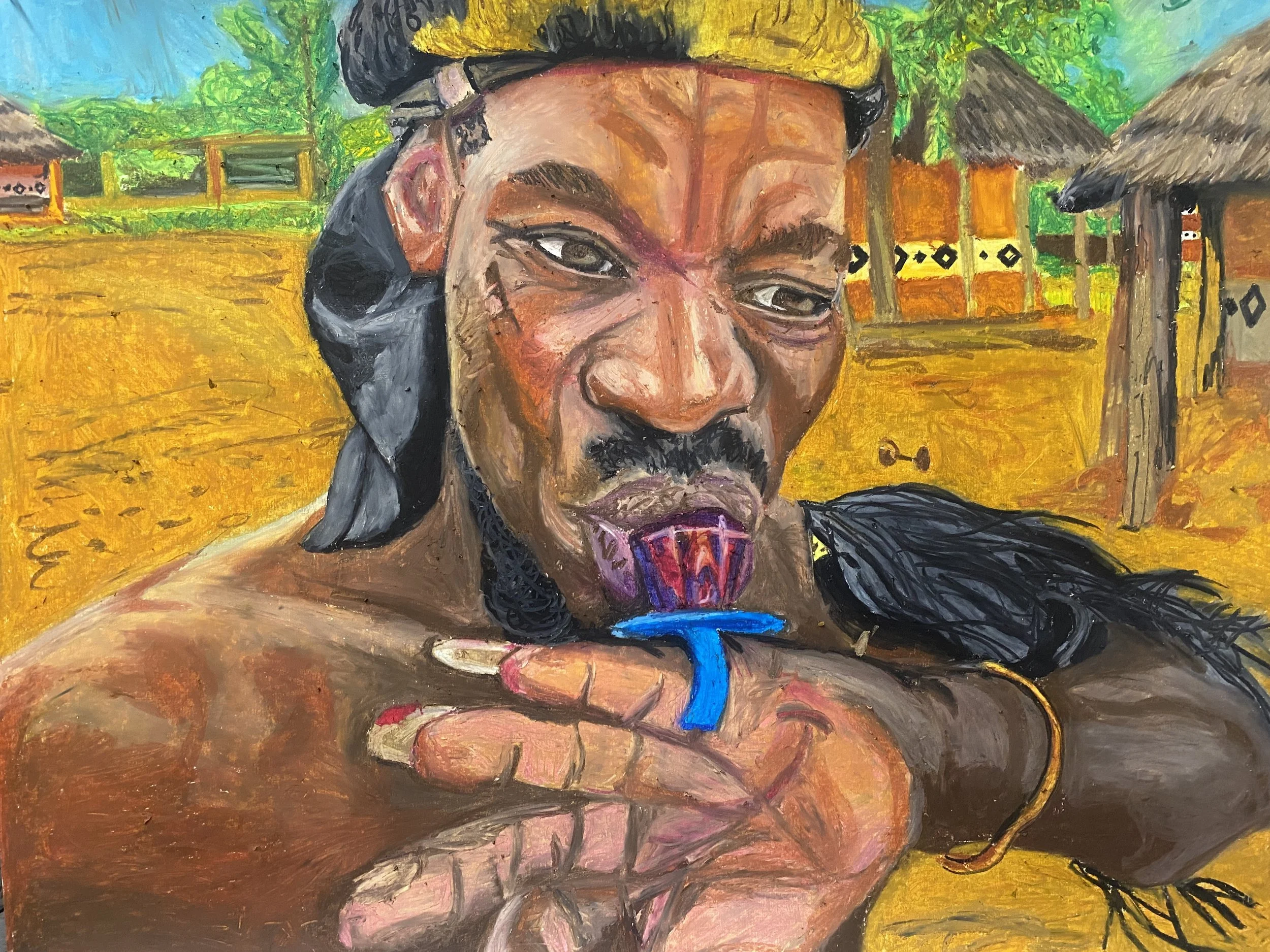
“Strange Fruit (Ring Pop)” 36” x 48” oil pastel on canvas paper 2K22
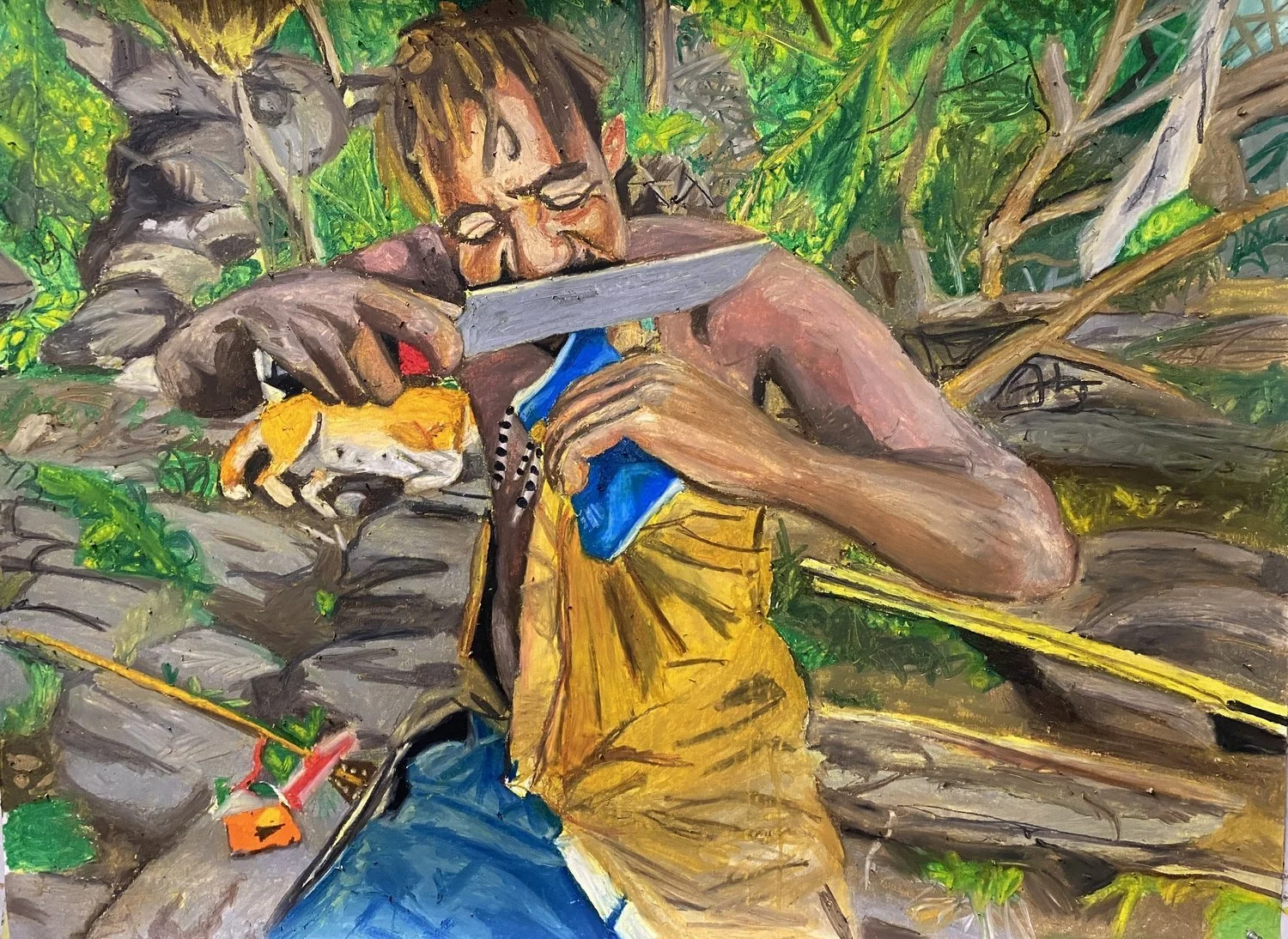
“Untitled”
Colonial Sweeteners
In this series, Simmons stage-manages a poignant juxtaposition: Indigenous figures in traditional attire navigating daily life, interrupted by hands extending hyper-processed, plastic-wrapped Western candy—from Ring Pops to store-bought sweets.
The commentary is subtly subversive rather than heavy-handed; the viewer is invited into the satire, but the joke is never at the expense of the people depicted. Instead, the target of the irony is the absurdity of globalized consumerism invading ancient cultural spaces, where synthetic commodities are offered up as tokens of modern intrusion.
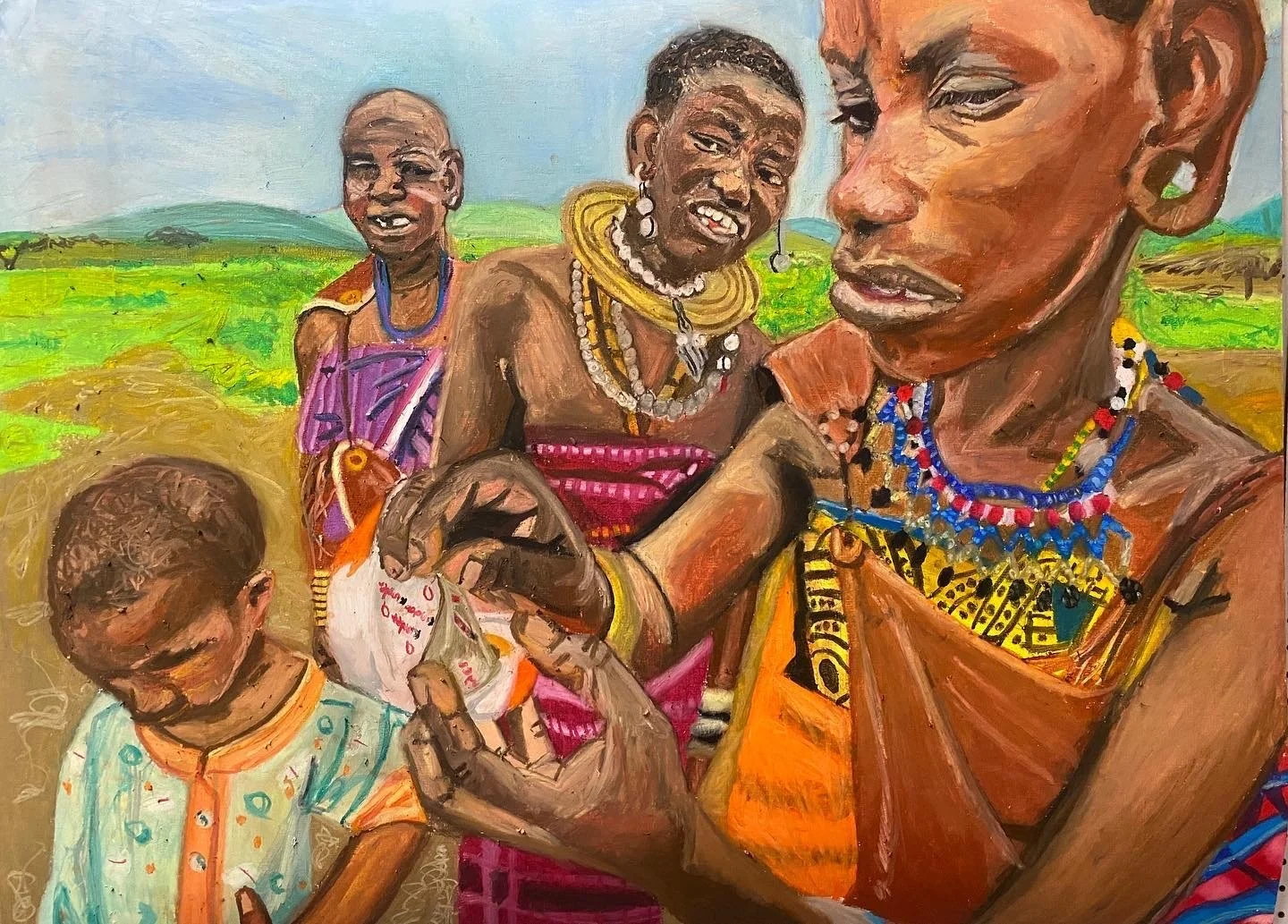
“Strange Fruit (Kinder Egg)” 36” x 48” oil pastel on canvas paper 2K22
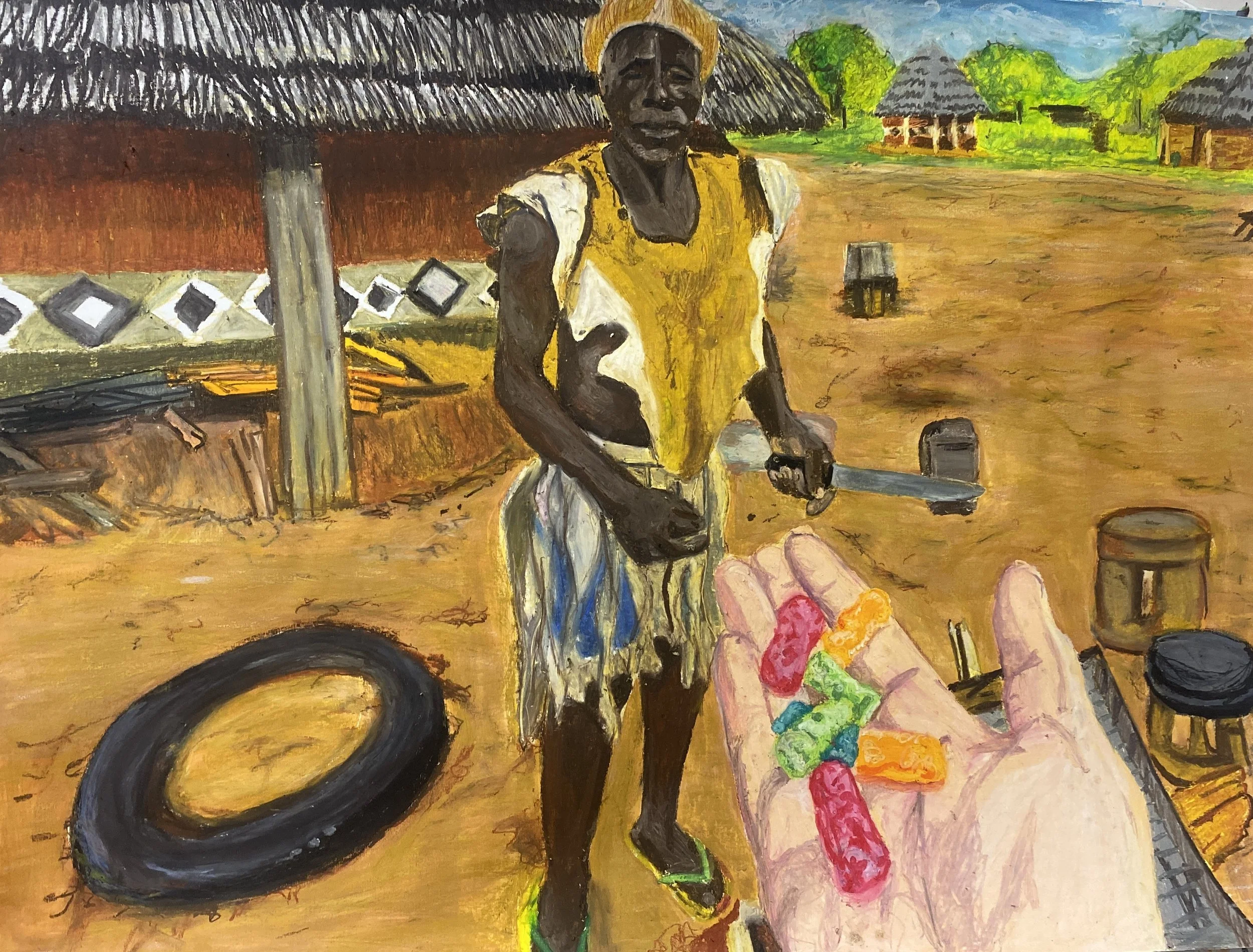
“Strange Fruit (Sour Patch Kids)” 36” x 48” oil pastel on canvas paper 2K22
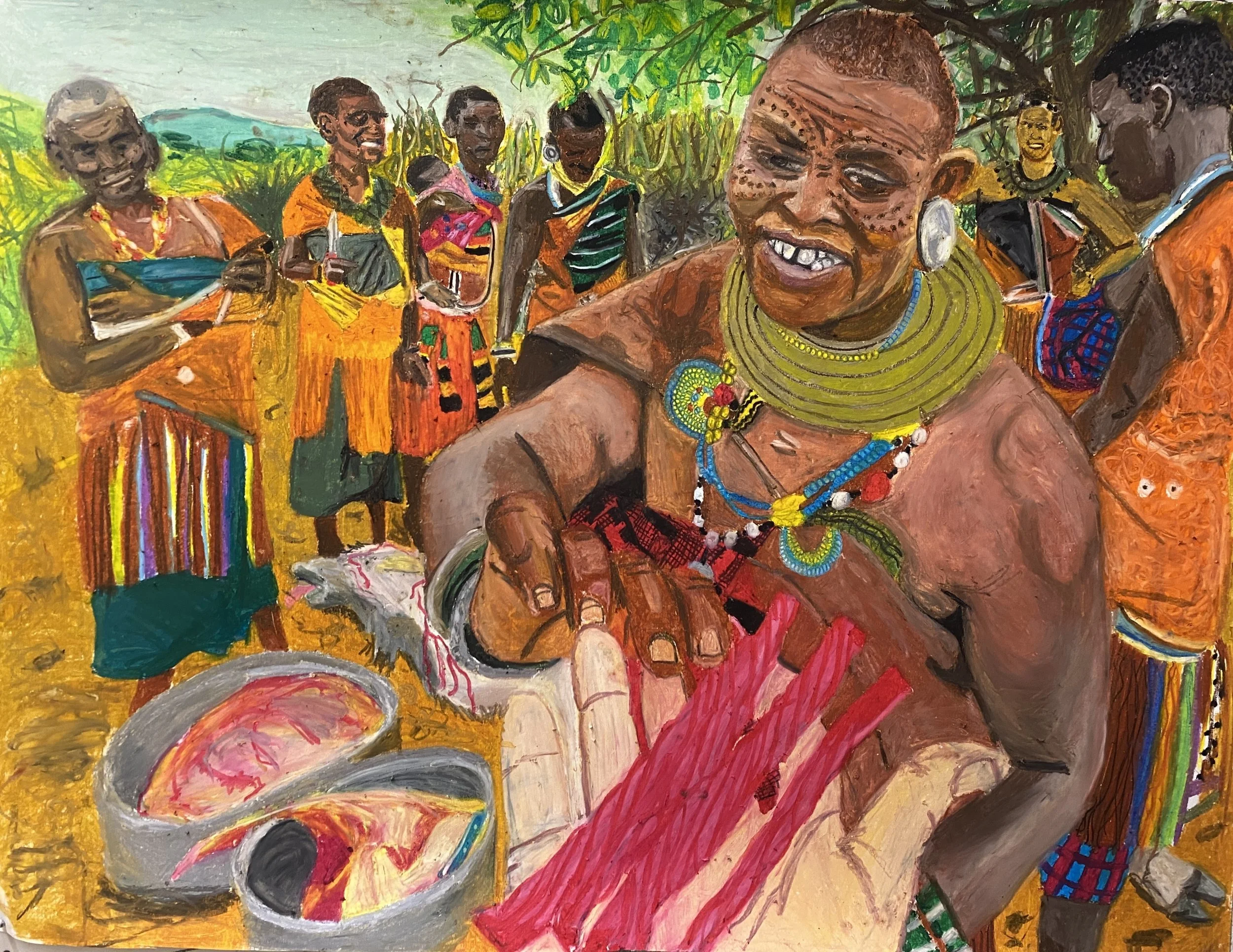
“Strange Fruit (Twizzler) ” 36” x 48” oil pastel on canvas paper 2K22
Portraits of Cultural Icons and Everyday People
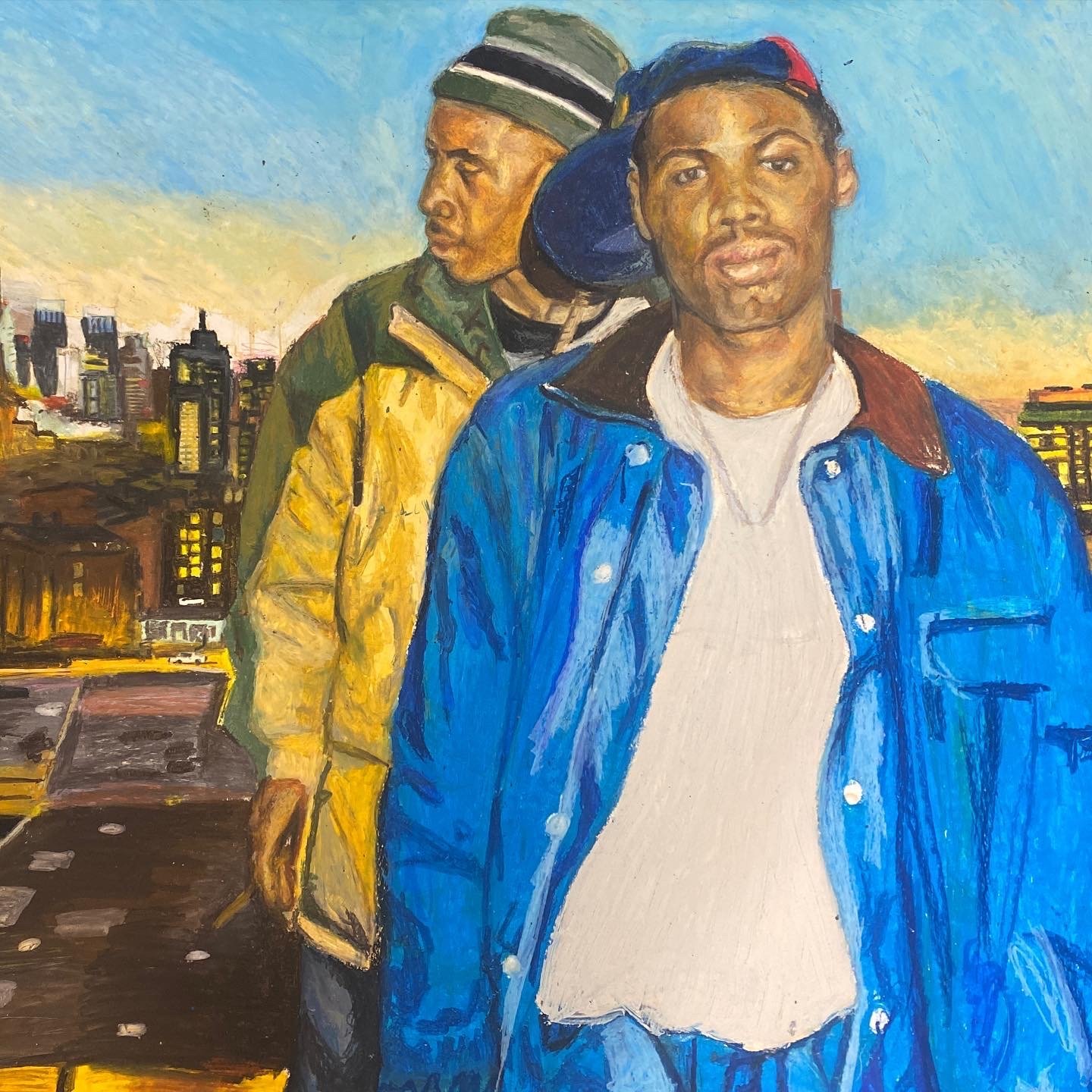
“QB’s Finest 2” 36” x 36” oil pastel on canvas on paper 2K22
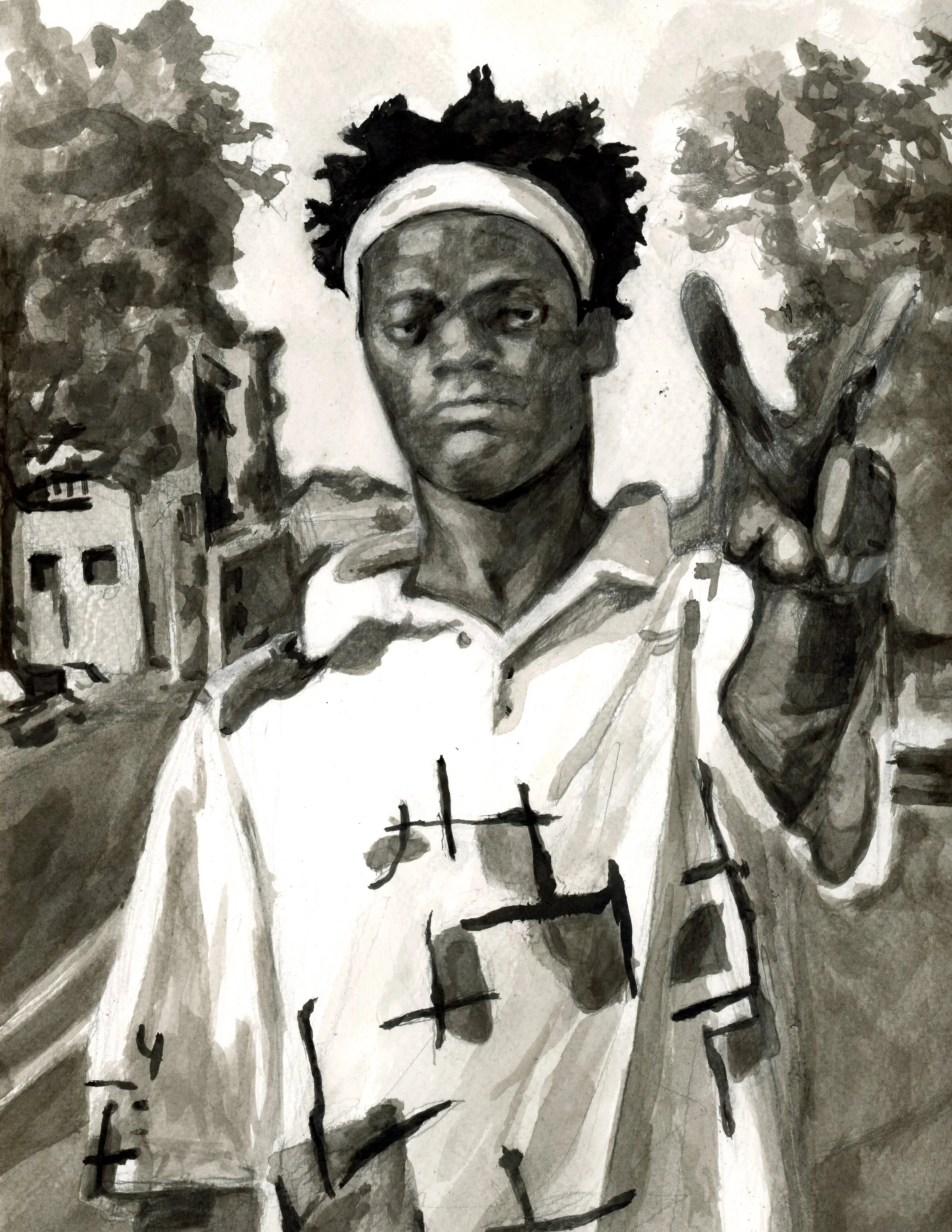
“Harold Hunter” 9” x 12” ink on watercolor paper 2K22
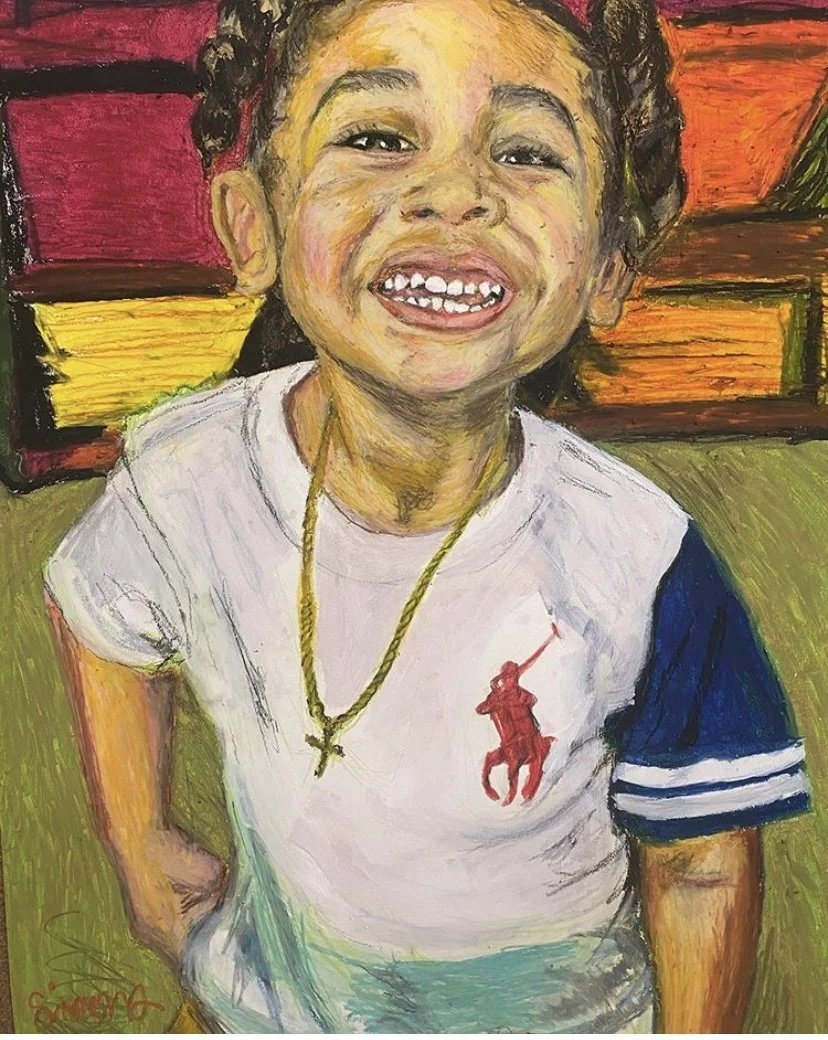
“Commissioned Piece 3” 24” x 36” oil pastel on canvas paper
In this series, Simmons flattens the hierarchy between public renown and local presence. He places cultural icons alongside everyday neighborhood figures with identical care and importance. Whether drawing recognizable figures or chronicling familiar faces from his community, Simmons avoids pedestal-building and caricature alike.
He engages each person intimately using rich palettes and tactile linework to emphasize individual character, quiet dignity, and self-determination—affirming that daily life holds as much historical weight as celebrity culture.
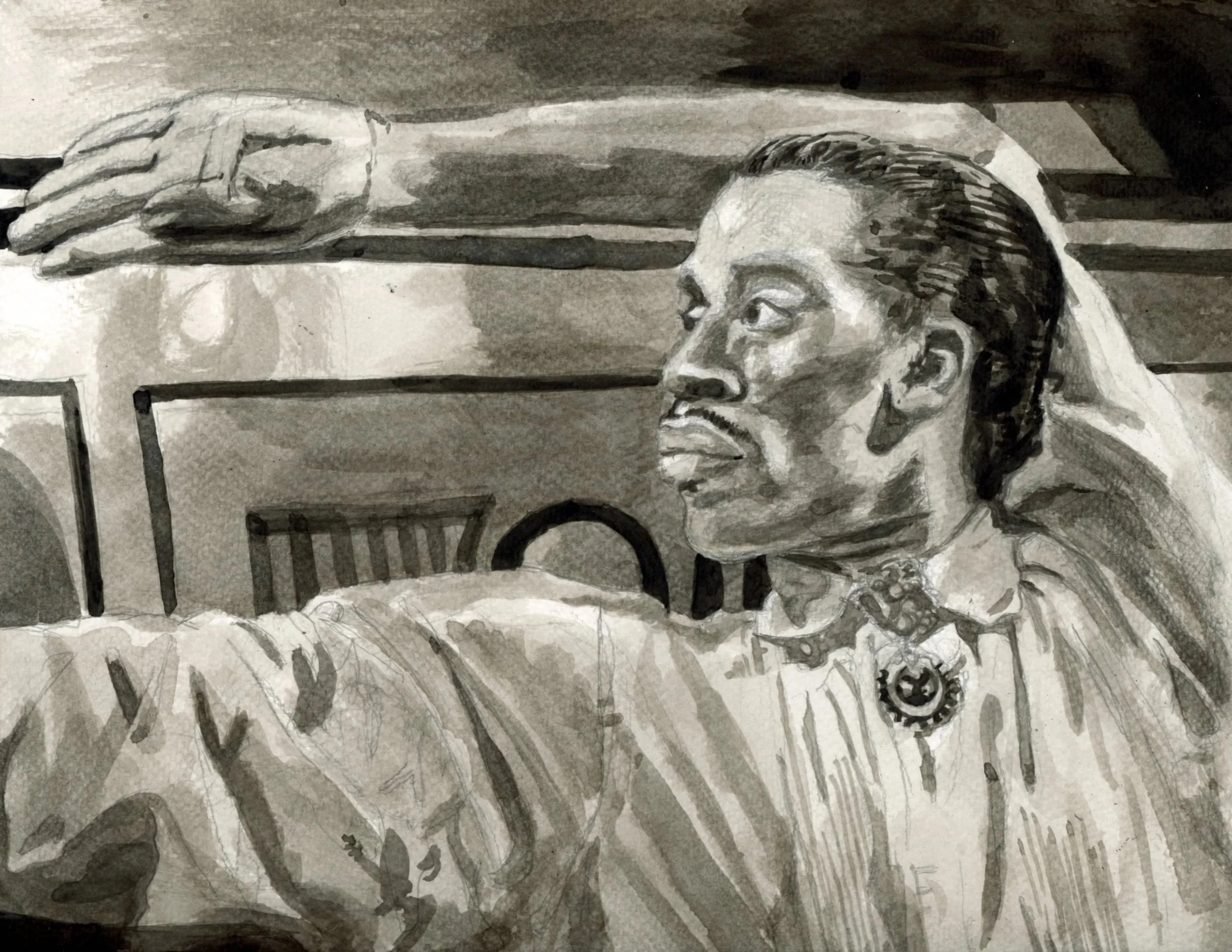
“Willie Ninja” 9” x 12” ink and pencil on watercolor paper
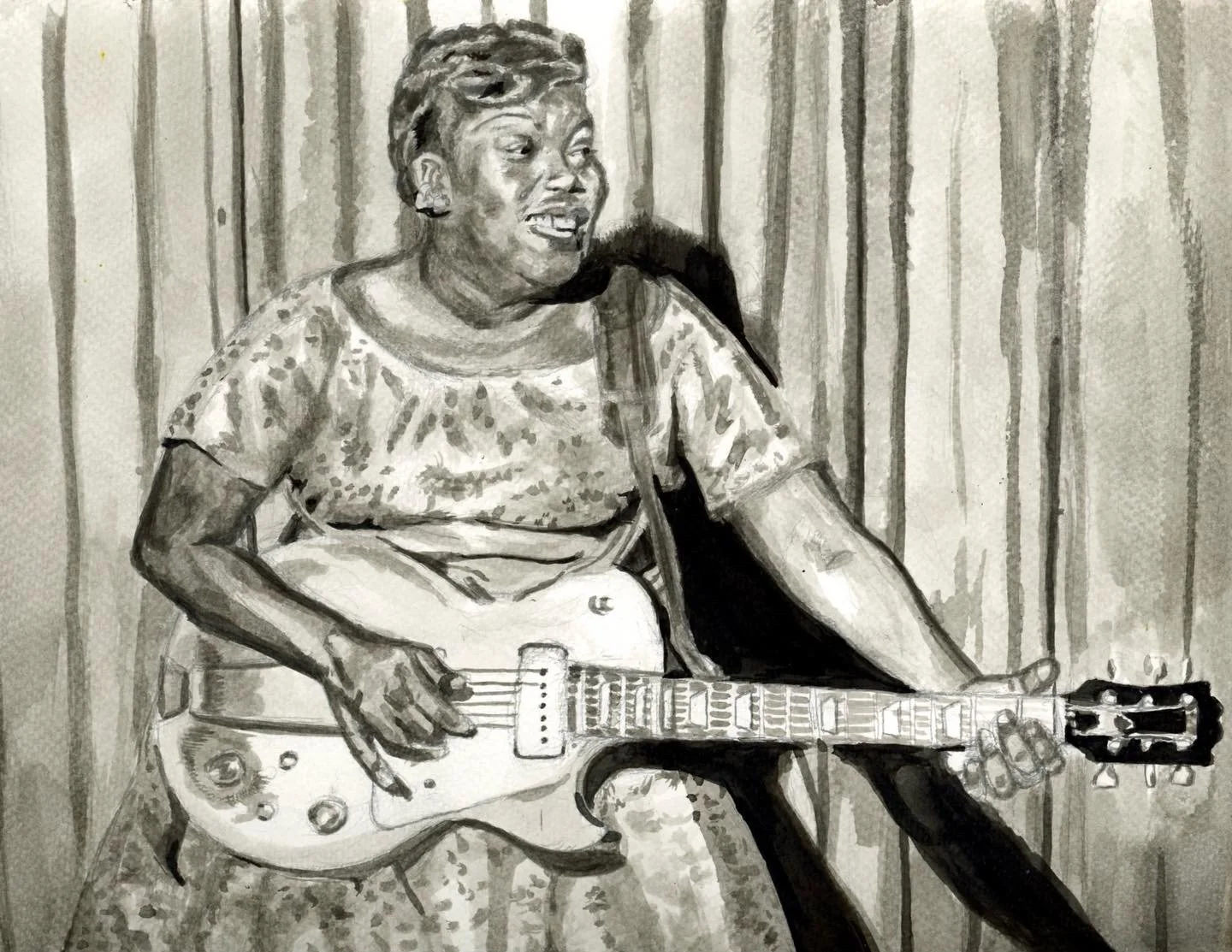
“Sister Rosetta Tharpe” 9” x 12” ink and pencil on canvas paper 2K22
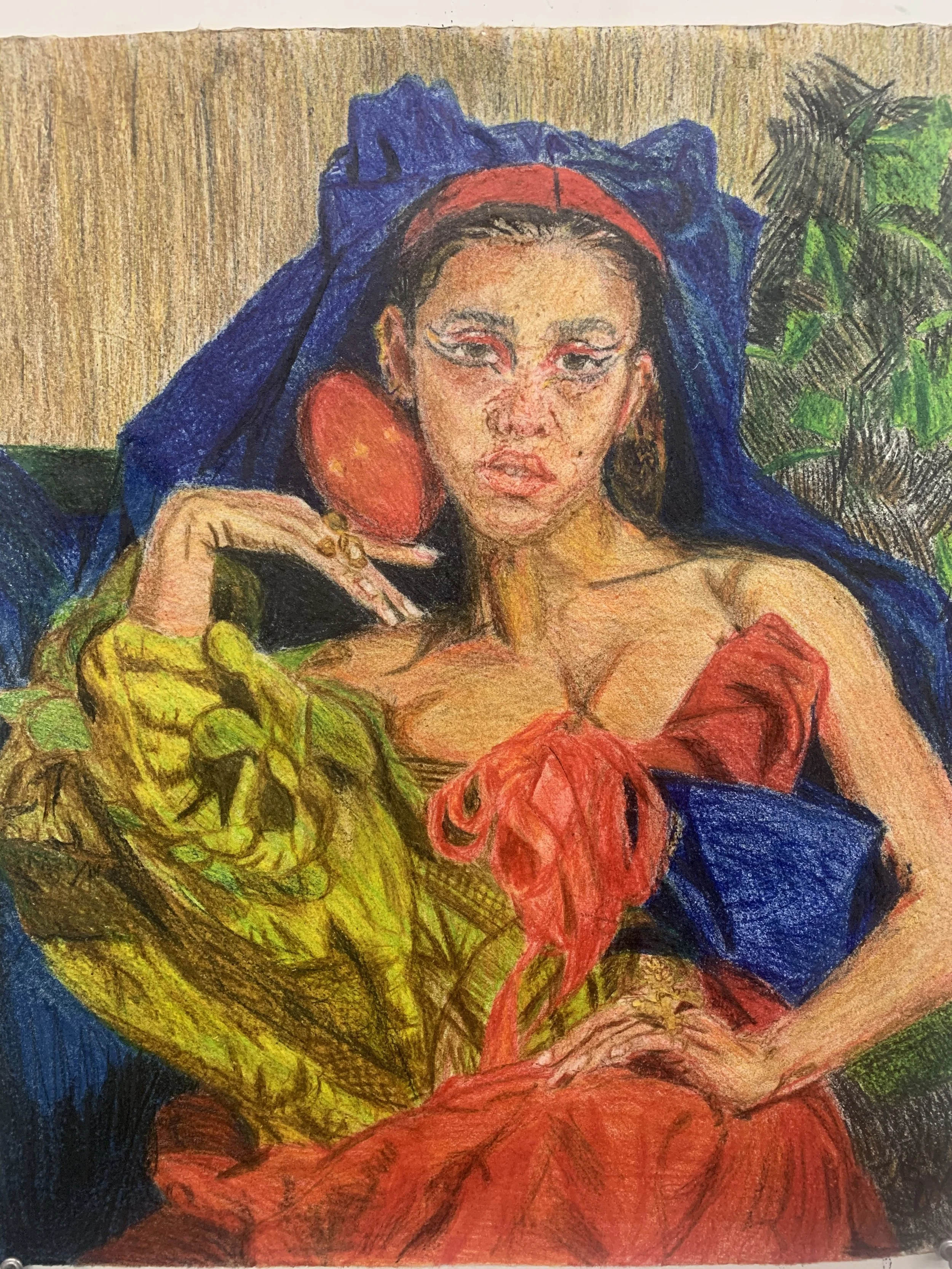
“FKA Twigz Lost on the train Christmas Eve” 2K19
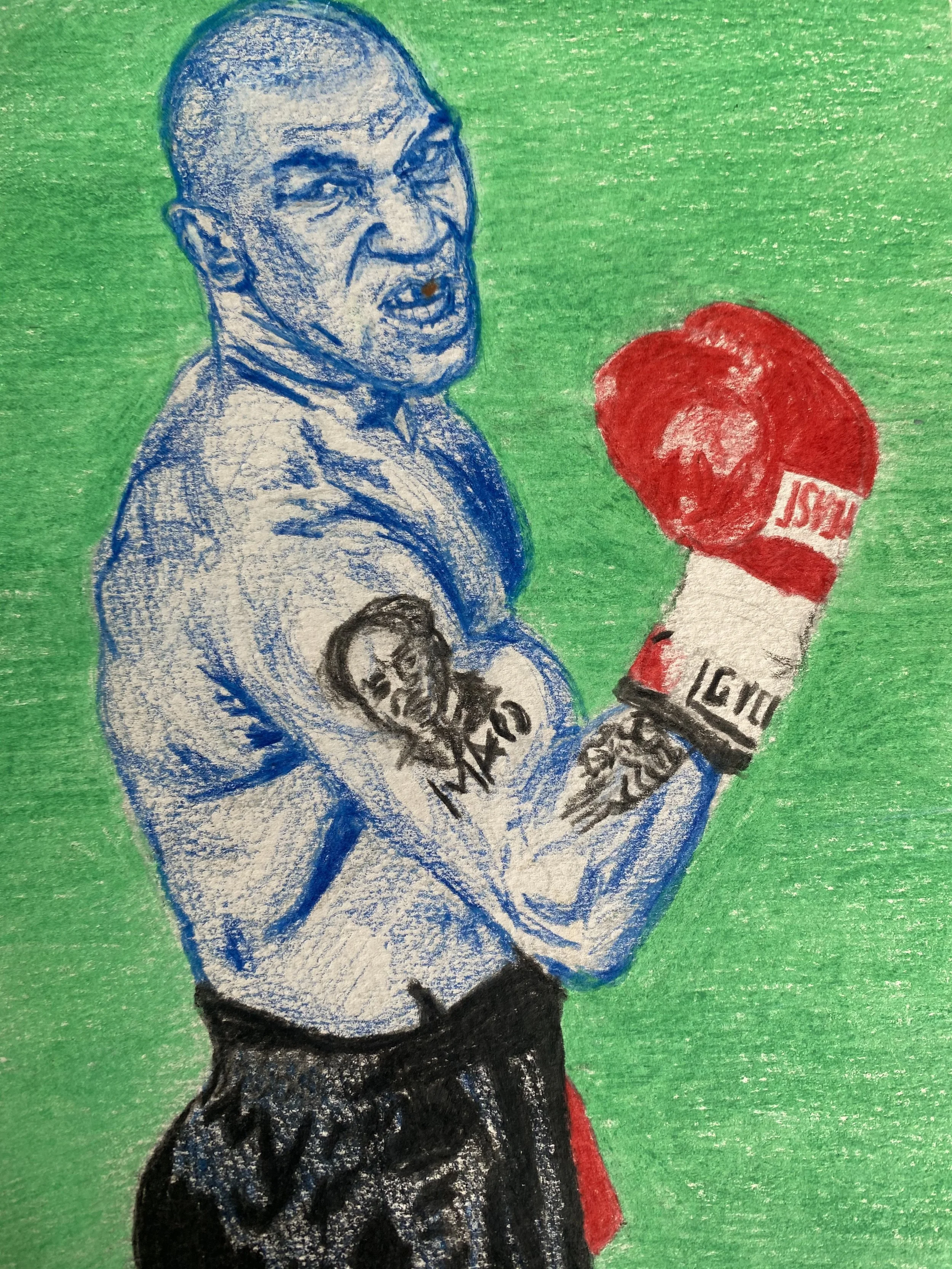
“Untitled”
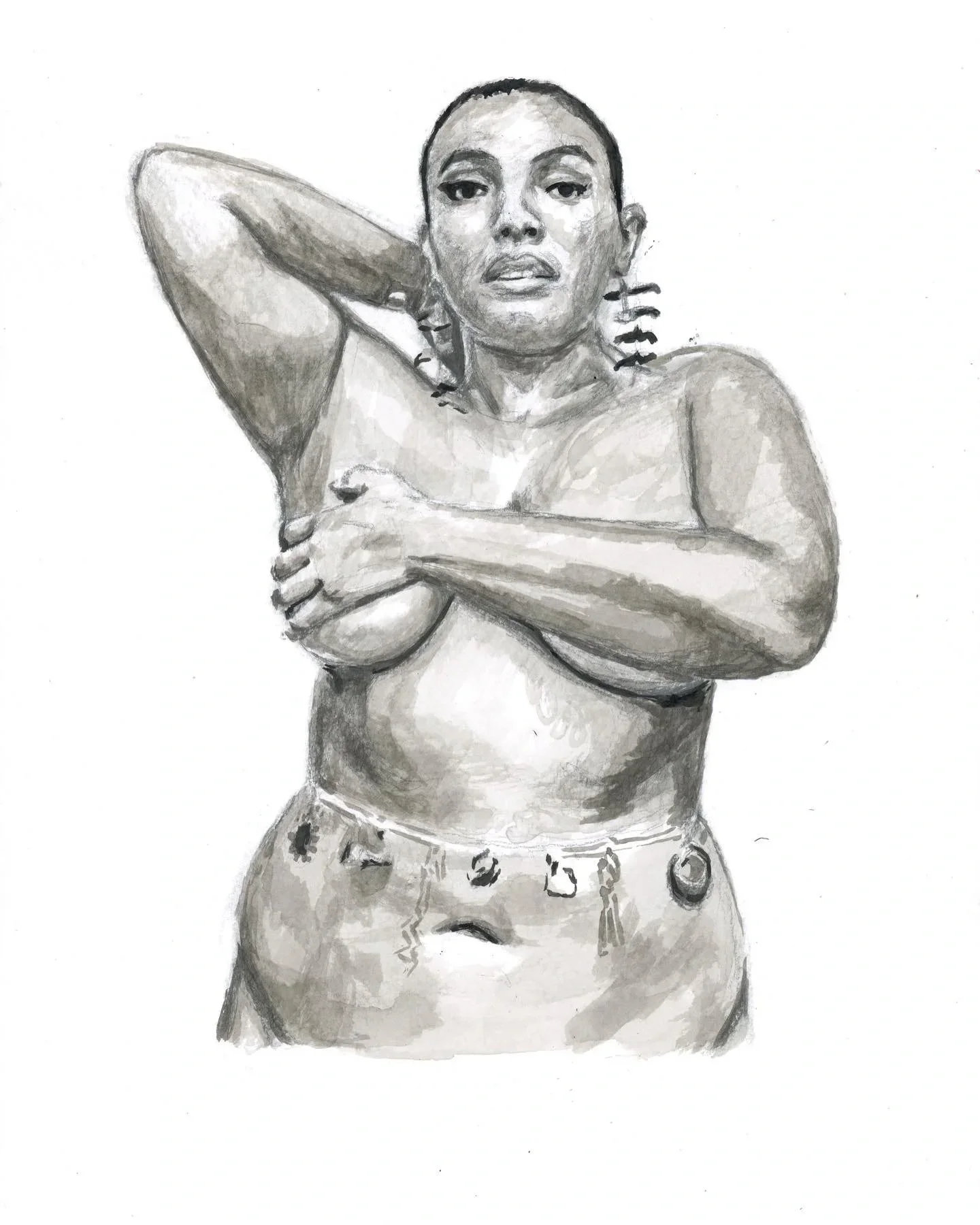
“Poloma” 9” x 12” ink and pencil on watercolor paper
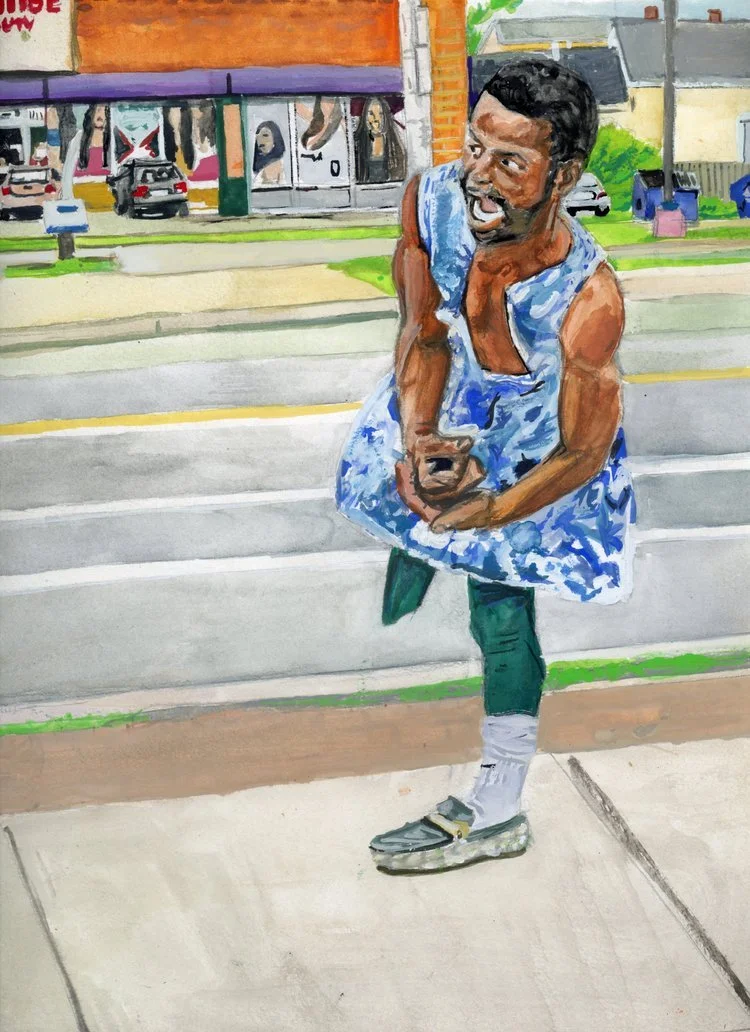
“Eastside Flip!” 9” x 12” gouache on watercolor paper 2K22
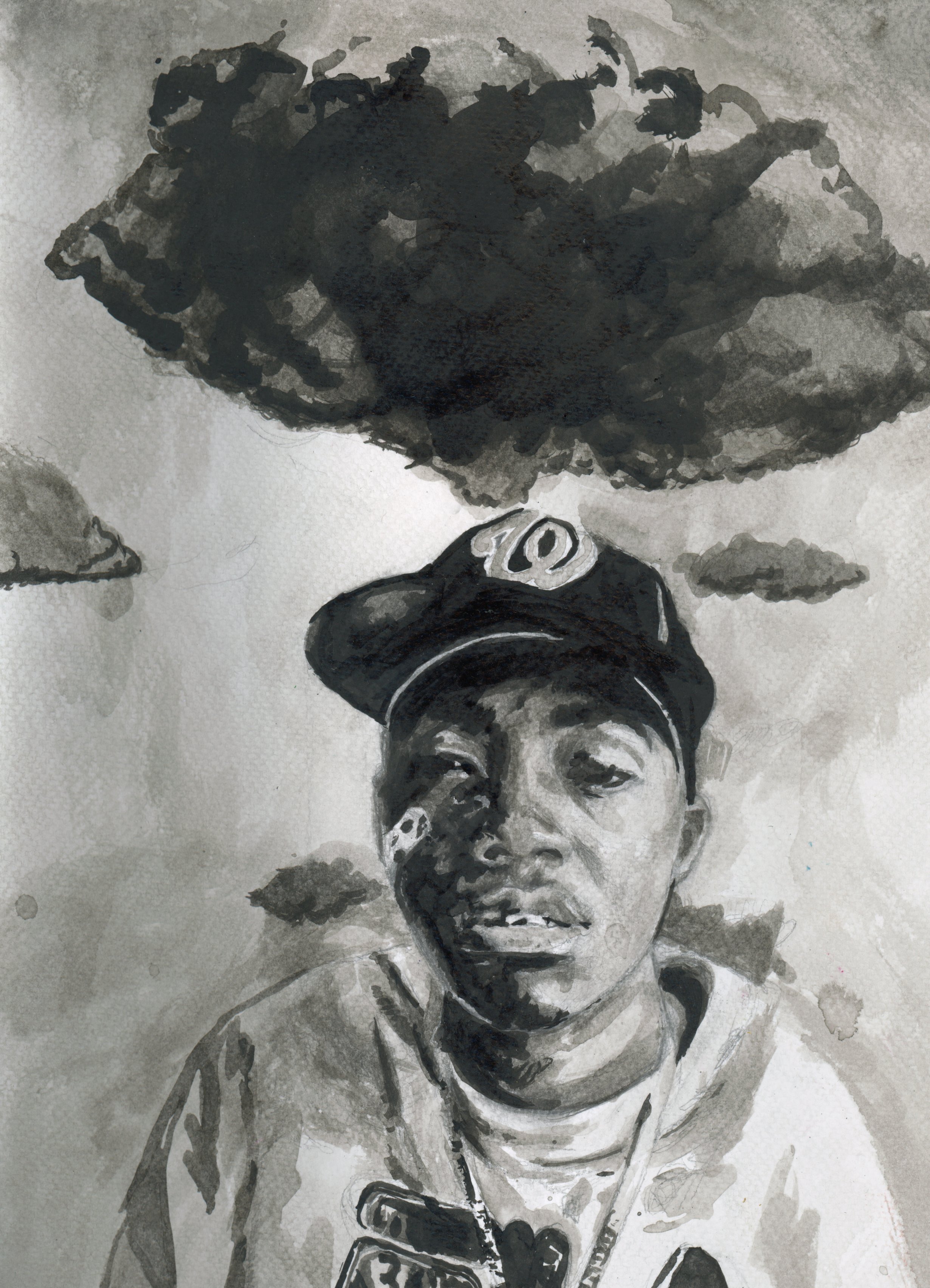
“I Need A New N***a For This Black Cloud To Follow” 9” x 12” ink and pencil on watercolor paper 2K22
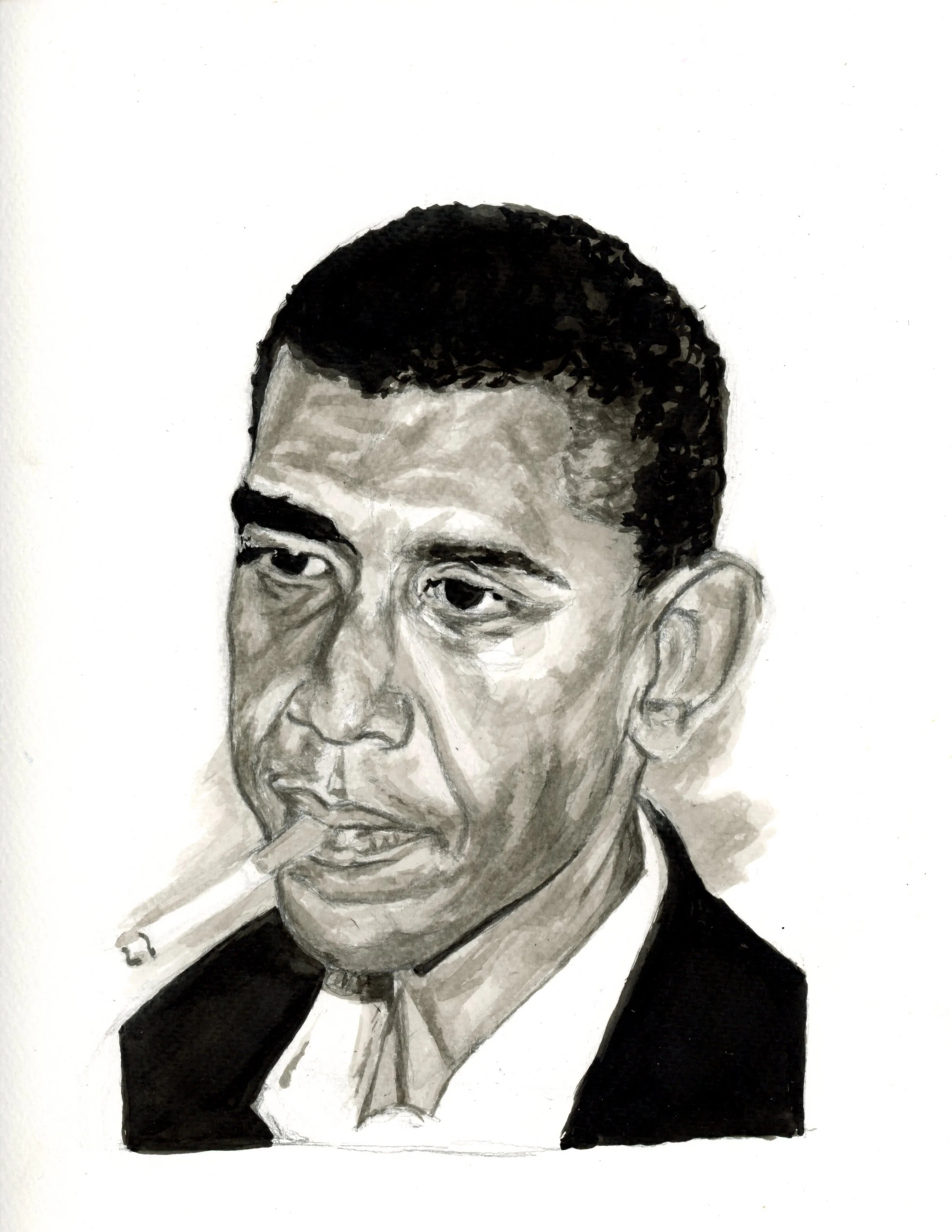
“Colt 44” 9”x12” ink & pencil, watercolor paper
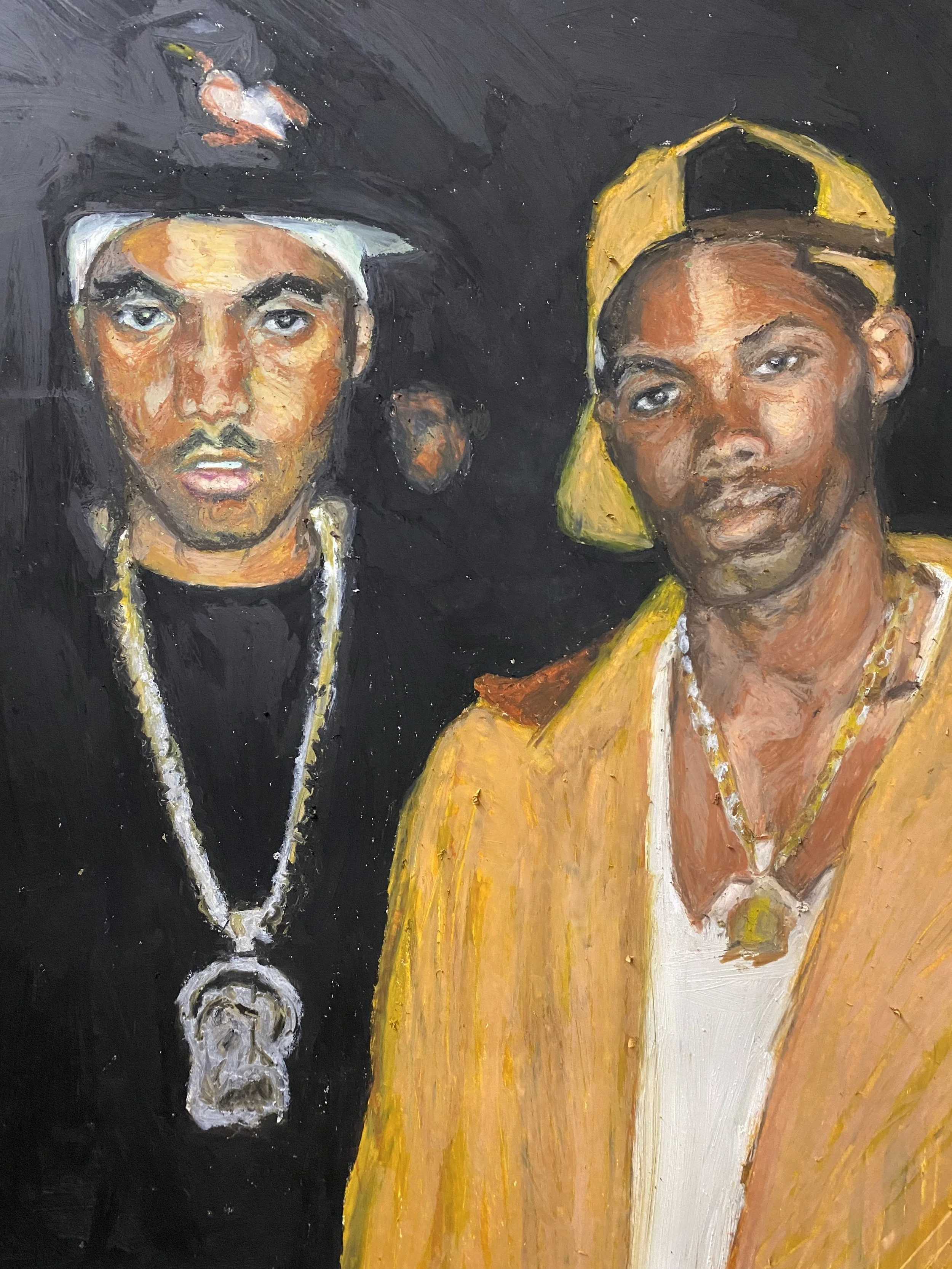
“QB’s Finest 1” Marker on Supreme Sticker 2K20
Subways, Corner Stores, and Essential Workers
Pandemic-Era NYC
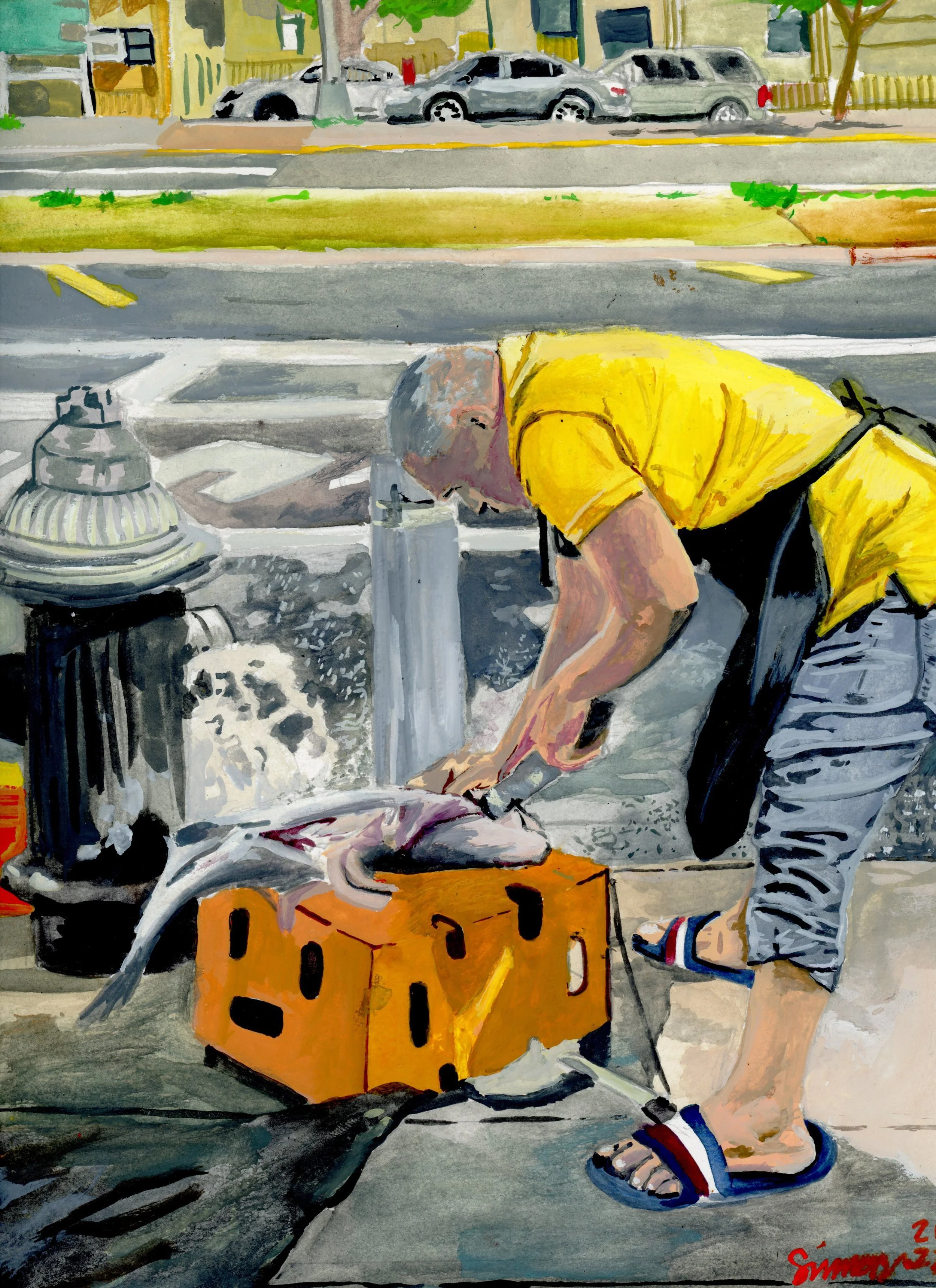
“Bronx Fish Filet” 9” x 12” gouache on watercolor paper 2K22
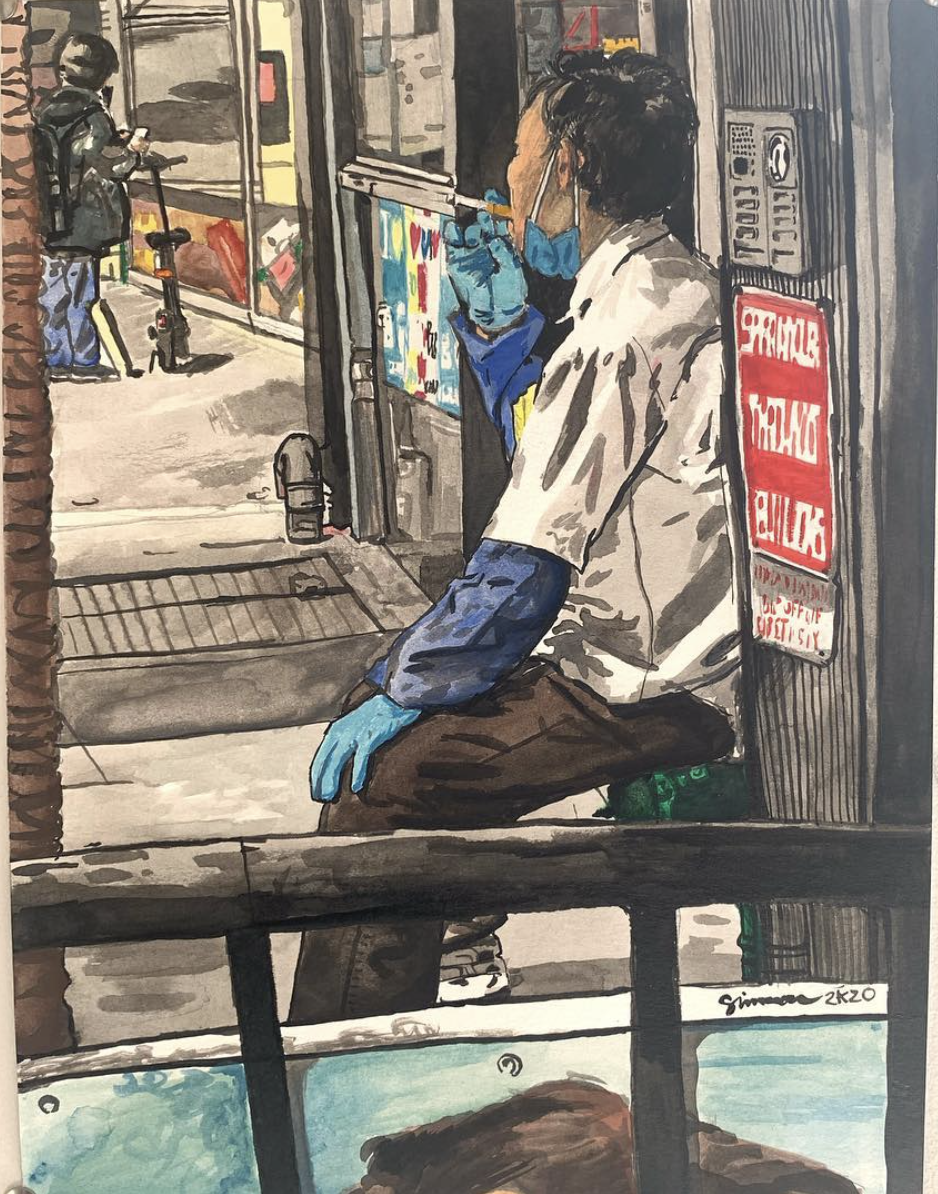
“Covid Essential Worker” 9” x 12” gouache on watercolor paper 2K20
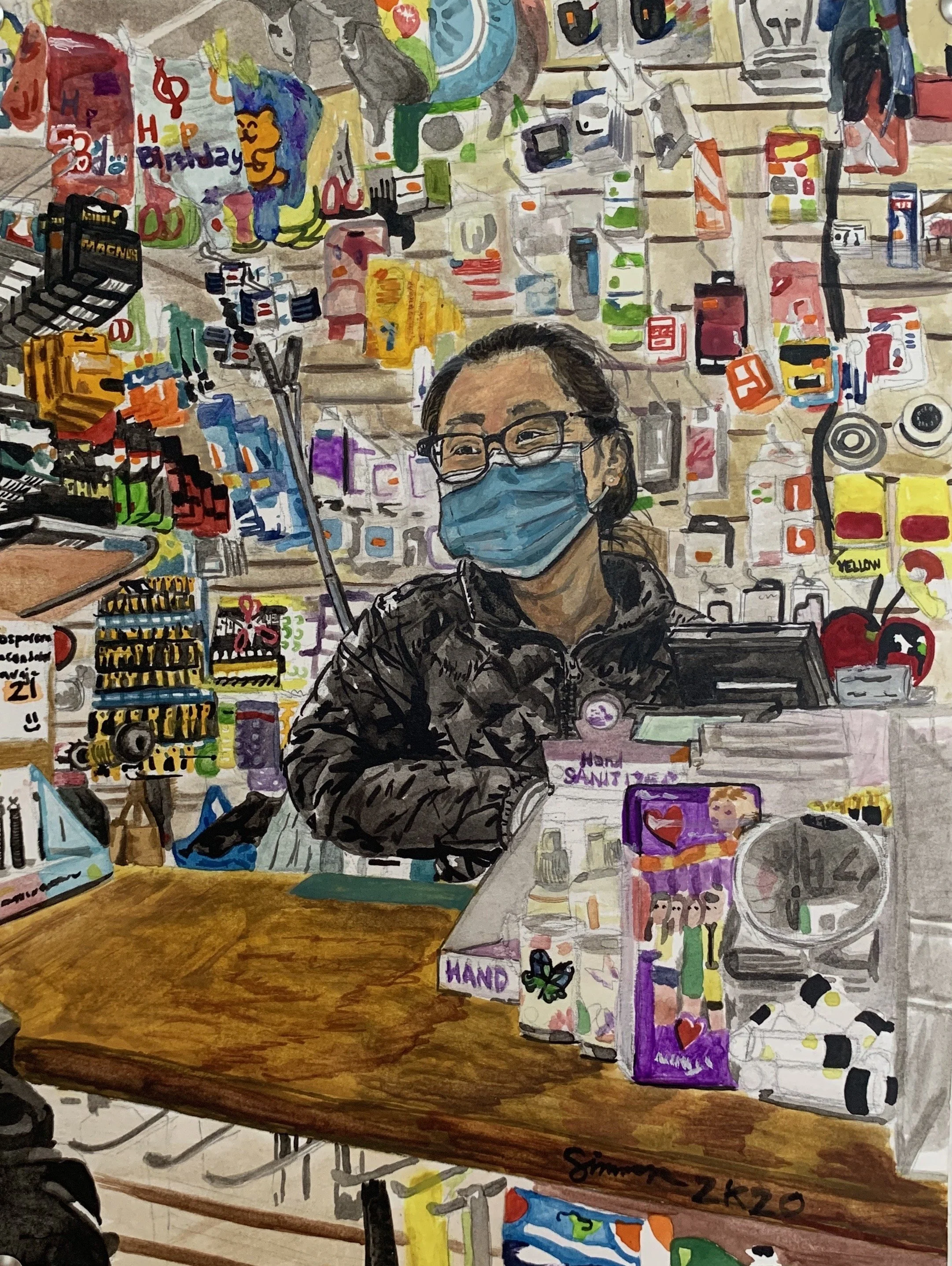
“Covid Corner Store” 9” x 12” gouache on watercolor paper 2K20
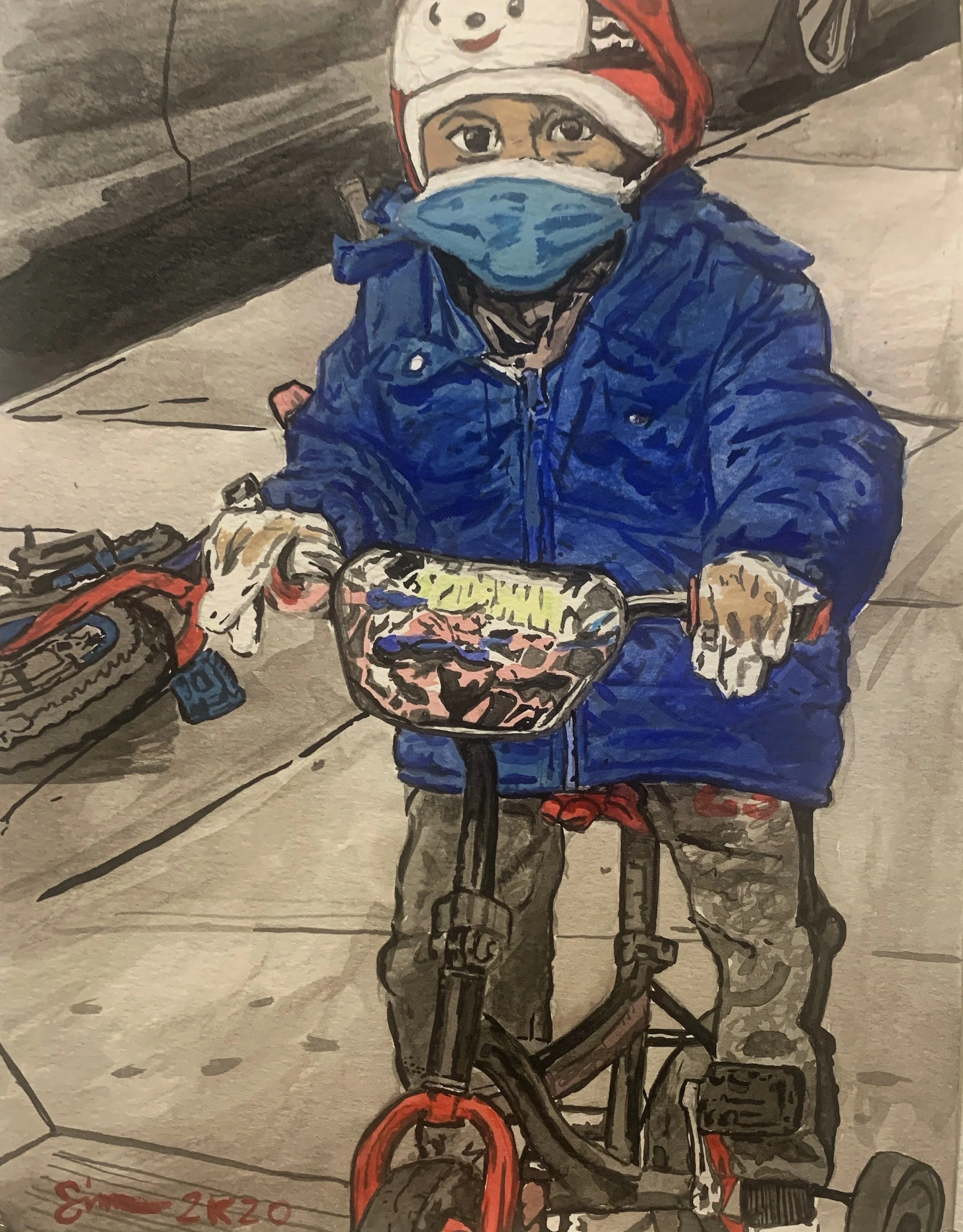
“First Kid I Saw With A Mask” 9” x 12” gouache on watercolor paper 2K20
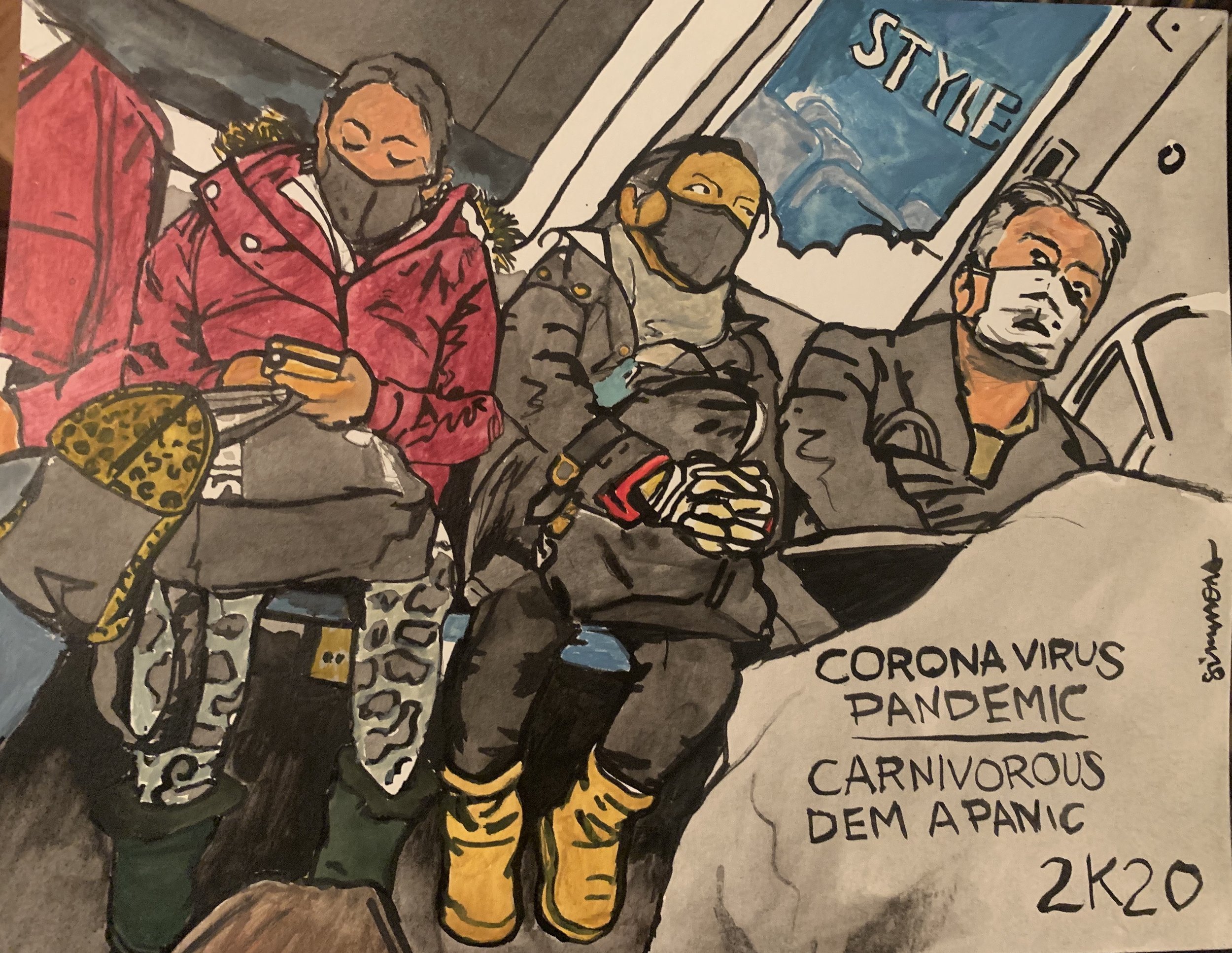
Simmons created this series during the height of the pandemic. Works like Covid Corner Store and Covid Essential Worker document the lived texture of New York City in crisis. Rather than resorting to sensationalized depictions of panic or despair, Simmons focuses on the quiet persistence of locals riding the MTA and keeping neighborhood storefronts afloat.
Masked faces are drawn not as symbols of isolation, but as active participants in collective survival—holding space for humor, resilience, and daily routine against a backdrop of global disruption.
“Untitled”
Subverted Brand Ephemera:
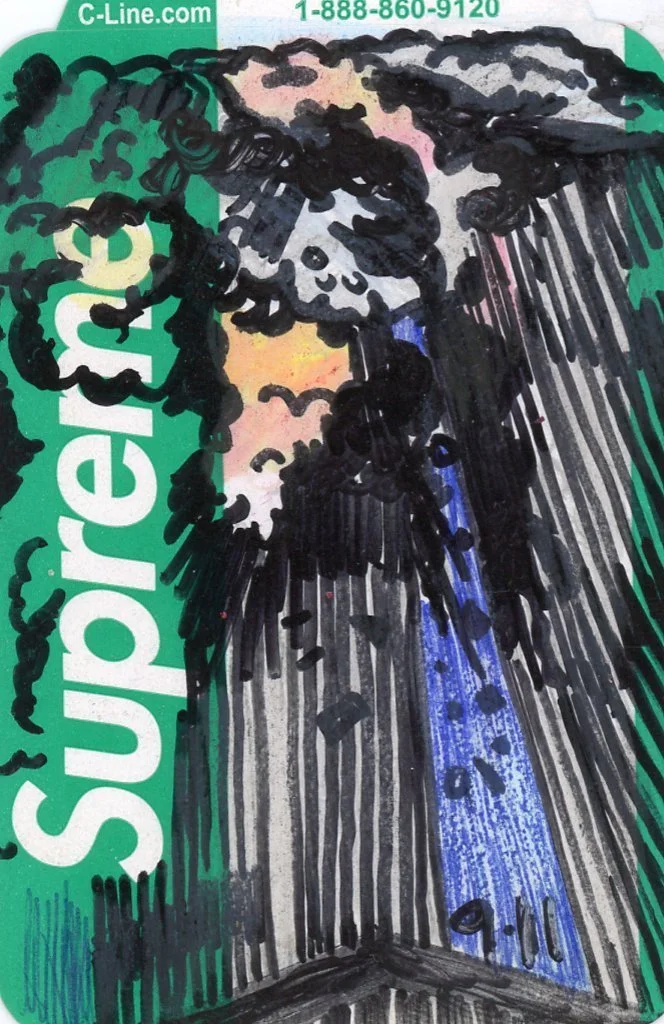
“Never Forget” Marker on Supreme Sticker 2K20
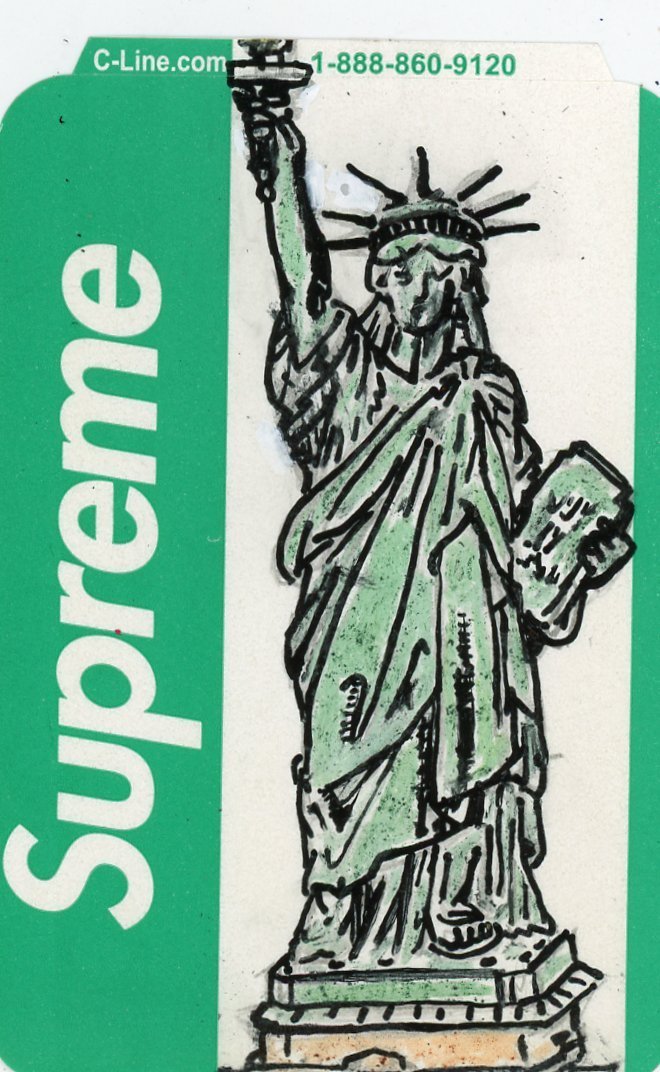
“Lady Liberty” Marker on Supreme Sticker 2K21
In this series of mixed-media miniatures, Simmons uses Supreme name-tag stickers as ready-made canvases, subverting ubiquitous streetwear ephemera into fine art. It’s a direct nod to the classic skate and graffiti tradition of "slap" stickers—using simple labels as portable, DIY art in public spaces. But the sharp layer of irony applied to these miniatures makes me giggle with delight:
The origin of the "Hello My Name Is" tag is the ultimate symbol of corporate anonymity, handed out en masse at awkward office mixers. By selecting Supreme's branded version of that label, Simmons bridges corporate monotony with street hype, then pushes past both. Deftly layering ink, marker, and paint right over the logo, he paints monumental figures like Dr. Martin Luther King Jr., Lady Liberty, and Biggie Smalls—refusing to leave the brand logo exposed as mere status.
The result is a striking contrast, imbuing a simple, everyday paper label with real cultural gravity and fine-art presence.
The Sticker Art Vernacular
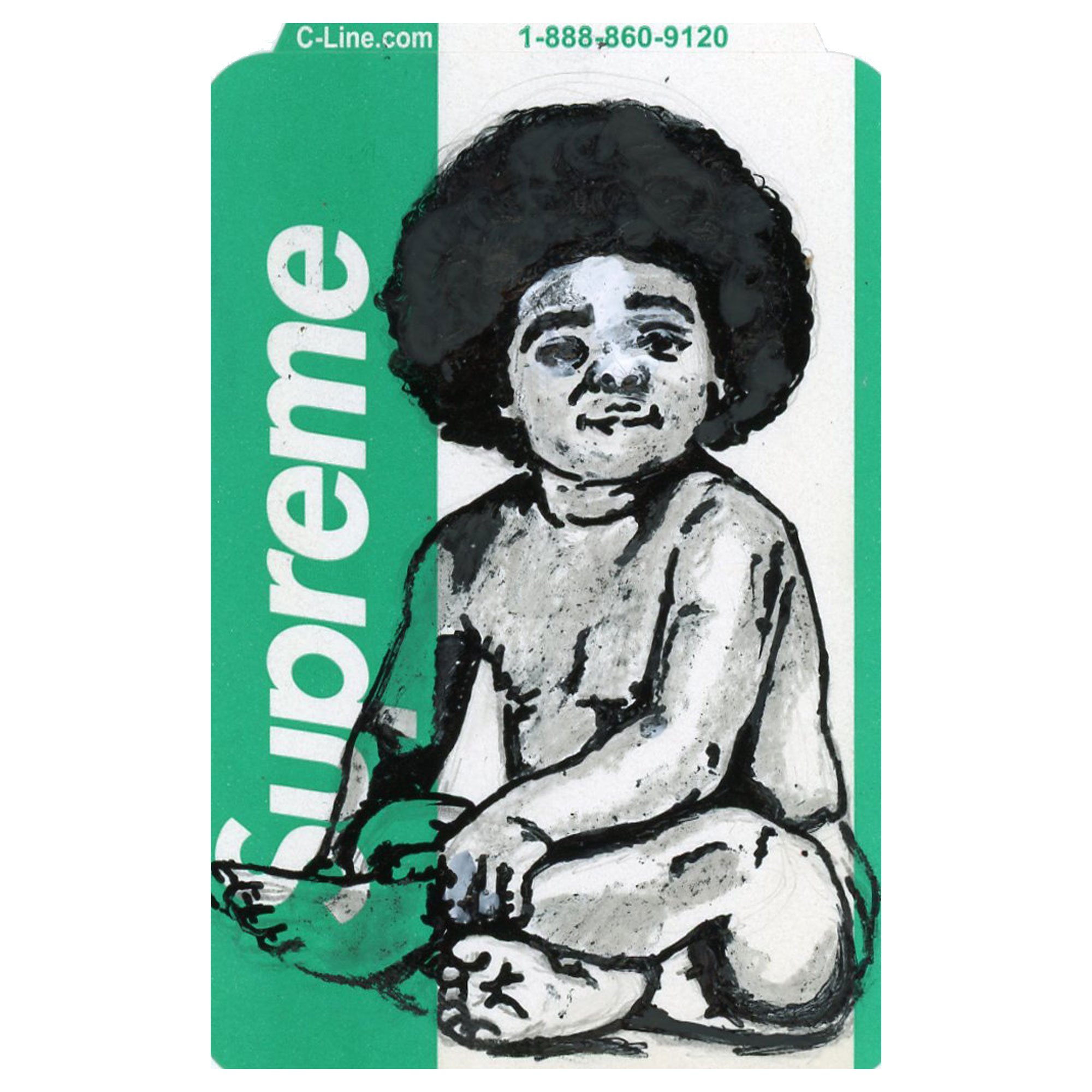
“Ready 2 Die” marker on Supreme sticker 2K21
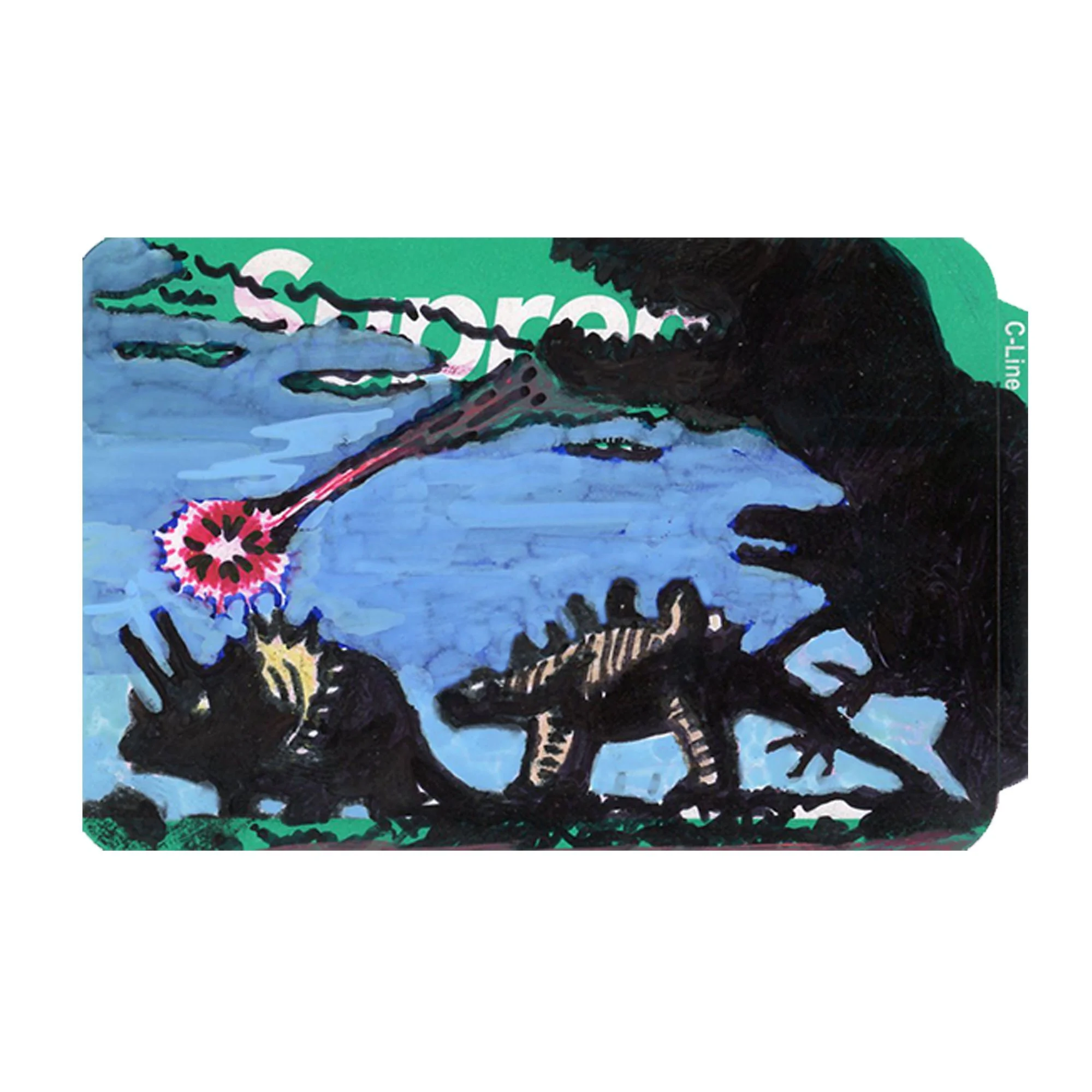
“E.L.E” marker on Supreme sticker 2K21
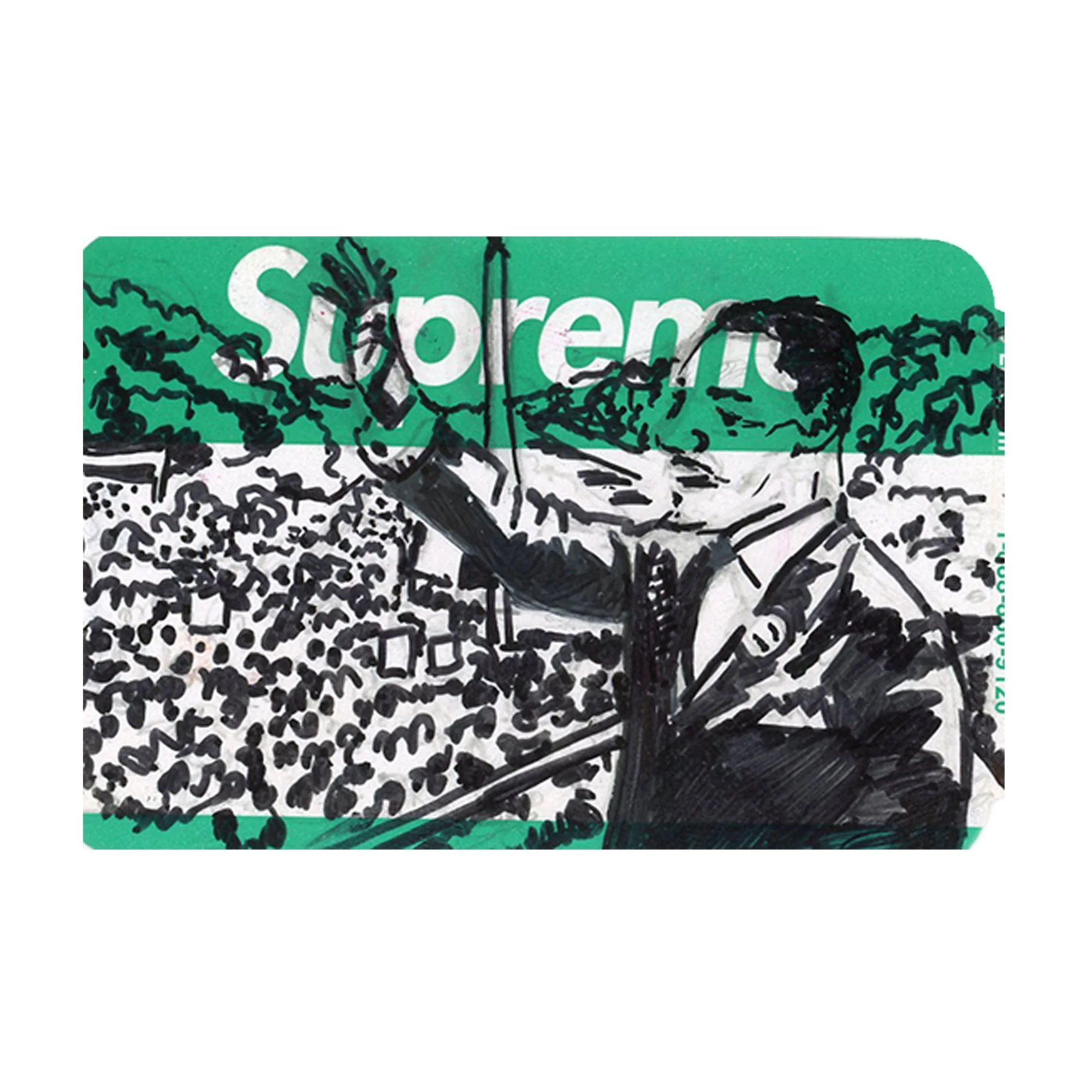
“I Had a Dream” marker on Supreme sticker 2K21
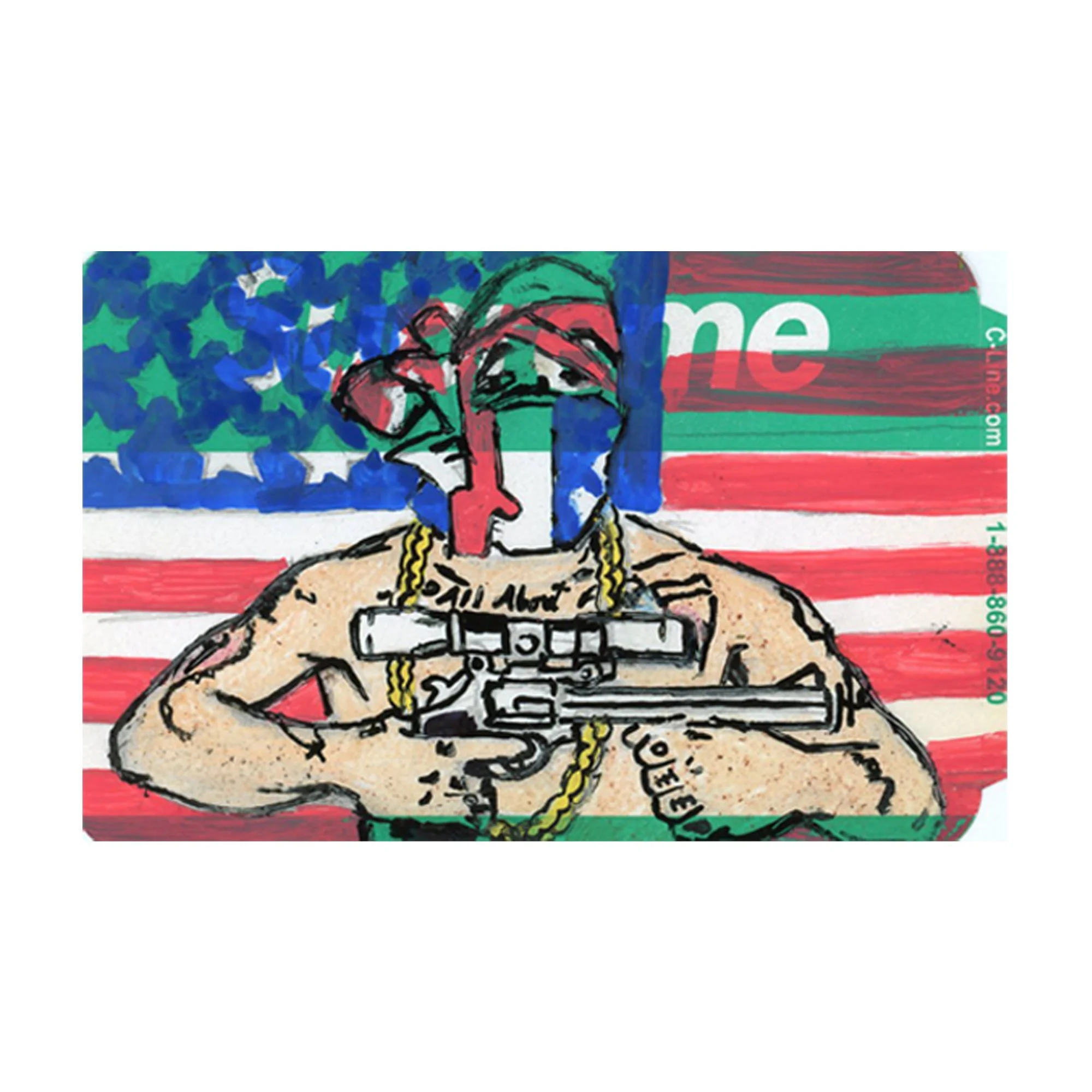
“Bandana P” marker on Supreme sticker 2K21
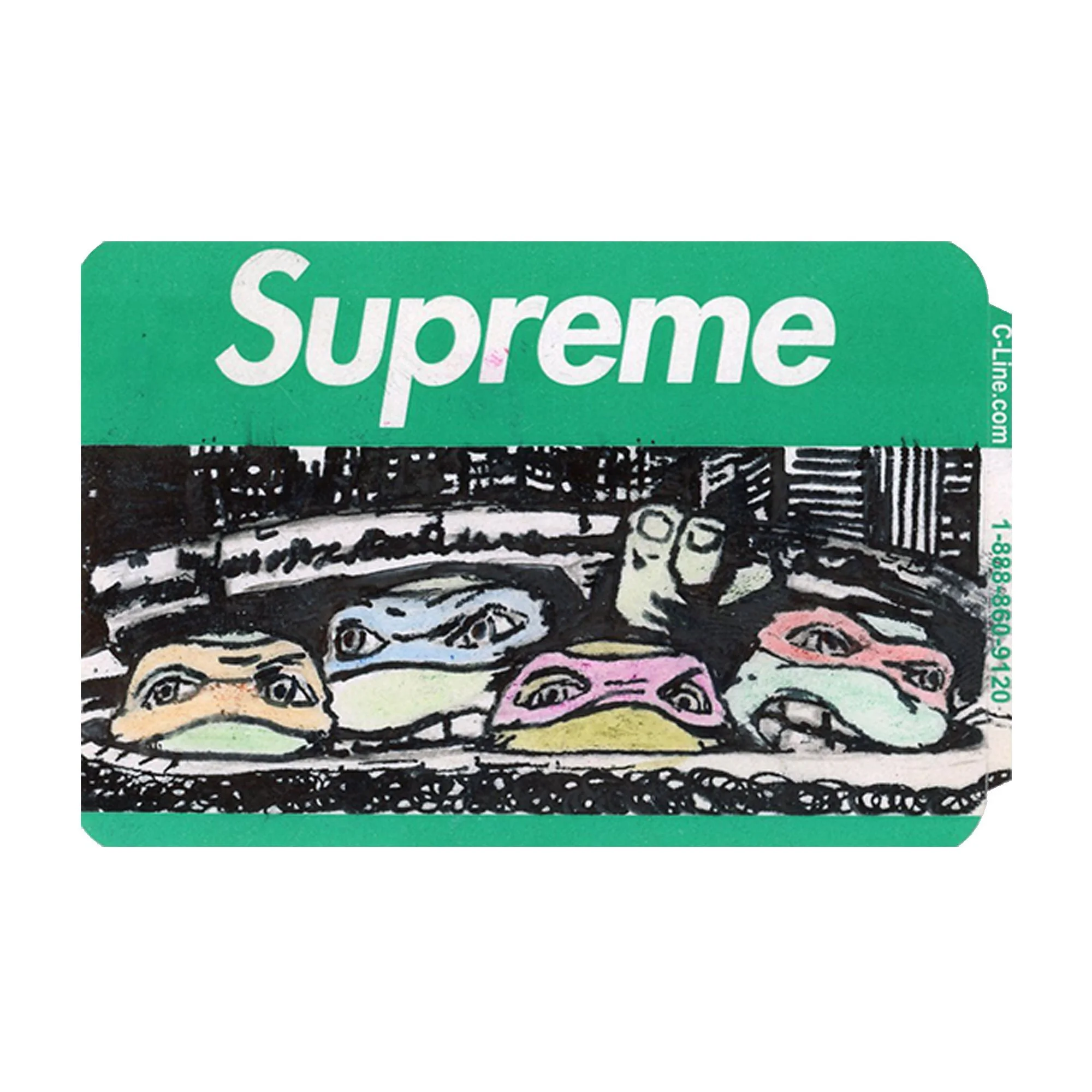
“TMNT” marker on Supreme sticker 2K21
Jazz Visual Culture
Atmospheric Expressionism & Graphic Modernism
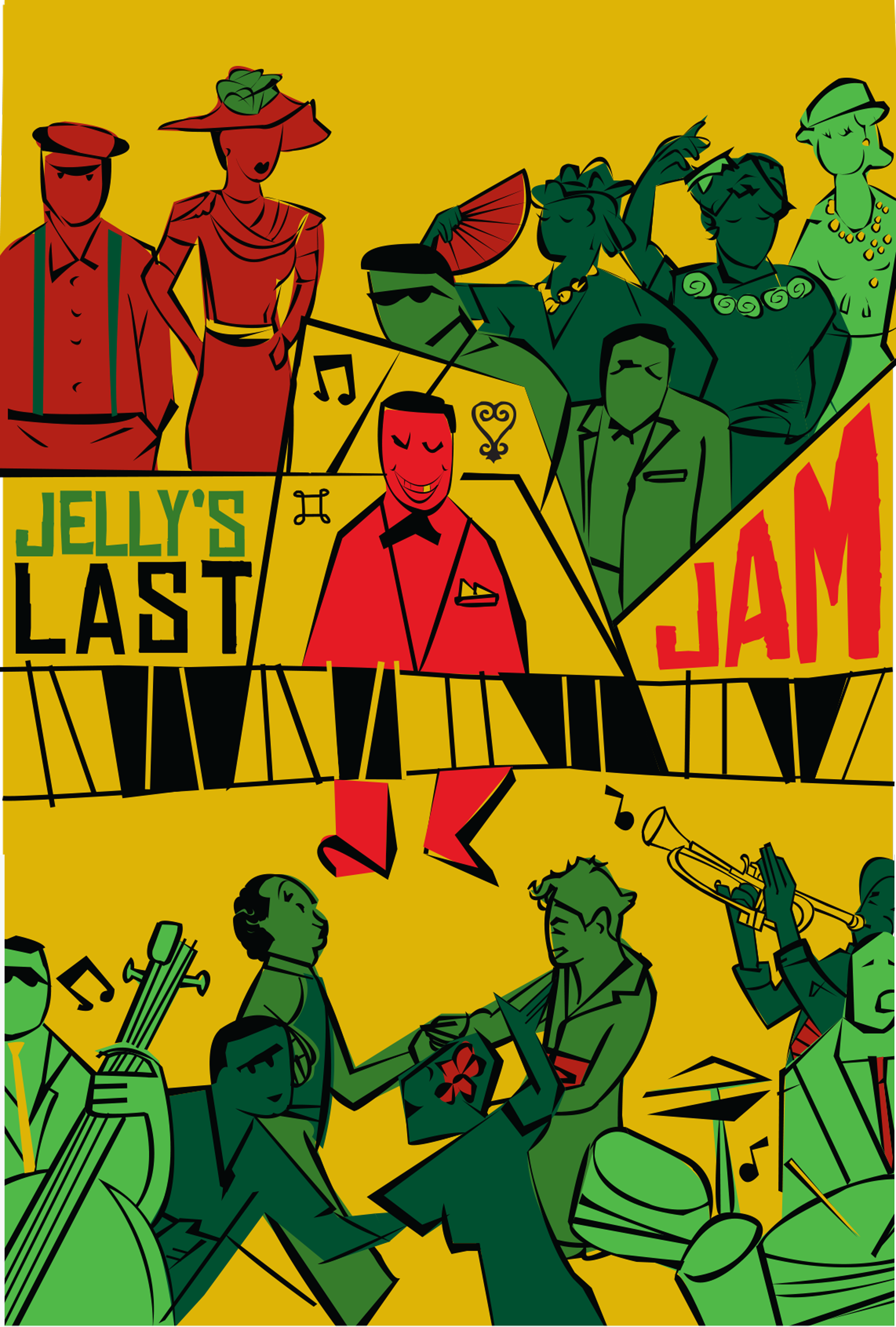
“Untitled”
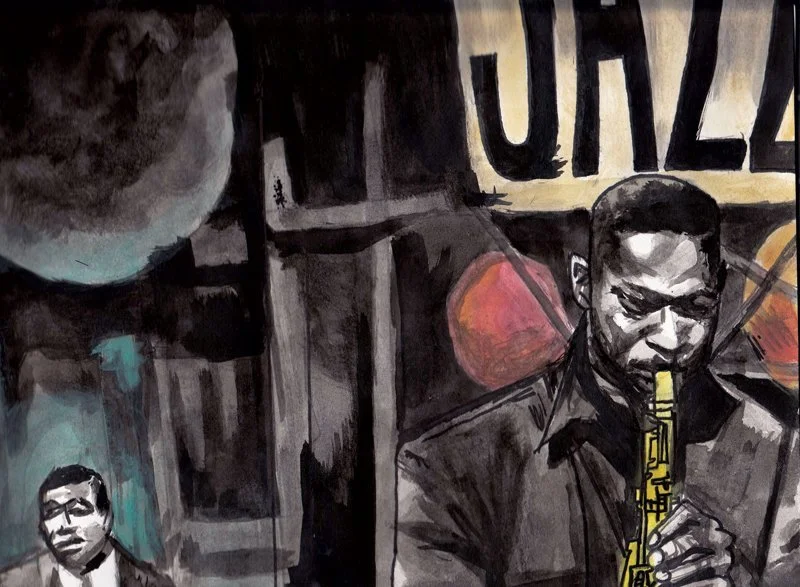
“J. C.” ink and watercolor on paper 2K12
What I love about these two paintings is how Simmons channels jazz music through two totally different visual frequencies:
First piece is a bold, flat graphic composition that draws straight from Harlem Renaissance printmaking and mid-century posters. Then he pivots into his ink-and-wash piece that’s all about atmosphere—smoky, low-lit, and gestural—you can smell that quiet corner in a late-night jazz club.
Through sharp silhouettes and rhythmic geometry, Simmons translates the back-and-forth of jazz improvisation into pure visual form.
The 2021 MSG VERZUS Battle
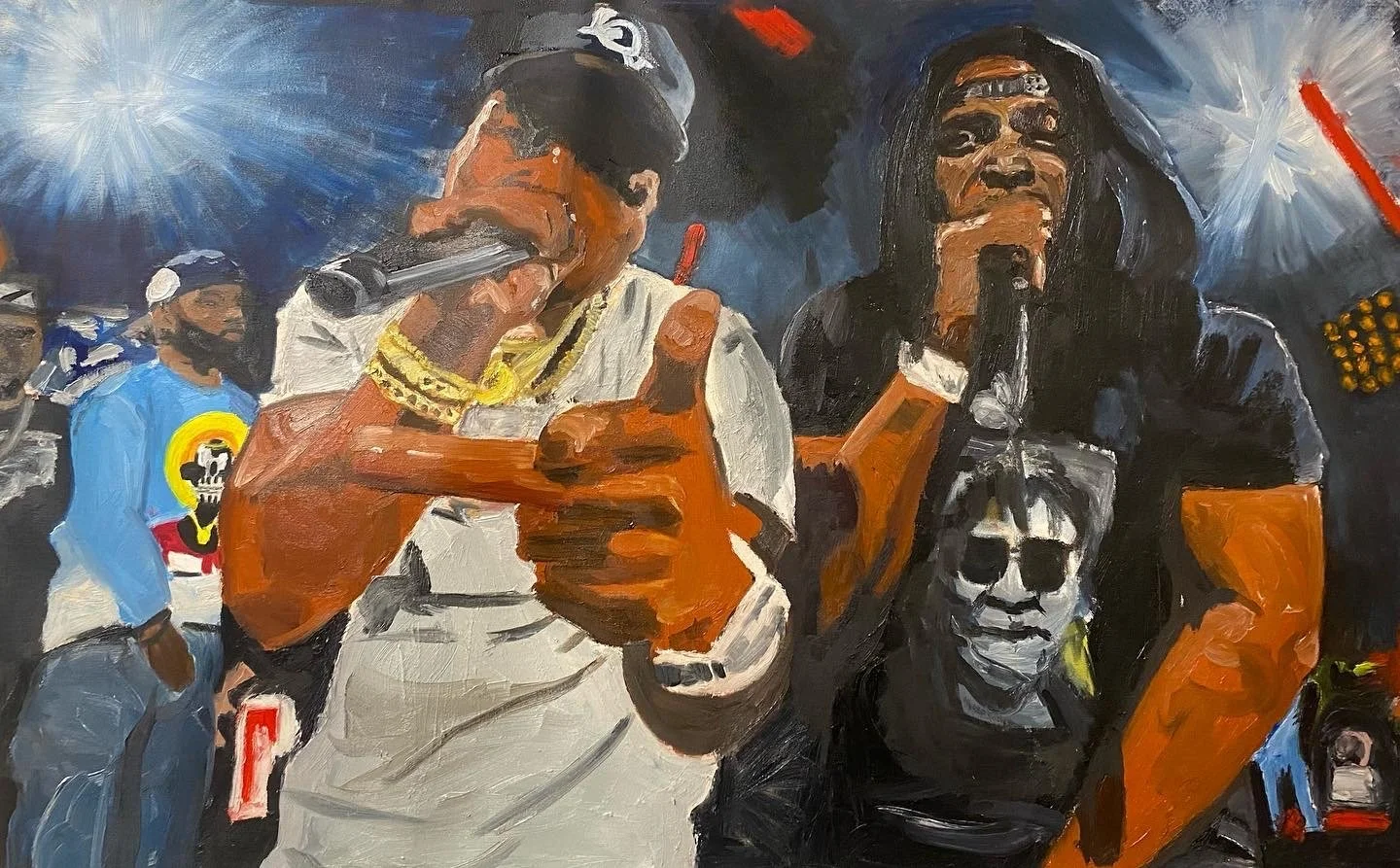
In his oil pastel series documenting the iconic August 2021 Verzuz battle between The LOX and Dipset at Madison Square Garden—featuring songs like "Striving 4 Prosperity," "Oh He Hurt Hurt," and "Oh Nah He Tweakin'"—Simmons documents a watershed moment in contemporary hip-hop history.
Rather than relying on simple concert photography tropes, Simmons uses saturated color, kinetic gesture, and expressive spatial layering to translate the high-stakes energy of the arena into a permanent visual archive. He approaches the night as a masterclass in New York rap lineage—framing performance, bravado, and subcultural pride not merely as viral entertainment, but as a monumental clash of lyrical craftsmanship and cultural heritage.
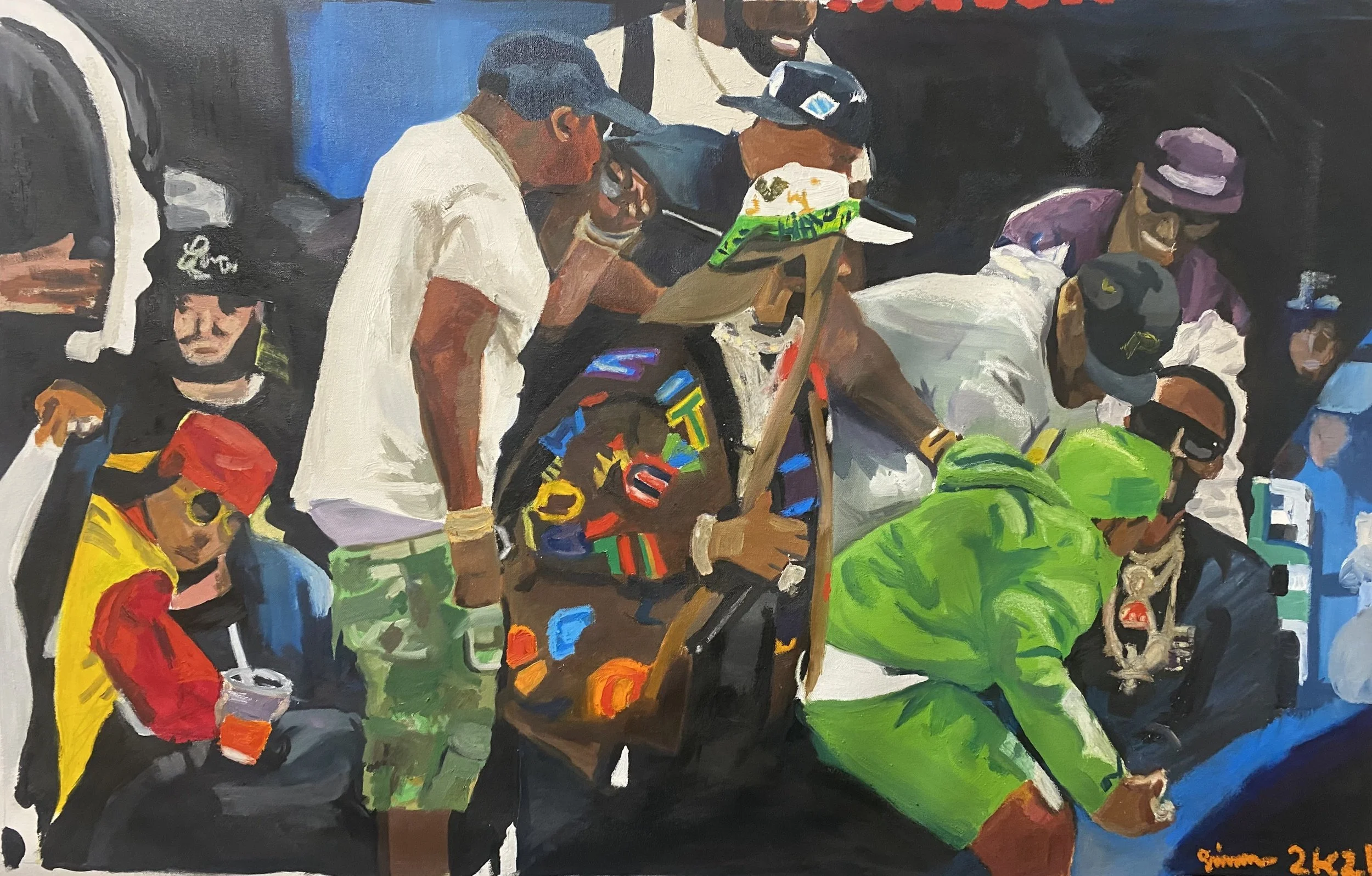
“I’m Suppose To Be At Home Watching The Honeymooners” 31” x 49” oil on canvas 2K21
“All Praises, All Burners, All Razors” 49” x 31” oil on canvas 2K21
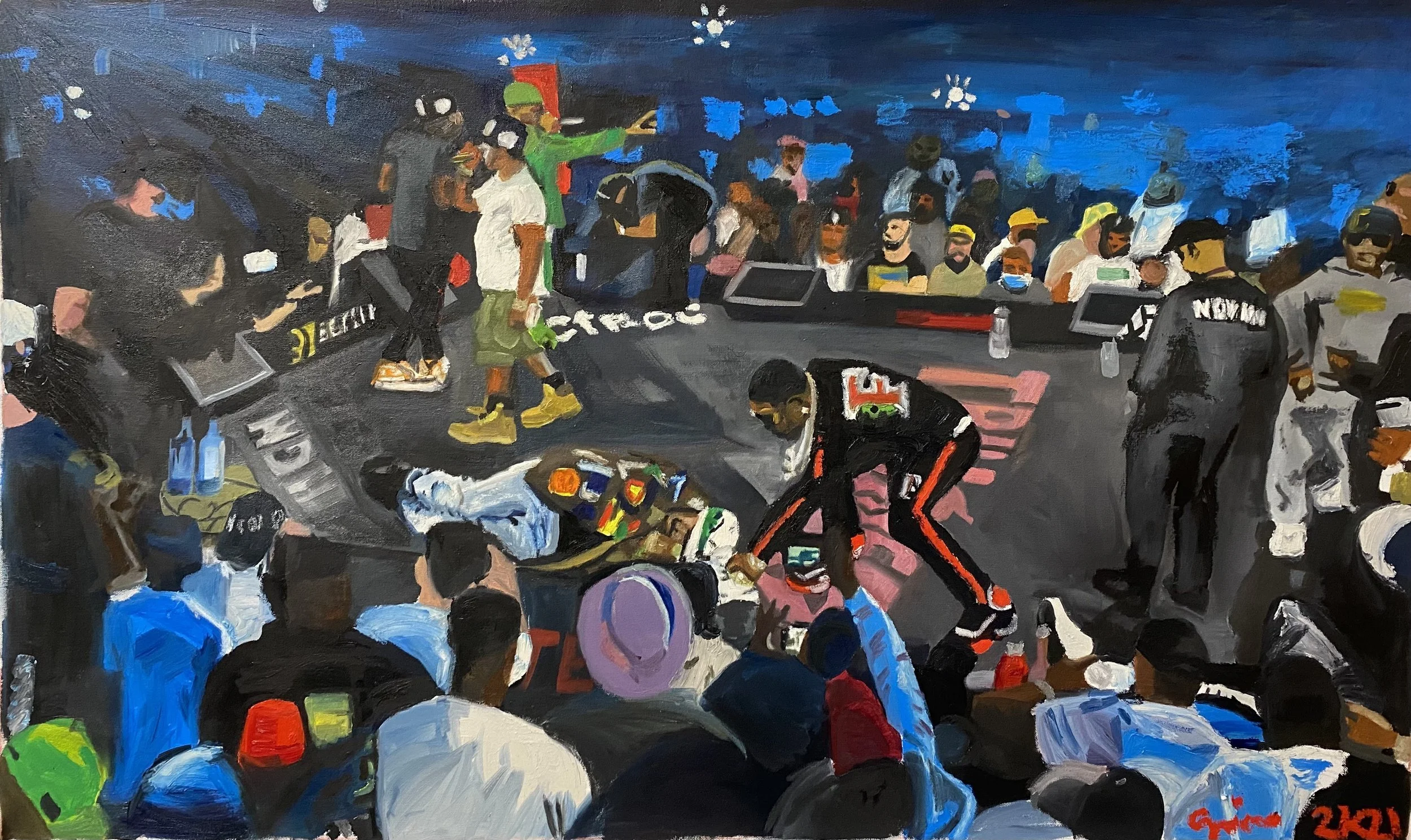
“My Name Rings Bells Like Sunday at 12:00” 31” x 49” oil on canvas 2K21
Urban Vanitas
Subcultural Ephemera As Sacred Memory
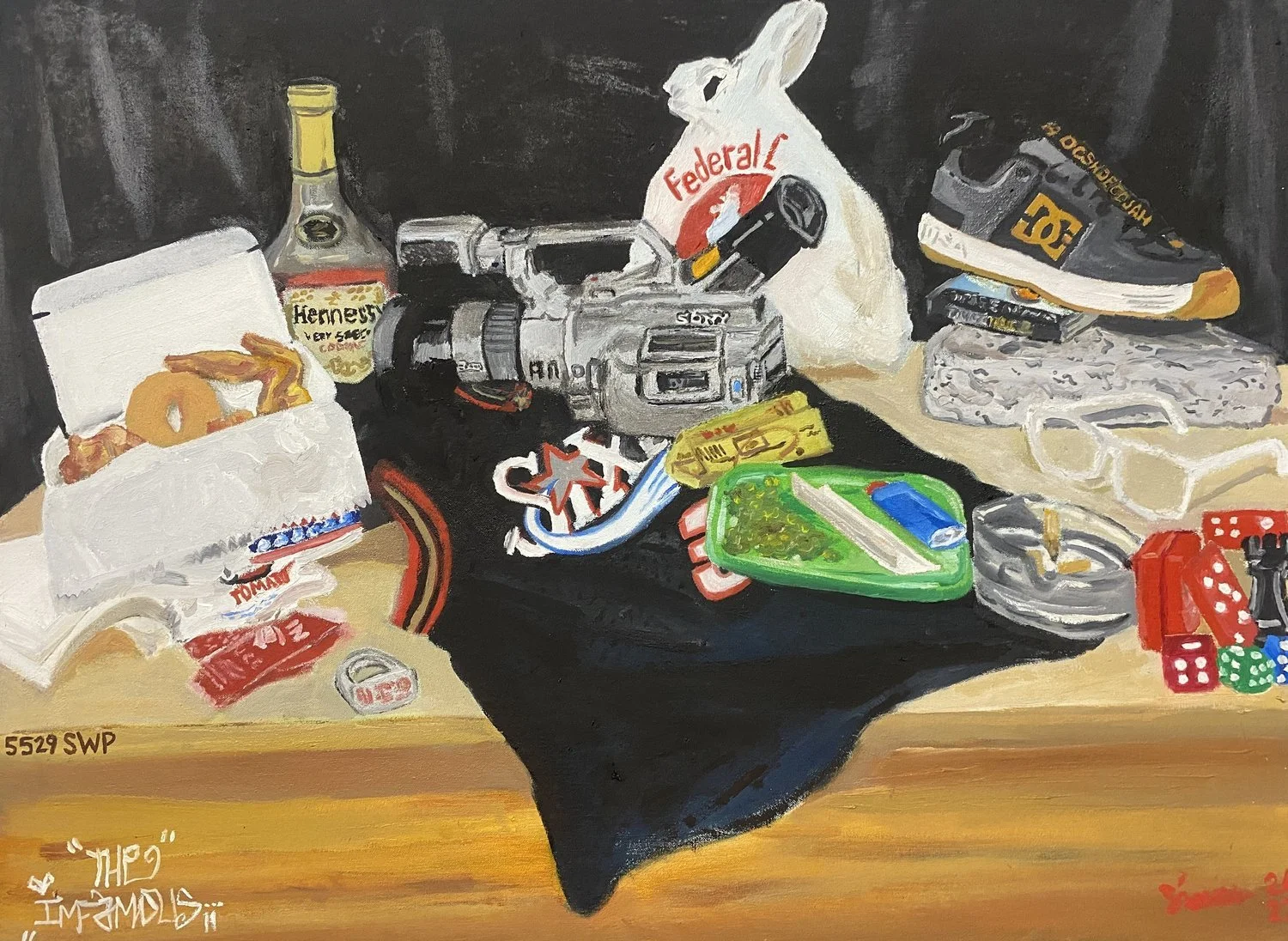
“Vanita for Jahmir” 20” x 25” oil on canvas 2K22
Simmons takes the classical European tabletop still life and completely flips the script with hip-hop heritage, skate nostalgia, and street culture. It's his take on Dutch Golden Age vanitas tricks—the skulls, hourglasses, and rotting fruit (classical symbols of mortality)—replaced with the quiet, intimate detritus of everyday life: Hennessy bottles, takeout fried chicken boxes, rolling trays, dice, and the iconic Sony VX camcorder that defined 1990s skate video culture.
Presented at eye level with warmth, Simmons avoids both sensationalism and romanticized nostalgia. He elevates mundane neighborhood artifacts into formal, museum-worthy art objects, transforming street-level ephemera into a rich, permanent visual archive.
“Untitled”
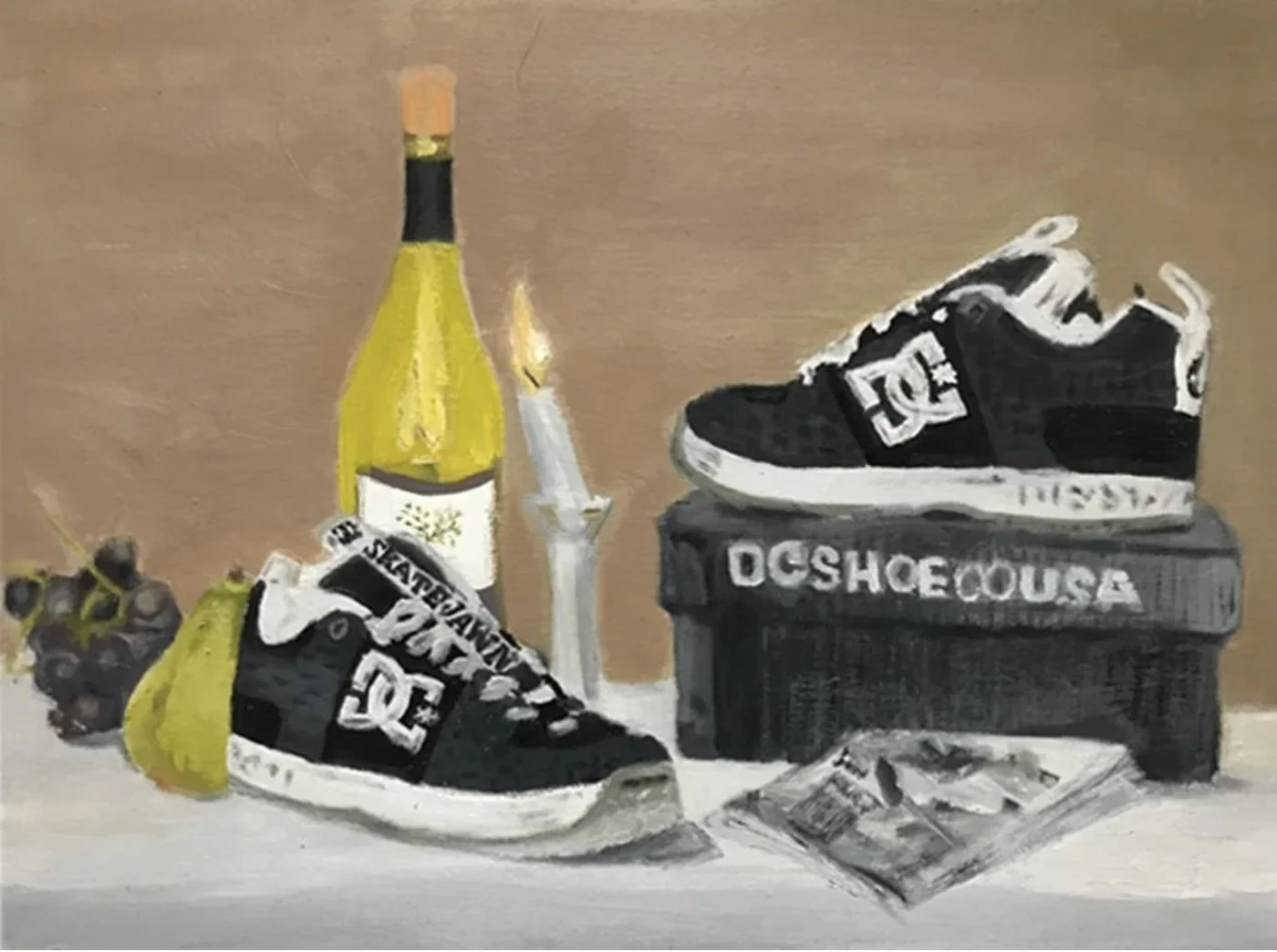
“Skate Jawn Still Life” 20” x 25” oil on canvas 2K19
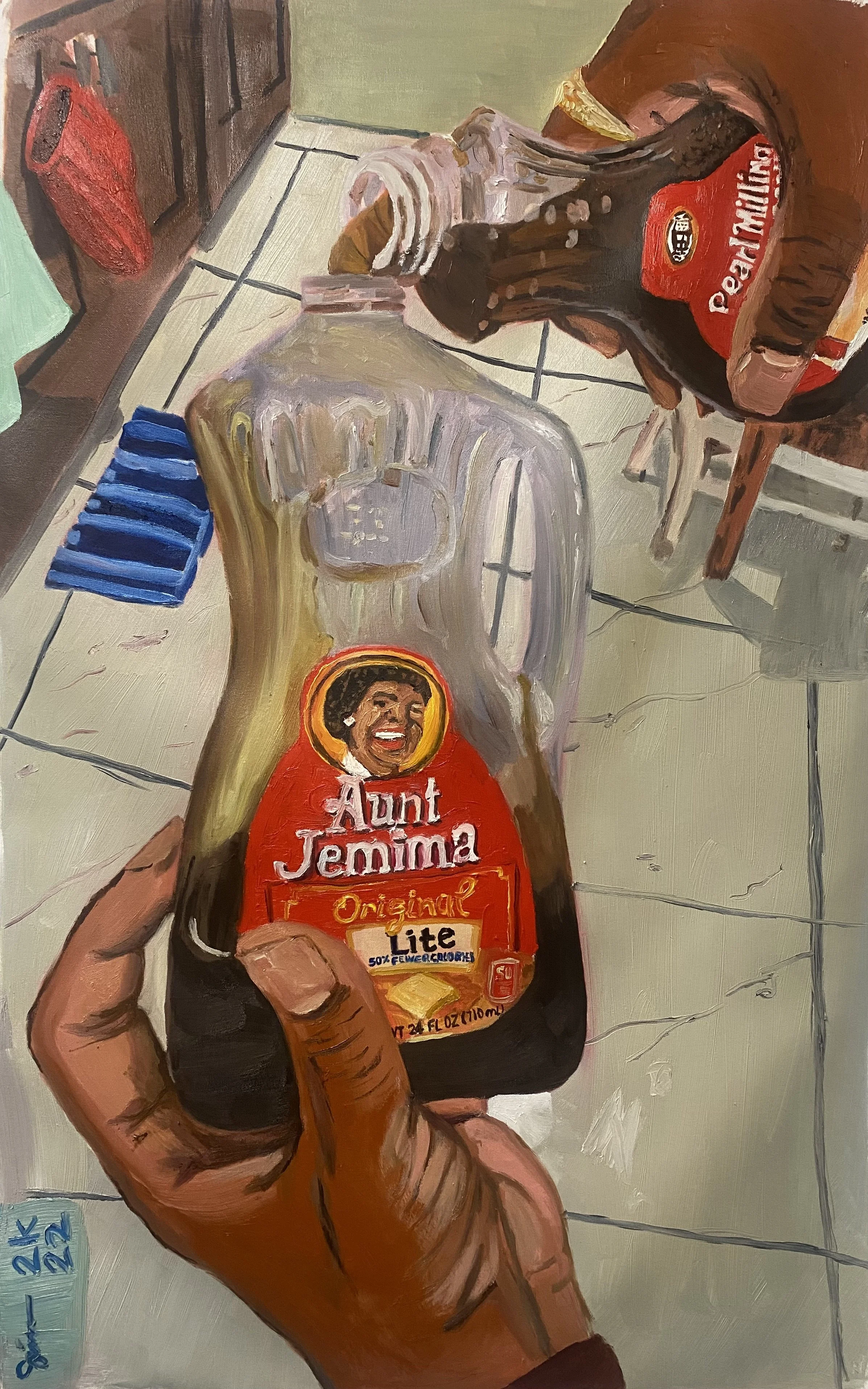
“Woke Up This Mornin' 1” 49” x 31” oil on canvas 2K22
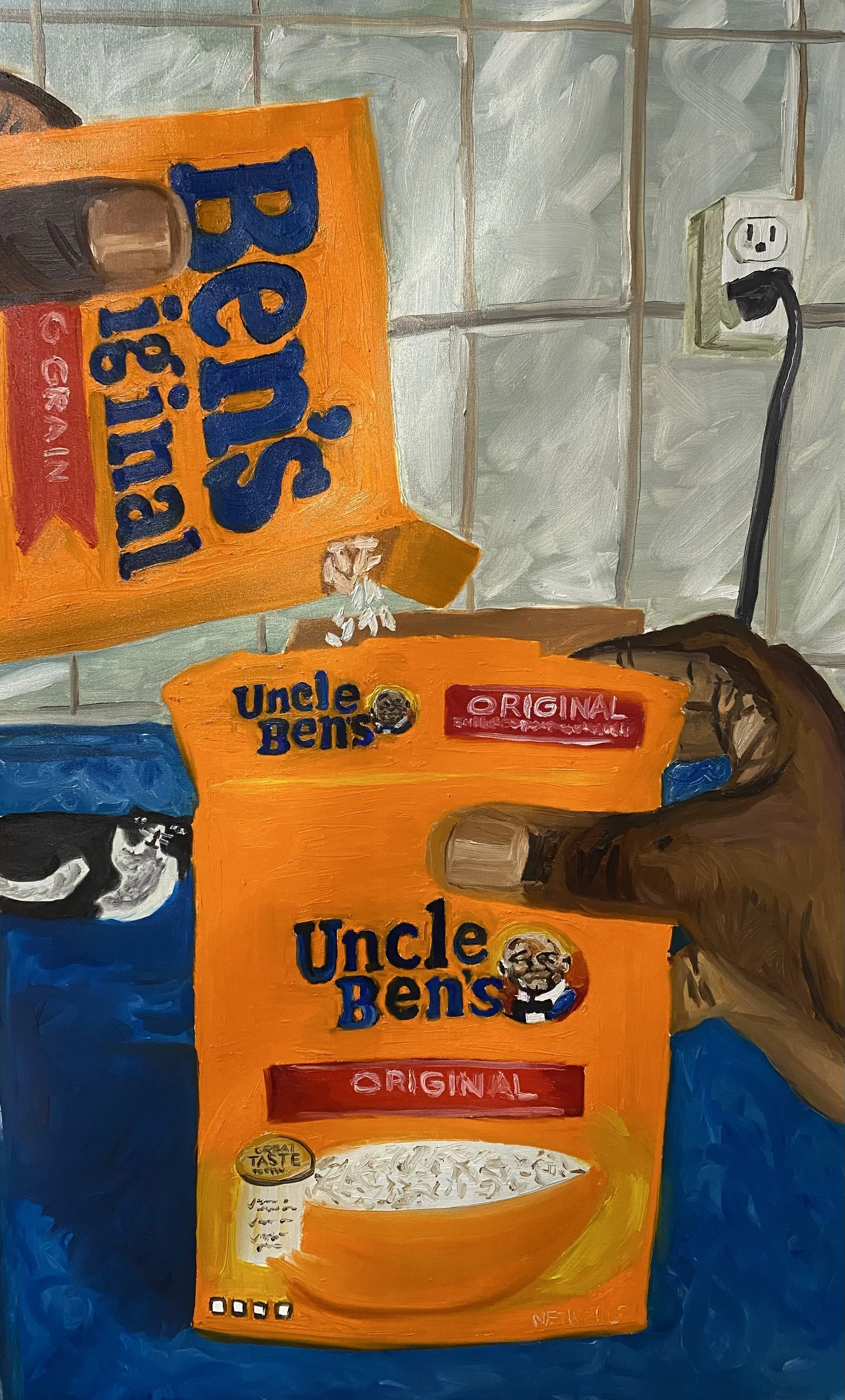
“Woke Up This Mornin' 2” 49” x 31” oil on canvas 2k22
The Crucible of Character
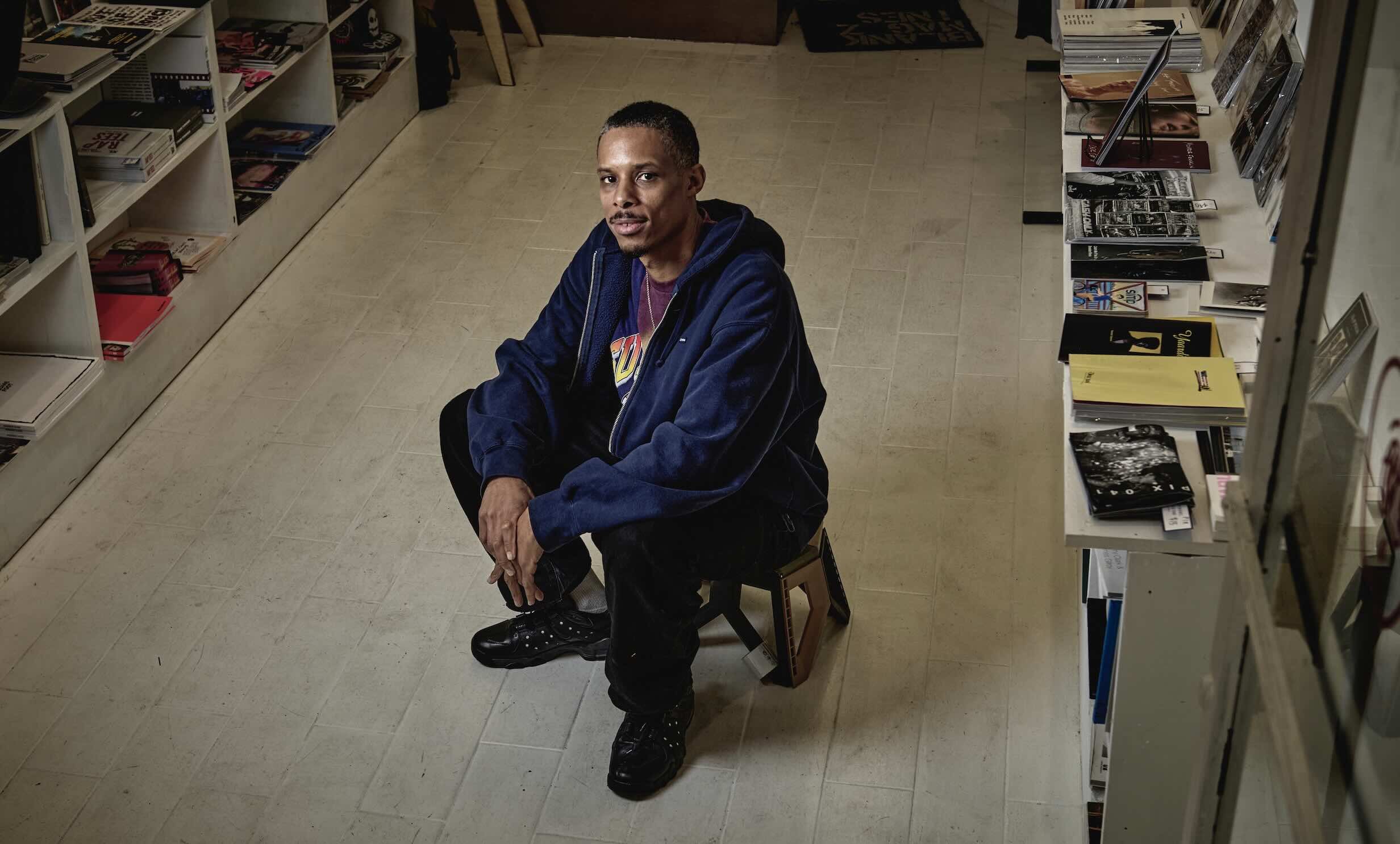
Photograph by Giovanni Reda @giovannireda
Born in Los Angeles and named after his father, Greg often wonders how his trajectory might have differed had he remained on the West Coast. His father, who hails from Sandusky, Ohio, worked as a truck driver, while his mother earned her bachelor's degree in TV Communications from UCLA and worked at Lorimar Studios. When his parents split, Greg and his mother returned to her hometown of Atlantic City, New Jersey.
Navigating these surroundings as an only child and latchkey kid, Greg spent much of his youth absorbing the visual languages of 1990s television, cartoons, video games, music, and sketchbooks. Far from feeling confined, Greg found that these early solitary hours cultivated an enduring sense of internal direction and self-reliance.
The bedrock of Greg's values was laid by his mother, whom he speaks of as his "Super Woman." Having watched her navigate immense challenges with steady resolve, Greg considers her his "ultimate hero" and primary influence. She taught him resilience, prioritized reading to him as a young boy, and rooted him in daily affirmations of wholeness and prosperity. Her life mantra—"I'm happy, healthy, whole, prosperous"—modeled what it meant to be unshakable and persistent, traits that remain central to how he walks in this world.
A turning point came at age 13, when Cousin Donna, who's like a second mother to Greg, gifted him his first skateboard. Before long, a buddy named Mike Eidell took him out skating. And the moment Greg landed his first ollie, something clicked—unlocking a whole new sense of physical confidence and spatial instinct. Moving through the world as a Black skater, he said, gave him "a distinct way of seeing"—one that balanced the raw freedom of the subculture with a clear, sharp consciousness of identity.
That early taste of independence mirrored the autonomy he had known growing up. But for Greg, independence is about self-determination. Whether navigating the streets of New York City or working late into the night in his studio, that quiet drive for agency is still what defines him as a man, a son, a father, and an artist.
Leaving Home, Finding Form
Although Greg earned a Bachelor of Science in Graphic Design from The Art Institute of Philadelphia, his trajectory as a painter is entirely self-taught.
Now based in Brooklyn, he works fluidly across mediums spanning oil, pastel, gouache, illustration, mixed media, product design, and fine art projects that preserve the fleeting, poignant moments of modern life. Drawing inspiration from sources ranging from digital culture and viral media to street vernacular and hip-hop history, Greg's work is a vital cultural mirror.
With an aesthetic both vibrant and gritty, he shares what he sees with humor, nostalgia, and sharp commentary on Black identity and contemporary urban life. Everyday street scenes and social phenomena are elevated into enduring artistic dialogue, carving out a space that connects street-level authenticity with rigorous institutional critique.
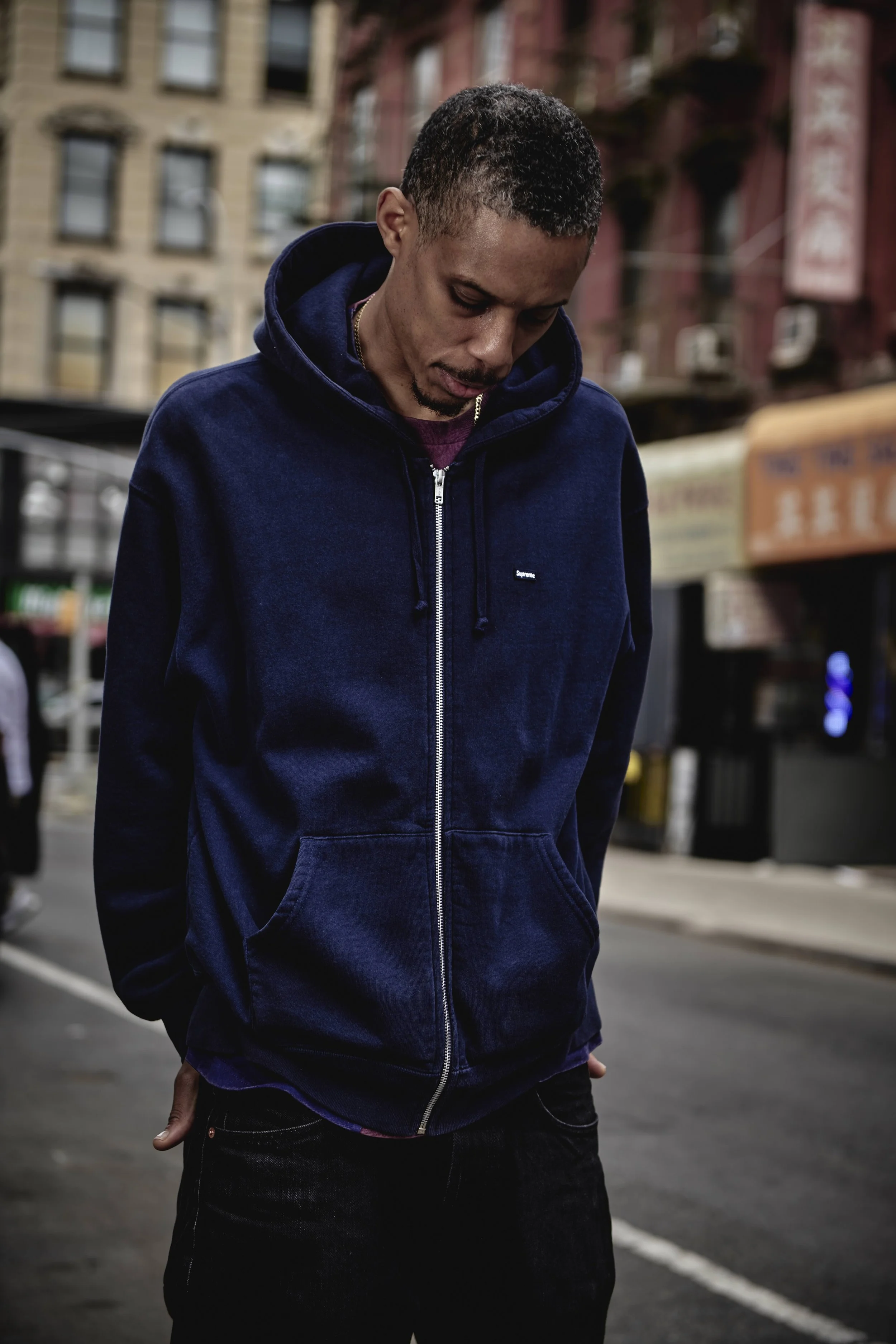
Photograph by Giovanni Reda @giovannireda
Fatherhood, Maturity, and Legacy
The birth and raising of his son changed Greg's perspective on life. He says it deepened his understanding of patience and commitment. Balancing fatherhood with a demanding studio practice sharpened his discipline to maintain boundaries—grounding Greg's output in purpose and care. Greg describes himself as open-minded, optimistic, and grateful, creating from an authentic place that honors his roots.
His exuberant, prolific archive of contemporary life has permanence; it's enduring work destined for major museum collections for generations to come.
Sugar Sisters
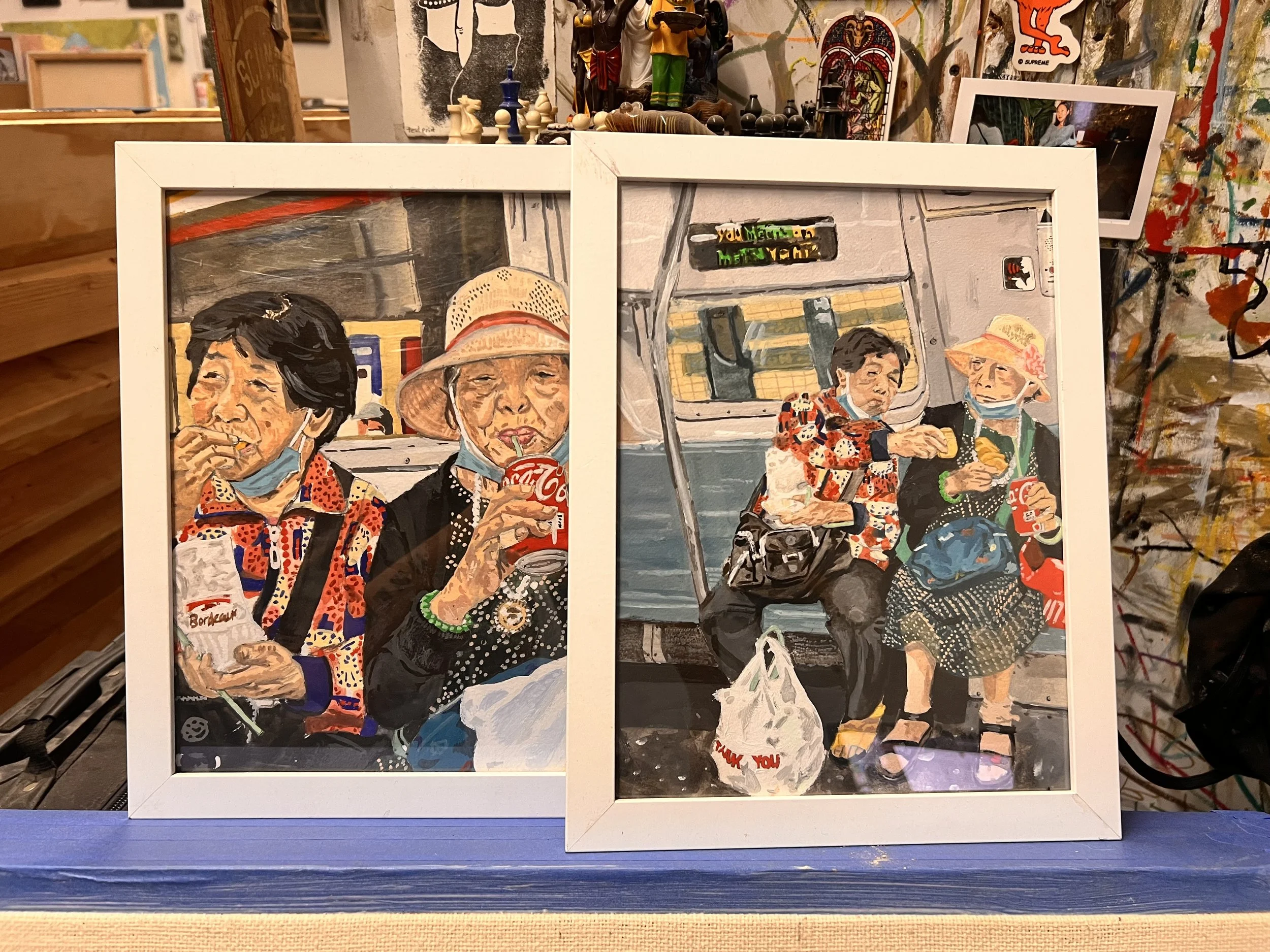
“Sugar Sisters” by Greg Simmons. Private collection of the publisher, acquired 2025.
Two Chinese American sisters sharing snacks on the subway — one handing the other a bite, both holding their own iconic American treats. There's so much tenderness in this quiet moment: the intimacy of food, the rhythm of routine.
"Sugar Sisters" is profoundly tender because it taps into some of the most fundamental expressions of care and trust. Feeding someone carries a deep emotional and symbolic charge. It's a selfless act of caretaking as it mimics the earliest form of love most people receive: being fed by a parent or caregiver. It signals concern for the other's well-being. To feed someone is to say: I want you to be nourished, I want you to be okay.
In many cultures, sharing food is a primary love language. Elders don't always say "I love you," but they'll peel your fruit, pack your lunch, pass you the best bite. It's affection made visible. The foods we share often carry stories, migration histories, and emotional residues. It bridges generations, origins, and belonging. The moment becomes layered with memory, ritual, and survival.
Greg has an exceptional way of pulling us into such moments. His paintings welcome us in without condescension, without mockery — embodying a kind of inclusion without reducing the subjects to caricature. He retains humor and lightness in his work without ever flattening the people he portrays. Rather than inviting us to gawk, Greg includes us in the shared human experience—not at the expense of those he draws but alongside them—in recognition and compassion.
Greg's balance of humor and humanity offers layered narratives that honor identity and lived experience in full complexity. His art does not just represent—it invites and holds space for connection, reflection, and respect.
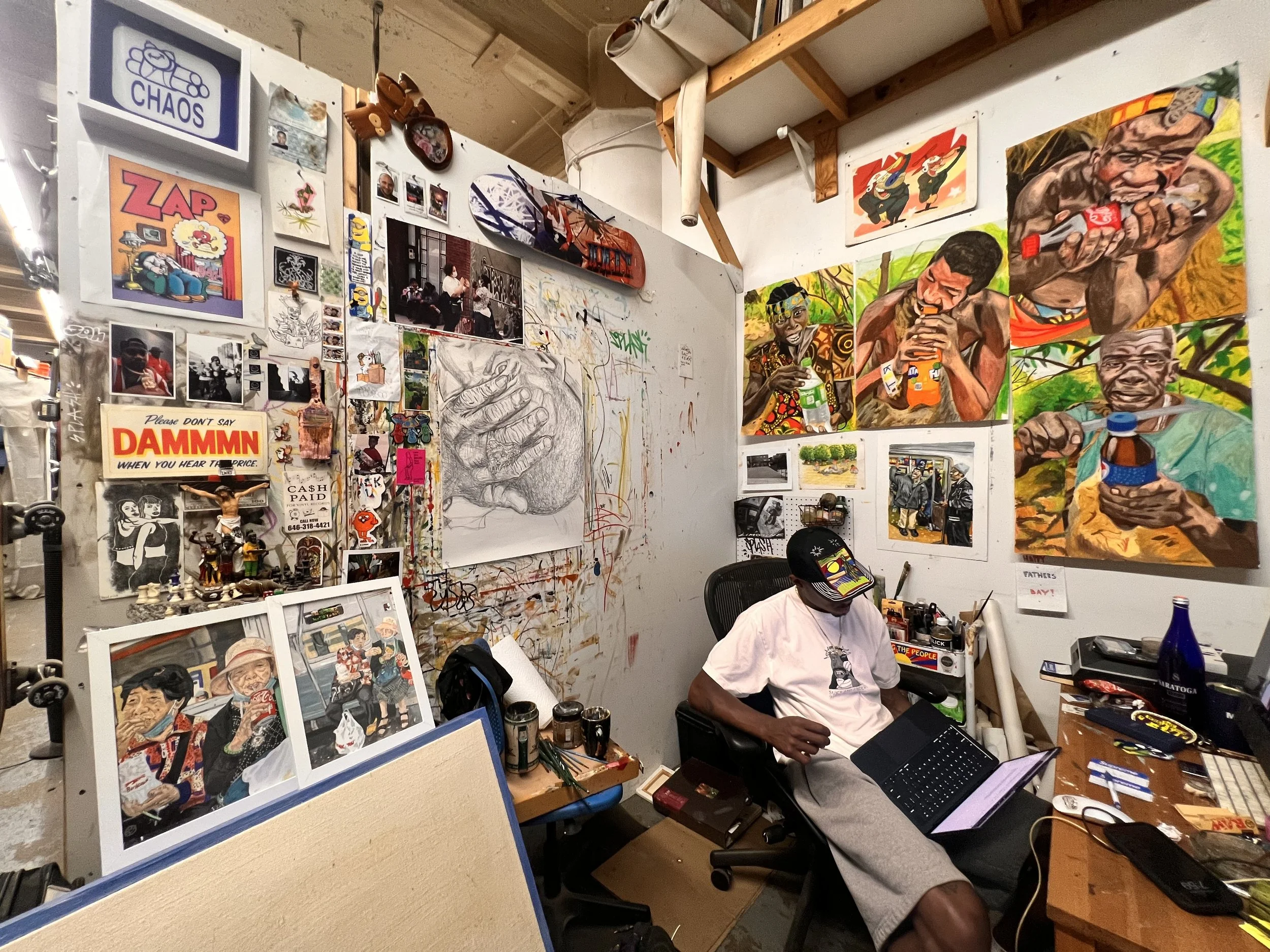
Photograph by popJellyNYC
popJellyNYC would like to extend its gratitude to Greg Simmons (@g_simmonsart) for his generosity throughout the creation of this story. Being entrusted with personal access to his most sacred space—his art studio—was a privilege. Experiencing his work in the very space where it comes to life makes it clear how every piece bridges Greg's inner world with the viewer's own.
Thank you, Greg, for opening your space and sharing your process. Your work carries a universal and timeless quality that reflects the complexities of our contemporary moment. It's relevant today and will endure for the future.
A massive thank you to the legendary Giovanni Reda (@giovannireda) for photographing Greg Simmons for this feature. Reda, known for documenting some of skateboarding's most iconic moments, brought that same kinetic energy to his portraits of Greg right here in New York City. Having his eye behind the art direction of Greg's photos was both a personal privilege and dream collaboration. So grateful for your exceptional taste; humbled by your wise counsel.
Blessed to call you both friends.
All featured artwork by Greg Simmons and photographs by Giovanni Reda are reproduced with permission from each artist. For acquisition, press, or rights inquiries, please direct message the artists:
Artwork: Greg Simmons
Photographs of Greg: Giovanni Reda
